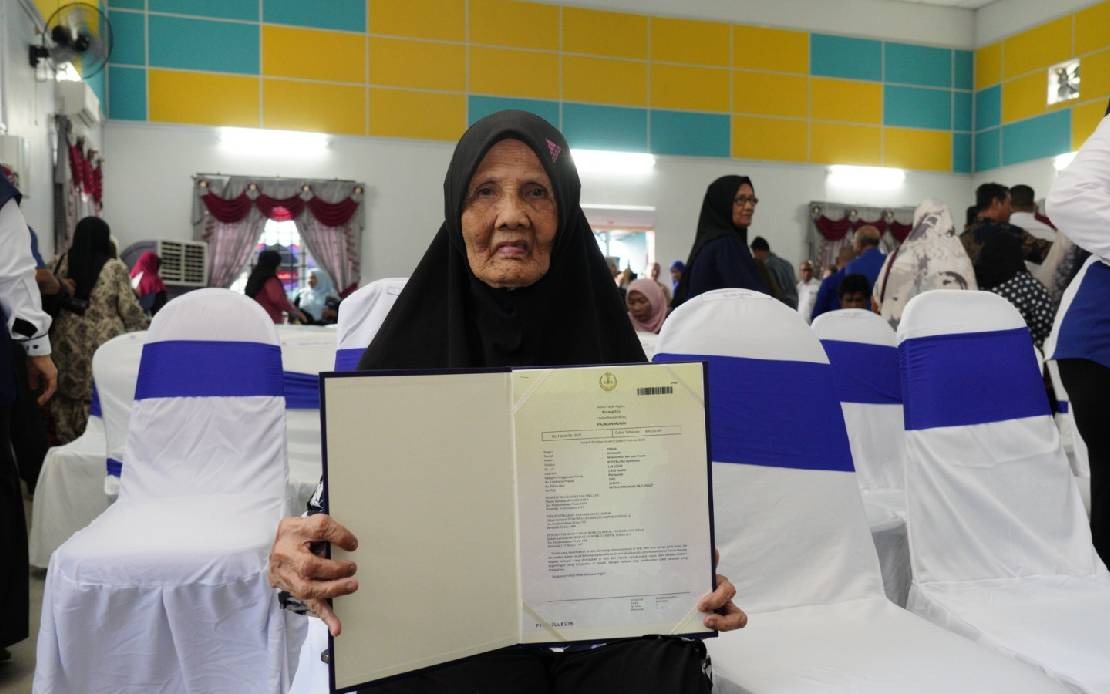
Forty-seven rural families in Perak have formally received land ownership grants through the FELCRA Berhad Seri Gala Area Village Rearrangement Programme, validating a development approach that government officials say has substantially improved living standards and economic prospects across Malaysia's countryside. The certificates were presented at a formal ceremony in Ipoh on July 14, accompanied by the inauguration of the Felcra Berhad Seri Gala PPSK Grand Hall, underscoring official commitment to formalising property rights and creating tangible economic assets for rural communities.
Mentri Besar Datuk Seri Saarani Mohamad characterised the FELCRA Consolidation and Rehabilitation Programme as one of the nation's most effective rural development strategies, distinguishing it from conventional land-clearing initiatives by its focus on community revival and sustainable livelihoods. According to the Perak leader, the programme transcends simple infrastructure construction, instead treating land ownership certification as a pathway to restored dignity and generational wealth creation for families historically excluded from property ownership and formal economic participation.
The significance of formalised land titles extends beyond symbolic recognition. By converting previously unutilised territory into documented assets backed by legal standing, the initiative generates collateral that families can leverage for agricultural loans, business expansion, or other economic ventures—a critical advantage in rural areas where informal land use has historically limited access to credit and investment capital. The psychological dimension of legitimate ownership also matters substantially; when rural participants possess certified titles, evidence suggests their willingness to invest long-term improvements increases, transforming temporary subsistence farming into capital-intensive agriculture.
The Seri Gala ceremony reflected broader scaling within FELCRA's operational footprint. According to Zainal Abidin Alias, the organisation's director of participant affairs, FELCRA now administers nearly 32,000 hectares across almost 20,000 participant families nationwide. This expansion positions Perak as the country's second-largest FELCRA operational zone, trailing only Pahang, indicating concentrated rural development effort across the peninsular interior where agricultural modernisation and land productivity remain critical development priorities.
Government rhetoric around rural transformation has expanded beyond infrastructure provision. During a recent World Rural Development Day celebration in Jengka, Pahang, Deputy Prime Minister and Rural Development Minister Datuk Seri Dr Ahmad Zahid Hamidi articulated a comprehensive framework encompassing human capital investment, entrepreneurship development, welfare enhancement, and community agency—language that Zainal Abidin explicitly referenced when discussing FELCRA's strategic direction. This rhetorical shift acknowledges that infrastructure alone cannot sustain rural competitiveness if residents lack education, market access, or decision-making influence.
The FELCRA model's effectiveness derives partly from its systematic approach to land consolidation and rehabilitation. Rather than distributing fragmented plots to individual participants, the programme coordinates large blocks, enabling mechanised agriculture, coordinated input procurement, and collective marketing arrangements that individual smallholders cannot achieve independently. This economies-of-scale approach has demonstrably increased agricultural productivity while reducing per-hectare development costs compared to conventional schemes.
For Malaysian policymakers, the Seri Gala milestone underscores the viability of formalising rural property rights at scale—a challenge that has constrained development across Southeast Asia. When government successfully issues documented titles, it simultaneously creates tax bases (through property registries), reduces land disputes through transparent ownership records, and facilitates rural credit markets. Malaysia's progress here contrasts with neighbouring countries where customary land tenure remains dominant, limiting rural families' ability to formalise transactions or access institutional credit.
The programme's reception in Perak also reflects broader political attention to rural constituencies, particularly as urban-rural disparities continue fuelling migration pressures and regional resentment. By visibly improving rural property ownership and economic opportunities, such initiatives address underlying grievances about unequal development distribution, though sceptics might question whether 47 families represent meaningful progress given the scale of rural populations requiring intervention across the nation.
The expansion of FELCRA operations and formalisation ceremonies carry implications for surrounding communities beyond direct participants. Successful agricultural transformation in designated FELCRA zones typically generates localised employment in processing, transportation, and services, attracting workers from neighbouring villages and gradually stimulating broader economic activity. This spillover effect can validate continued government investment while creating constituencies with direct interest in rural development continuation.
Moving forward, the programme's sustainability depends on factors beyond land certification—sustained agricultural commodity prices, reliable rural credit availability, adequate extension services, and market access infrastructure all influence whether families can convert land titles into stable income streams. Historical experience suggests that formalised ownership without complementary support services yields disappointing results, suggesting that FELCRA's effectiveness ultimately depends on institutional capacity across multiple government agencies.
The Seri Gala ceremony also coincides with broader Malaysian government emphasis on inclusive growth rhetoric, positioning rural development and property ownership expansion as essential to national equity objectives. As urbanisation accelerates and rural populations age, securing livelihoods for remaining agricultural communities through formalised property rights represents both practical economic policy and political commitment to regional stability and social cohesion.

