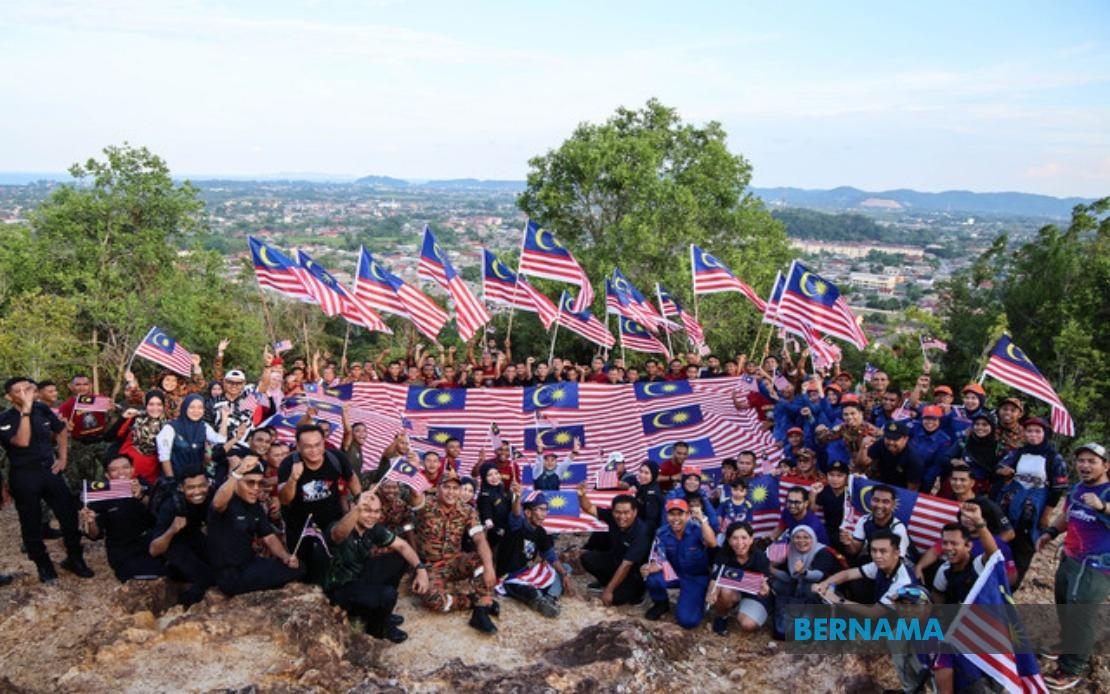
Over 300 participants gathered in Kuala Terengganu on August 21 for an inaugural summit hike that blended patriotic celebration with cross-agency cooperation during the National Month festivities. The event brought together uniformed personnel, government officials and media practitioners in a coordinated effort to express national pride through physical activity and collective participation. The organisers viewed the gathering as an opportunity to reinvigorate Malaysia's National Month observance in the state while fostering a sense of unity among those working in public service and information dissemination.
METRA president Mohd Zaid Mohd Noor explained that the inaugural event successfully assembled representatives from multiple government organisations and security agencies. Participants included personnel from the Terengganu Fire and Rescue Department (JBPM), Malaysian Armed Forces (ATM), Road Transport Department (JPJ), Malaysian Anti-Corruption Commission (MACC), Terengganu Ministry of Domestic Trade and Cost of Living (KPDN), Terengganu Royal Malaysian Customs Department (JKDM), and Malaysia Civil Defence Force (APM). This comprehensive cross-section of the state's institutional framework demonstrated the extent of coordination required to bring such a diverse assembly together on the hiking trail.
The core motivation for organising the event centred on elevating National Month celebrations beyond traditional ceremonies and festivities. Rather than limiting observance to office-based activities or scheduled public events, organisers recognised an opportunity to channel patriotic sentiment into a physically engaging experience that could resonate with participants across different agencies and backgrounds. By selecting a summit hike as the vehicle for this celebration, the event combined outdoor recreation with institutional pride, creating a platform where individual commitment to Malaysia could be expressed through shared effort and collective achievement.
Mohd Zaid emphasised the particular responsibility that media practitioners carry in shaping public discourse around national values. He articulated that as representatives of news organisations and information platforms, media personnel possess unique capacity to disseminate patriotic messages across diverse communication channels and reach audiences throughout Malaysian society. This understanding of the media's role in reinforcing national consciousness influenced METRA's decision to initiate the event as a demonstration of how the press could take concrete action to promote patriotism rather than merely reporting on others' patriotic initiatives.
Beyond symbolic expression of love for country, the summit hike served multiple practical objectives for the participating agencies. The event functioned as a mechanism to strengthen working relationships between different government departments and security forces that often operate in parallel but may have limited formal occasions for direct collaboration. By bringing personnel from fire and rescue, customs, defence, transport and anti-corruption agencies together in an informal yet structured setting, the organisers created conditions for informal networking that could potentially enhance inter-agency coordination on future initiatives.
The incorporation of health promotion into the patriotic framework represented a deliberate effort to link individual wellbeing with national purpose. Rather than framing the summit hike as merely an exercise activity or purely as a nationalist gesture, organisers presented it as an undertaking that simultaneously advanced personal fitness and collective pride. This synthesis acknowledged contemporary awareness of lifestyle-related health concerns in Malaysia while positioning physical activity as something inherently connected to national service and civic responsibility.
For media practitioners specifically, the event carried additional significance in their professional context. By participating alongside security and government personnel rather than simply covering such events, journalists and editors demonstrated commitment to the causes they reported on. This active engagement contrasted with the traditional journalistic stance of observer and chronicler, instead positioning the media as stakeholder and participant in the national project. Such involvement could influence how media professionals subsequently frame stories related to government initiatives and inter-agency cooperation.
The selection of a summit as the physical objective for the gathering imbued the event with symbolic resonance beyond the practical activity of hiking. Mountains have long carried cultural and nationalist significance in Malaysian society, and reaching a peak together suggested collective aspiration toward national goals. The planned unfurling of a giant flag at the summit would create a visual focal point that reinforced the patriotic message and provided a memorable image capable of circulating through media channels and social platforms.
Terengganu, as the host state, benefited from hosting an event that garnered participation from federal and state-level agencies. The concentration of government attention on the state during National Month observance could enhance Terengganu's profile and demonstrate active engagement with national celebrations. For state-level agencies like the Terengganu Fire and Rescue Department and state ministry representatives, the event provided visibility and opportunity to demonstrate their commitment to broader national initiatives beyond their regular operational mandates.
The timing of the event during August, when National Month observance intensifies, positioned the summit hike within a broader calendar of national celebrations and commemorative activities. Rather than constituting an isolated initiative, the event formed part of a larger ecosystem of patriotic expressions occurring simultaneously across Malaysia. This integration into the existing national calendar ensured relevance and resonance with public consciousness already attuned to nationalist themes and messaging.
Looking forward, the success of this inaugural event establishes a potential template for similar initiatives in other Malaysian states or involving different agency combinations. The demonstrated feasibility of bringing 300 diverse participants together for a patriotic undertaking suggests that such gatherings could become regular features of National Month celebrations. Should the model be replicated, it could gradually shift how Malaysia observes its national celebrations, moving incrementally toward greater participation from institutional actors and less reliance on passive consumption of government-organised festivities.

