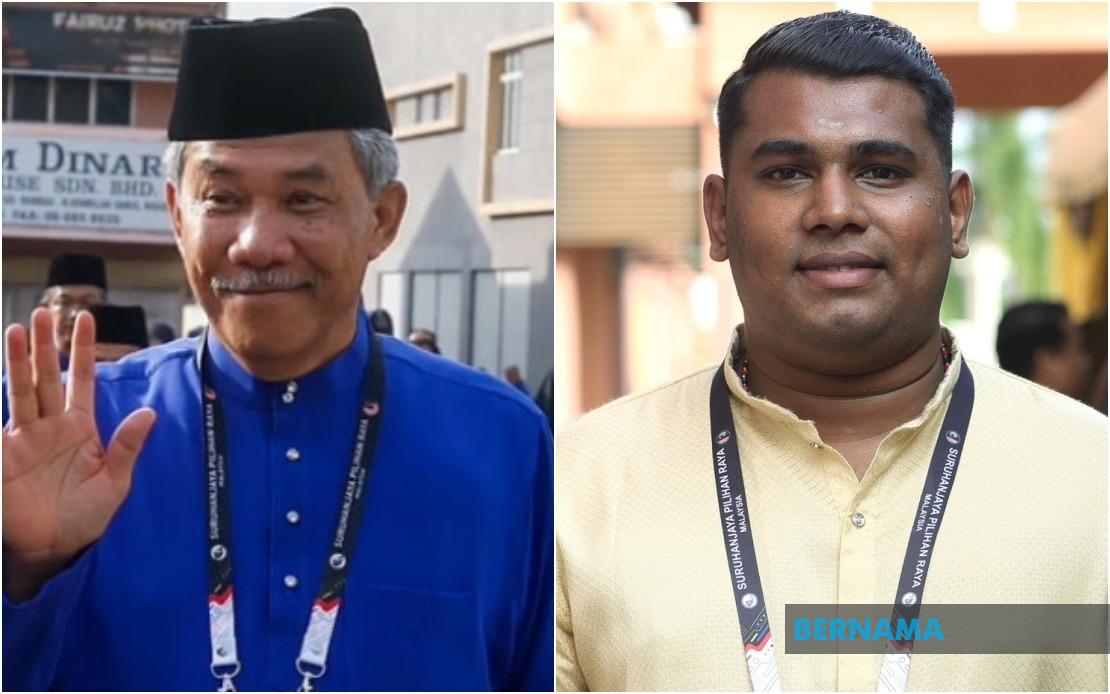
The 16th Negeri Sembilan state election has introduced M. Leevineshwaraan as a fresh political entrant, with the 23-year-old Bersatu representative becoming the youngest candidate vying for a seat in this electoral contest. Standing for the Sri Tanjung state seat, Leevineshwaraan will navigate a crowded five-candidate race as he attempts to secure voter support and establish himself as a viable political force in the constituency.
The young candidate faces a formidable obstacle in his bid to unseat the sitting member, Datuk Dr G. Rajasekaran of Pakatan Harapan, who retained his position in the previous election with a commanding majority of 3,996 votes. This substantial winning margin suggests PH has built considerable ground support in Sri Tanjung, presenting Leevineshwaraan with a steep challenge despite his party's recent electoral momentum in Negeri Sembilan. The generational contrast between the youthful challenger and the entrenched incumbent underscores a broader pattern of political renewal occurring across Malaysian state contests.
Leevineshwaraan's candidacy marks a notable shift from previous electoral cycles. In the 15th state election held in 2023, Muhammad Syakir Fitri Sadri held the distinction of youngest candidate when he contested the Paroi seat as an independent at age 25. The reduction in the minimum age by two years reflects either changing party strategies towards youth engagement or a genuine shift in the demographics of political participation within the state.
Within the Port Dickson parliamentary constituency, Sri Tanjung represents one of five state seats competing for the ballots of 19,590 registered voters. This electoral segment's composition—which includes constituencies of varying socioeconomic profiles and demographic characteristics—will significantly influence whether Leevineshwaraan can overcome the incumbent's advantage or whether traditional voting patterns prevail.
At the opposing end of the age spectrum, two septuagenarian candidates have emerged as the election's senior-most participants. Barisan Nasional deputy chairman Datuk Seri Mohamad Hasan and Pakatan Harapan's Abd Latif A Tambi both reached the age of 70, embodying the continued prominence of experienced political figures in Malaysian electoral competition. Mohamad, defending his Rantau seat, and Abd Latif, contesting in Gemencheh, will each face direct duels against single opponents rather than navigating multi-candidate contests.
These individual races carry distinct geographic significance. The Rantau state seat, situated within the Rembau parliamentary constituency, encompasses 34,831 eligible voters and represents a more densely populated electoral zone. By contrast, Gemencheh, located in the Tampin parliamentary constituency, contains 24,916 eligible voters, reflecting a smaller but potentially highly competitive constituency. Both contests pit established political figures with lengthy track records against potentially less-experienced challengers seeking to disrupt entrenched power structures.
The previous state election witnessed an even older candidate when Bujang Abu, then 72, contested as an independent. However, administrative hurdles have prevented Bujang's participation this time, as the Elections Commission declined his candidacy following his inability to furnish required documentation. This procedural barrier illustrates how technical compliance requirements can inadvertently reshape the candidate pool regardless of individual eligibility or voter preference.
Women's participation in the electoral process has experienced incremental growth, though progress remains modest. Nine of the 103 total candidates are female, representing approximately 8.7 percent of the candidate pool. Pakatan Harapan has demonstrated the strongest commitment to female representation by fielding four women candidates, while other coalitions and independent candidates account for the remaining five. This configuration represents a marginal improvement over the previous election, when women comprised eight of 83 candidates, suggesting that structural and cultural barriers to female political participation persist within the state's electoral ecosystem.
The Electoral Commission has confirmed the logistical schedule for the electoral process. Early voting will occur on July 28, providing advance opportunities for voters with scheduling constraints or mobility challenges. The principal polling day is scheduled for August 1, giving the public approximately two weeks from announcement to final voting to assess candidates and make their electoral decisions. This timeline compresses the traditional campaign period, potentially advantaging candidates with existing name recognition or organisational infrastructure already in place.
The election's demographic composition reveals fundamental tensions within Malaysian democracy. The simultaneous prominence of a 23-year-old seeking to challenge entrenched power and 70-year-old figures defending their positions suggests generational fractures within the political landscape. Whether Leevineshwaraan's youth and fresh perspective can overcome the incumbent's established network, or whether experience and incumbency advantage prove determinative, will provide crucial signals about the direction of political renewal in Negeri Sembilan and broader patterns of electoral change across Malaysia.
These contests carry implications extending beyond Negeri Sembilan's borders. The state election serves as an important bellwether for federal-level political dynamics, revealing whether Bersatu can consolidate its position in the state or whether Pakatan Harapan will strengthen its grip on key constituencies. Similarly, the performance of Barisan Nasional in defending traditional strongholds like Rantau will test whether the coalition has successfully stabilised its political base or whether fractures continue to undermine its electoral competitiveness.

