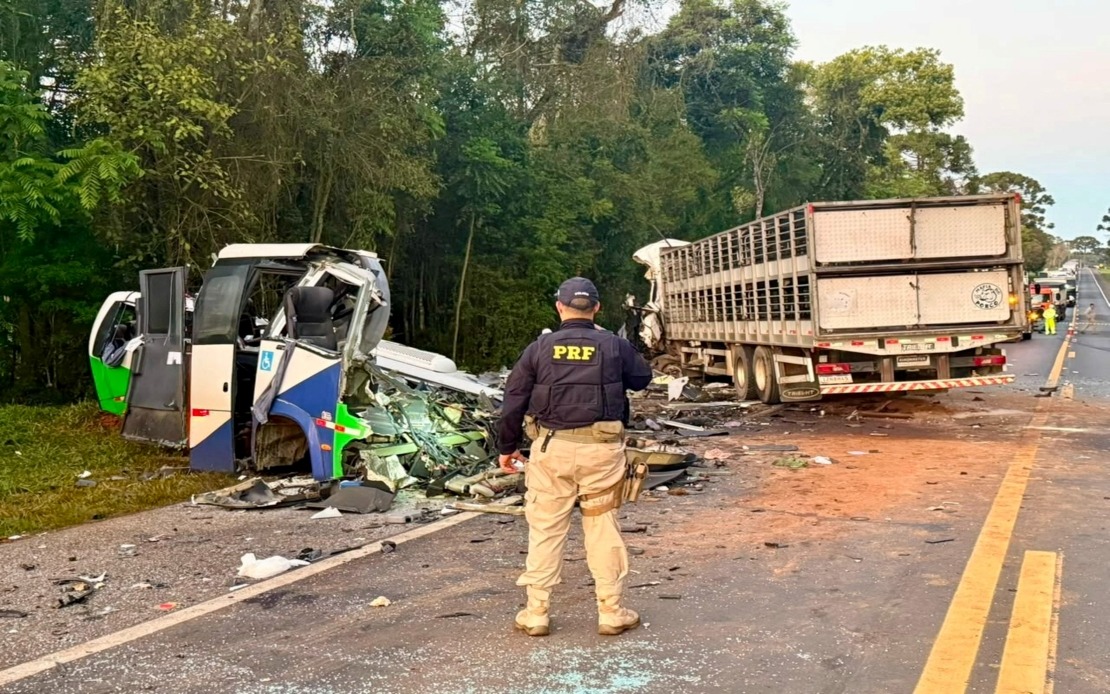
A catastrophic collision between a minibus and a heavy lorry on a national highway in southern Brazil has claimed 23 lives, marking one of the deadliest traffic accidents in the region in recent times. The crash occurred early Wednesday near Ipiranga in the Campos Gerais region of Paraná state, leaving authorities and families grappling with one of the country's most severe road disasters.
According to preliminary investigations, the lorry appears to have drifted into the oncoming traffic lane before colliding head-on with the minibus, which was operated as part of the state's health service network. The impact of the collision was devastating, with rescue teams finding the vehicles severely damaged at the accident site. The exact sequence of events leading to the crash remains under active investigation by local authorities, who are examining factors such as weather conditions, vehicle maintenance records, and driver fatigue.
The passengers on the minibus were patients being transported to medical facilities in the greater Curitiba metropolitan area, roughly 200 kilometres away from the accident site. The journey typically takes several hours along the national highway system that connects various regions throughout southern Brazil. Among the 23 fatalities were 13 women, eight men, and two children, with the lorry driver also among those killed. An additional five people sustained injuries and were rushed to nearby hospitals for treatment, according to the Paraná State Secretariat for Public Security.
For Malaysian readers, this tragedy underscores concerns that resonate across Southeast Asia regarding road safety infrastructure and vehicle transportation standards. The Campos Gerais region's highway system, consisting of two-lane roads in many sections, shares similarities with congested arterial routes throughout Malaysia and the broader region where heavy commercial vehicles regularly share space with vulnerable passengers and public transport. The mixing of large goods vehicles with medical transport on narrow highways presents inherent risks that developing nations across Asia continue to grapple with.
The accident site remained cordoned off for several hours as emergency responders worked to retrieve victims and assess the crash dynamics. Traffic flow along this critical national route was severely disrupted, highlighting the dependency of southern Brazil's regions on this single highway corridor. The closure impacted commerce, patient transfers, and routine travel across multiple state boundaries, demonstrating how a single catastrophic event can ripple through regional connectivity.
The Paraná state government responded by declaring three days of official mourning, a measure that acknowledges both the scale of the tragedy and its profound impact on local communities. This formal recognition comes as investigators continue piecing together what caused the lorry to veer across the centre line. Questions loom regarding whether inadequate road signage, poor road maintenance, driver error, vehicle failure, or some combination of factors contributed to the disaster.
Brazil's highway infrastructure, despite being extensive, has faced recurring criticism for safety shortcomings. Many national routes traverse challenging terrain and weather patterns, with maintenance standards varying significantly by region and funding availability. The two-lane configuration in many sections of this particular highway raises questions about whether modern traffic volumes and the size of contemporary commercial vehicles exceed the design capacity of roads built decades earlier.
For families affected by this tragedy, the loss is immeasurable. The fact that the minibus was transporting patients—individuals already in vulnerable health conditions—adds another layer of poignancy to the disaster. These passengers were likely heading toward treatment that might have improved their conditions, making the circumstances particularly heartbreaking for medical institutions and healthcare workers involved.
The incident will almost certainly prompt reviews of safety protocols governing medical transport operations in Paraná and potentially across Brazil. Questions will emerge about vehicle inspection standards, driver training requirements, and whether additional safety measures such as improved road markings, speed restrictions, or dedicated lanes for heavy vehicles might reduce future collision risks on this critical corridor.
For transport authorities across Southeast Asia, including Malaysia, the Paraná collision serves as a stark reminder of the consequences when infrastructure design lags behind modern vehicle specifications and traffic volumes. Malaysia's highways, similarly serving high volumes of commercial transport alongside public and private vehicles, require continuous investment in safety upgrades, driver education, and enforcement of traffic regulations. The mixing of slow-moving buses with rapid long-haul lorries demands respect for traffic disciplines that, when breached, can produce exactly the kind of catastrophic outcomes witnessed in Brazil.

