Two hundred motorcyclists in the Renggam area of Kluang received RM5 fuel vouchers on June 25 as part of a targeted assistance initiative, with government officials framing the distribution as evidence of broader support for working-class communities across Malaysia. The programme, organised by the National Security Council (MKN), aimed to ease the immediate financial pressures faced by motorcycle users who often depend on their vehicles for daily livelihoods, whether as delivery personnel, taxi drivers, or commuters in areas where public transport options remain limited.
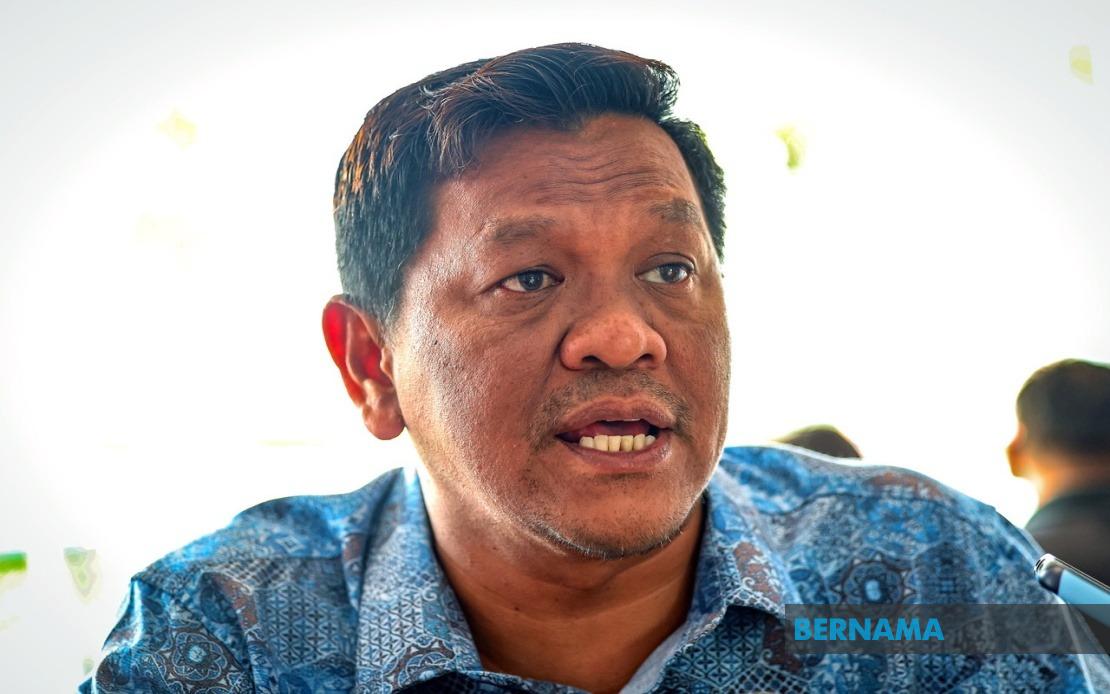
Abdullah Izhar Mohamed Yusof, political secretary to the Communications Minister, outlined the rationale behind the initiative during remarks to media at the event in Kluang. He characterised the fuel voucher scheme as reflecting genuine government concern for grassroots welfare while simultaneously serving to reinforce national unity and cohesion. Beyond the material assistance itself, officials positioned the programme as emblematic of a broader commitment to regular, recurring engagement with communities outside urban centres, where government initiatives sometimes struggle to achieve visibility or accessibility.
The distribution event formed part of a wider platform known as Jiwa@Komuniti MADANI Sembang Santai, which carries thematic variations—in this case, a World Cup Edition component—to maintain engagement across different seasons and national moments. This naming convention reflects efforts by the government communications apparatus to create branded platforms that can be deployed repeatedly across different constituencies and demographics, lending consistency to outreach efforts while allowing for local flavour and contemporary relevance.
Beyond the voucher handout itself, the programme incorporated informational and dialogue components designed to address the government's stated priority of ensuring accurate policy communication reaches grassroots populations. Representatives from the National Security Council, the Information Department (JaPen), and the Department of Community Communications (J-KOM) participated in briefing sessions and community dialogue, creating space for residents to raise local concerns while receiving explanations of government policies from official sources. This multipronged approach reflects recognition that material assistance alone, while immediately valuable, carries limited strategic or political benefit without accompanying narrative framing.
According to Abdullah Izhar, the underlying purpose of such community outreach is to democratise access to information about government programmes and policy directions, while simultaneously creating feedback channels through which local communities can communicate grievances and suggestions back to decision-makers. He described such engagement as essential infrastructure for strengthening state-society relations, emphasising that effective communication and transparent information dissemination serve as prerequisites for public understanding and support of government initiatives. This framing positions information access as a public good comparable to material assistance.
The political secretary committed to expanding such programmes nationwide, signalling intentions to replicate the Renggam model across different regions and demographic segments. He indicated that the government views sustained, repeated engagement with communities as necessary to ensure that assistance benefits reach diverse population segments and that policy understanding penetrates beyond urban centres and educated audiences. This expansionist rhetoric, however, leaves unspecified the actual budget allocations, timeline, and mechanisms through which such proliferation would occur.
Among voucher recipients, responses reflected appreciation tempered by modest expectations. M. Raja, a 56-year-old resident of Taman Sri Jaya and father of five, expressed gratitude while hoping future iterations might become monthly rather than one-off initiatives. His comment implicitly highlights the distinction between symbolic gestures and sustained material support, suggesting that motorcycle-dependent workers view the RM5 voucher as meaningful but insufficient as a standalone measure without regularisation and predictability.
Hee Eeck Kwe, a 66-year-old from Kampung Baru, emphasised appreciation that rural communities remained included within government assistance frameworks. His remark suggests that residents of less-developed areas sometimes experience or perceive exclusion from government programmes concentrated in urban constituencies, making explicit inclusion—even in modest schemes—carry psychological and political significance beyond the material value. This perception of rural marginalisation has long characterised Malaysian political discourse and arguably influences electoral behaviour in peripheral areas.
The initiative, while locally bounded to Renggam and numerically limited to 200 beneficiaries, nonetheless reflects broader patterns in Malaysian governance whereby government agencies deploy grassroots engagement platforms to maintain communication channels and demonstrate responsiveness to working-class constituencies. The combination of material assistance, information dissemination, and dialogue mechanisms creates a multifaceted engagement model that addresses material needs, information access, and voice simultaneously, reflecting contemporary understanding that legitimacy requires attention to multiple dimensions of citizen experience beyond policy outputs alone.

