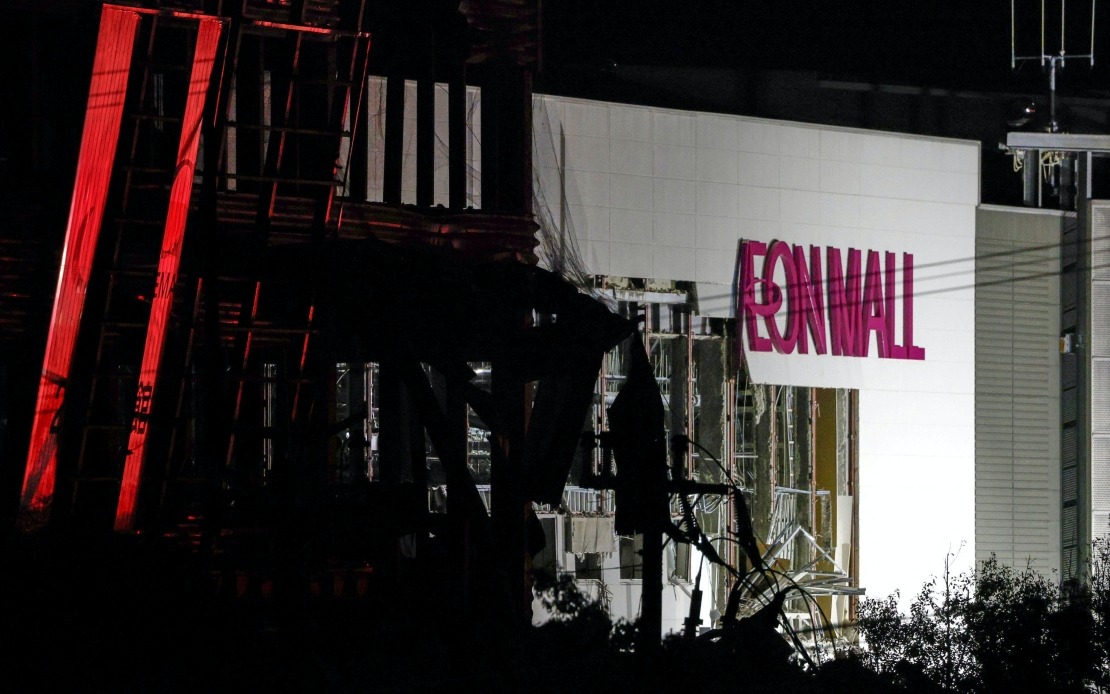
A catastrophic explosion at Aeon Mall Kumamoto has plunged rescue operations into high alert, with authorities confirming that between 20 and 30 employees of the major shopping complex remain unreachable following the incident in Kashima Town. The blast occurred at approximately 6 pm local time on Tuesday, mere hours after a powerful magnitude-7.1 earthquake shook Kumamoto Prefecture at 4.27 pm, triggering a cascade of emergencies that has overwhelmed local response capabilities.
The National Police Agency has intensified efforts to establish contact with missing staff members, though communications difficulties following the explosion have complicated the search process. According to public broadcaster NHK, investigators remain uncertain whether all unaccounted individuals are trapped within the structurally compromised building or have been dispersed in the chaos following the blast. Police and firefighting teams have prioritized systematic searches of the damaged facility, working methodically through sections of the complex to locate and extract anyone still trapped within.
While the majority of retail customers had been safely moved to outdoor areas before the explosion occurred—a precaution likely informed by the earlier seismic activity—the status of missing individuals remains unclear. Authorities have not definitively stated whether the unaccounted employees constitute the entirety of those missing from the incident, or if customers are also among those whose whereabouts cannot be confirmed. This ambiguity reflects the confusion typical in the immediate aftermath of major disasters, when communication networks are overwhelmed and personnel records become difficult to access.
The scale of the disaster extends beyond the shopping mall itself. The National Police Agency has separately received reports of fewer than ten additional people missing in other locations throughout Kumamoto Prefecture as a direct consequence of the earthquake. This distributed pattern of casualties and disappearances suggests the seismic event caused widespread structural damage across the region, not merely concentrated at the mall site.
Government officials have begun preparing for a grim accounting of the human cost. According to Kumamoto Prefectural Police, the explosion at the shopping mall is believed to have resulted in numerous deaths, with police representatives cautioning that establishing a precise fatality count will require considerable time. Broadcast media outlet TBS reported that multiple deaths were feared, reflecting the severity of the blast and the difficulty rescue teams face in accessing all areas of the damaged structure.
The timing of the explosion—occurring during evening shopping hours when the mall would typically host significant foot traffic—compounds the potential for mass casualties. The fact that most customers had been evacuated following earlier earthquake warnings may have substantially reduced the death toll among shoppers, though the concentration of employees still on site when the blast occurred raises serious concerns about workplace safety protocols and emergency evacuation procedures.
For Malaysia and Southeast Asia, this incident underscores the vulnerability of large commercial complexes in seismically active regions and the cascading risks when a single disaster triggers secondary catastrophes. Japan's generally robust building codes and emergency response infrastructure provide some mitigation, yet the Kumamoto incident demonstrates that even advanced nations face significant challenges when natural disasters and industrial accidents combine. The region's geography places it in a high-risk earthquake zone, a factor that developers and operators of major facilities must continuously factor into their operational and safety planning.
The broader implications for regional disaster preparedness are substantial. Shopping malls and major commercial centers across Southeast Asia, particularly in countries like the Philippines and Indonesia that face comparable seismic risks, should critically examine their own emergency response frameworks in light of this incident. The coordination between initial earthquake evacuation procedures and secondary hazard management—particularly regarding chemical or structural failures—represents a crucial gap that requires systematic attention.
Authorities in Kumamoto Prefecture are now engaged in a race against time to locate survivors and establish the complete extent of casualties. The involvement of both police and firefighting services, combined with reports suggesting extensive structural damage, indicates that rescue operations will likely prove protracted and complex. The challenge of confirming the status of missing individuals in an environment where communication infrastructure may be compromised, and where employees may have fled to various locations seeking safety, represents a significant logistical hurdle for recovery efforts.
The incident also highlights broader questions about the adequacy of emergency communication systems in modern commercial facilities. When dozens of employees become simultaneously unreachable, organizational systems for rapid staff accountability prove insufficient. This gap between expected and actual response capabilities will likely prompt reviews of emergency protocols not only at Aeon facilities but across the retail and hospitality sectors regionally.

