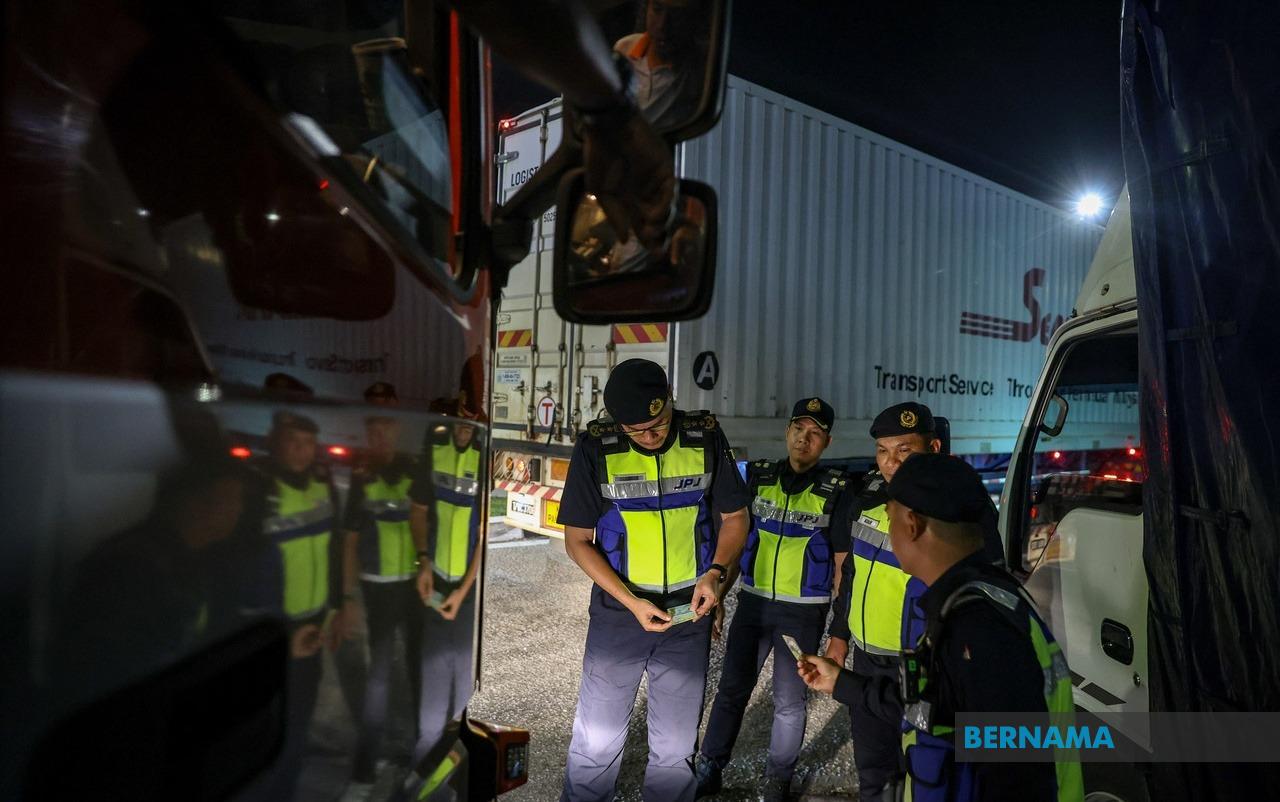
A coordinated drug and traffic enforcement campaign spanning ten days in Johor has yielded significant results, with authorities identifying 16 commercial and public transport drivers who tested positive for narcotics. The Integrated Drug Operation, conducted jointly by the Johor Road Transport Department (JPJ), Royal Malaysia Police (PDRM), National Anti-Drug Agency (NADA) and PLUS Malaysia Berhad, represents an intensive effort to curb substance abuse among professional drivers whose work directly impacts public safety on Malaysian highways.
According to Johor JPJ director Zulkarnain Yasin, the operation running from July 1 through July 10 processed 164 drivers through urine screening tests at multiple enforcement points. Among those screened, ten tested positive for methamphetamine, three for crystal methamphetamine (commonly known as "ice"), two for cannabis, and one for morphine. The diversity of substances detected suggests a persistent challenge across different user demographics within the commercial transport sector, ranging from stimulants used to combat fatigue on long drives to opioids and other recreational drugs.
The enforcement sites were strategically positioned across Johor's transport infrastructure, including a highway rest and service area, facilities adjacent to the JPJ Enforcement Station, and the state's main bus terminal. This geographical spread indicates an attempt to capture violations across multiple transportation hubs rather than concentrating efforts in a single location, thereby providing a more comprehensive picture of the problem affecting different segments of the commercial driving community.
For Malaysia, where road safety remains a critical public health concern, the presence of drug-impaired professional drivers carries particularly grave implications. These operators control vehicles carrying goods and passengers, meaning any impairment directly threatens not only themselves but numerous other road users. The detection of stimulants like methamphetamine and ice is especially concerning, as drivers may use these substances to maintain alertness during extended shifts, creating a false sense of control while actually impairing judgment and reaction time.
Beyond the drug-specific findings, the operation uncovered a staggering catalogue of regulatory violations that paint a troubling picture of compliance within Johor's commercial transport sector. Officials detected 707 instances of drivers operating without valid licenses, 626 vehicles carrying expired road tax permits, and 574 lacking current insurance coverage. These figures suggest systemic weaknesses in enforcement mechanisms or perhaps widespread disregard for regulatory requirements among operators who may calculate the risk of detection as acceptable compared to compliance costs.
Vehicle-specific violations were equally extensive, with 128 goods vehicles operating without proper Goods Vehicle Licenses, 113 cases of overloaded cargo, 30 expired driving licenses, and 14 expired goods vehicle licenses. The prevalence of overloading is particularly significant for safety, as it directly compromises vehicle stability, braking performance, and tire integrity, multiplying accident risk across all road conditions. Technical violations numbered heavily as well, encompassing 39 unauthorized vehicle modifications, 30 instances of non-compliant tires, and 928 other technical breaches, alongside 51 expired PUSPAKOM inspection discs.
JPJ director Zulkarnain emphasized that the department will pursue formal sanctions against drivers who tested positive, utilizing Section 56(4) of the Road Transport Act 1987 to suspend or revoke vocational licenses. This enforcement mechanism serves as both a deterrent and a protective measure, attempting to remove impaired drivers from professional service. However, the sheer volume of other violations detected raises questions about whether license suspension alone addresses the root causes driving non-compliance across the transport sector.
The integrated nature of this operation underscores recognition among Malaysian authorities that road safety requires multi-agency coordination. The participation of police, anti-drug specialists, and highway operators indicates acknowledgment that trafficking in controlled substances and traffic violations often occur simultaneously and stem from overlapping risk factors. This approach contrasts with siloed enforcement that might address drug use or traffic violations independently without recognizing their interconnection.
For Southeast Asian maritime and logistics hubs like Malaysia, maintaining driver fitness for duty carries economic and reputational dimensions beyond immediate safety. International trade partners increasingly scrutinize supply chain safety and regulatory compliance, particularly for cross-border operations. A commercial transport sector plagued by drug use and regulatory non-compliance creates liability concerns for companies operating within Malaysia and damages the country's competitive position in regional logistics markets.
The scale of violations discovered raises questions about enforcement frequency and resource allocation. Detecting thousands of regulatory breaches during a single ten-day operation suggests that between formal campaigns, many drivers operate in violation of law. This pattern indicates either insufficient routine patrols or that operators perceive the probability of detection during normal operations as sufficiently low to justify non-compliance. Sustainable improvement likely requires not merely periodic intensive operations but elevated baseline enforcement capacity.
The operation also highlights the persistent challenge of substance abuse within occupational groups traditionally at higher risk. Commercial drivers often work irregular hours, face time pressures, and operate in environments where fatigue becomes a genuine occupational hazard. Understanding whether substance use represents a coping mechanism for unsustainable working conditions or reflects broader personal addiction issues could inform whether solutions should focus on enforcement, treatment access, or workplace regulation reform.
As Malaysia continues developing its road safety framework and enforcement capacity, findings from operations like this in Johor provide empirical evidence of where problems concentrate and which regulatory mechanisms require strengthening. The identification of 16 drug-positive drivers and thousands of compliance violations during a single campaign suggests that expanded, sustained enforcement efforts could yield proportionally larger impact on professional driver fitness and overall highway safety across the state and the broader region.

