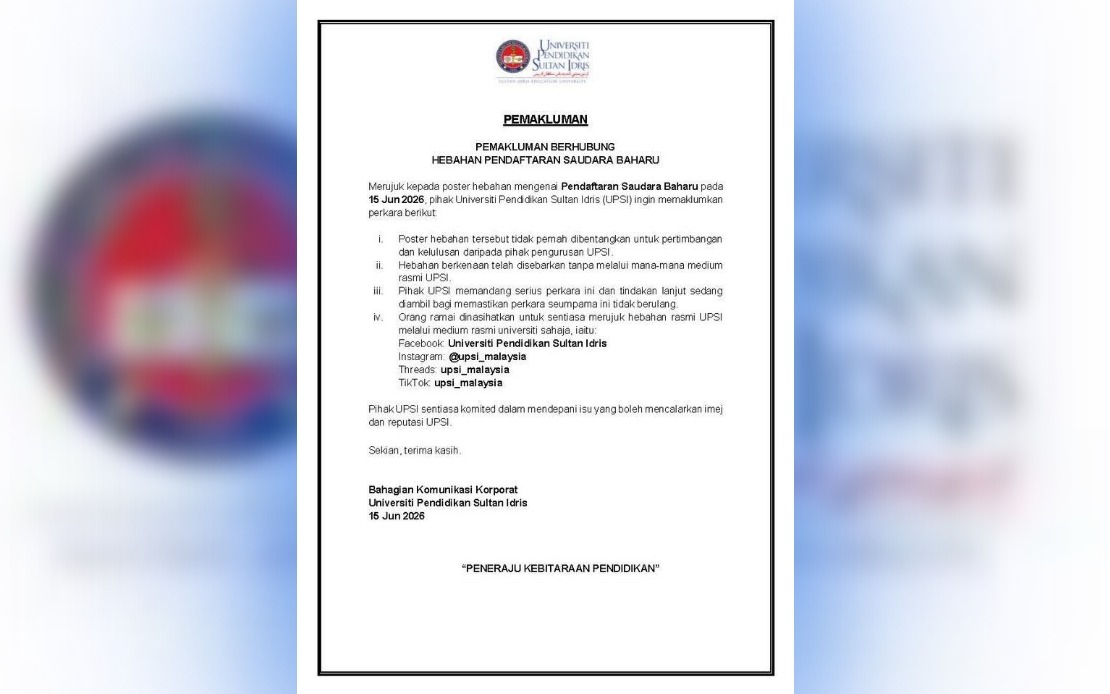
Universiti Pendidikan Sultan Idris (UPSI) has moved to clarify its position after an online poster concerning the registration of 'saudara baharu' or newly converted Muslims circulated widely across social media platforms in mid-June. The institution firmly rejected any institutional connection to the material, emphasizing that such promotional content neither originated from nor received authorization through university leadership before being shared publicly.
The contested poster, dated June 15, appears to have emerged from unvetted sources unaffiliated with UPSI's formal communication apparatus. In a statement issued through the university's verified social media accounts, administrators categorically denied that the campaign materials underwent any internal review process or received official sanction from the institution's decision-making bodies. The university underscored that the poster's circulation relied entirely on informal channels rather than established university communication mechanisms designed to disseminate authenticated institutional messages.
This incident highlights growing concerns about misinformation and unofficial materials being attributed to educational institutions without proper verification. UPSI's swift response reflects institutional anxieties about reputational risk in an environment where social media content spreads rapidly and often outpaces official clarifications. The university's statement warned members of the public to exercise caution and cross-reference any announcements against materials distributed exclusively through verified university channels, including official websites and authenticated social media profiles.
The controversy underscores broader challenges facing Malaysian universities in maintaining institutional credibility amidst the proliferation of user-generated and unattributed content. When unofficial materials become associated with reputable organizations, the resulting confusion can damage institutional standing and mislead audiences about actual university policies or initiatives. UPSI's transparent denial represents a standard institutional response, yet the incident raises questions about how universities can more effectively control their messaging ecosystems and prevent unauthorized appropriation of their reputational capital.
Beyond the immediate dispute over attribution, the poster's viral circulation suggests significant public interest in registration and institutional pathways related to religious conversion. The rapid social media adoption indicates that communities are actively seeking reliable information about formal procedures and organizational frameworks, yet sources of verified guidance remain limited. This gap between public demand for authoritative information and the supply of trustworthy institutional guidance creates opportunities for misinformation to flourish, particularly when material becomes associated with established organizations perceived as credible.
UPSI's formal commitment to addressing the matter and preventing similar occurrences signals the university's determination to safeguard its institutional brand. The statement explicitly noted that further investigative action would be undertaken to trace the poster's origins and identify mechanisms that might have facilitated its unauthorized circulation. Such follow-up efforts typically involve reviewing internal communication security, assessing whether institutional assets were misappropriated, and strengthening protocols for distinguishing authorized from unofficial materials.
For Malaysian academic institutions broadly, this incident serves as a cautionary example of vulnerabilities in institutional communication governance. Universities must navigate the tension between maintaining open dialogue on social media and preventing their platforms from becoming venues for unauthorized messaging. UPSI's response suggests an institutional awareness that failing to address such matters promptly could establish precedents enabling further misuse of institutional identity and credibility. By publicly rejecting the poster, the university has also signaled to community members and the general public that institutional integrity remains a priority requiring vigilant protection.
The distinction between official and unofficial institutional communications has become increasingly important as social media platforms democratize access to audience attention. Students, staff, and members of the public may struggle to distinguish between verified institutional communications and content merely claiming institutional affiliation. UPSI's emphasis on directing audiences toward verified official channels represents an effort to restore clarity and ensure that information attributed to the institution actually reflects institutional positions and decisions.
This episode also reflects evolving sensitivities around religious matters in Malaysian public discourse. Content touching on Islamic conversion and institutional involvement in religious registration can generate significant public attention and scrutiny. UPSI's rapid institutional response demonstrates awareness that remaining associated with unvetted religious messaging carries risks, particularly given expectations that universities maintain institutional neutrality while serving diverse student and faculty populations. The university's defensive posture ultimately aims to reassure all stakeholders that institutional communications remain trustworthy, properly vetted, and aligned with established university values and governance structures.