%22%2F%3E%3C%2Fpattern%3E%3C%2Fdefs%3E%3Crect%20width%3D%22100%25%22%20height%3D%22100%25%22%20fill%3D%22url(%23ph142xxg)%22%2F%3E%3Crect%20width%3D%22100%25%22%20height%3D%22100%25%22%20fill%3D%22url(%23ph142xxp)%22%2F%3E%3Ctext%20x%3D%2250%25%22%20y%3D%2250%25%22%20text-anchor%3D%22middle%22%20dominant-baseline%3D%22central%22%20fill%3D%22rgba(255%2C255%2C255%2C0.95)%22%20font-family%3D%22Georgia%2C%20'Times%20New%20Roman'%2C%20serif%22%20font-weight%3D%22700%22%20font-size%3D%22272%22%20letter-spacing%3D%22-0.02em%22%3EUnity%3C%2Ftext%3E%3C%2Fsvg%3E)
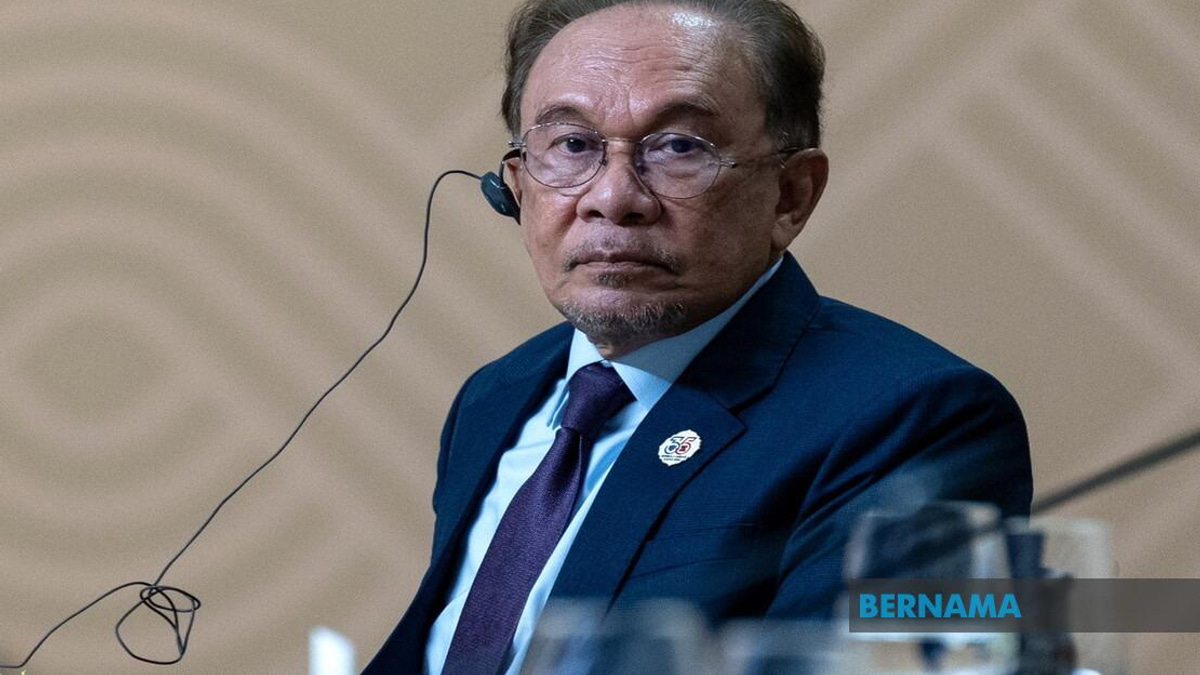
Prime Minister Datuk Seri Anwar Ibrahim has drawn a direct parallel between the Prophet Muhammad SAW's Hijrah to Madinah and Malaysia's contemporary reform agenda, framing both as endeavours that cannot succeed through isolated action but only through coordinated collective effort underpinned by shared purpose. Speaking on the occasion of Maal Hijrah 1448H, Anwar underscored that the foundational Islamic journey—which marks the beginning of the Islamic calendar—offers profound lessons applicable to modern governance and societal transformation seeking to advance justice, truth, prosperity and security.
The Prime Minister's reflection on Hijrah history emphasises a multi-stakeholder approach to nation-building that extends beyond conventional political hierarchies. He highlighted how the Hijrah involved diverse participants contributing their distinctive strengths: young leaders such as Saidina Ali Abi Talib drove the movement forward through courage and commitment, while women including Asma Abu Bakar played instrumental organisational roles, and numerous companions collectively shouldered the burden of migration. This historical reconstruction underscores a model of inclusive participation that Anwar appears to advocate for Malaysia's reform trajectory, where youth dynamism, women's contributions, and broad-based community engagement become essential components rather than supplementary elements.
The Prime Minister's assertion that translating Hijrah's spirit into contemporary reality presents a formidable challenge acknowledges the friction inherent in bridging historical religious ideals with pluralistic, multi-ethnic governance. Malaysia's demographic complexity—with its significant Muslim and non-Muslim populations—requires navigating between spiritual inspiration and secular constitutional frameworks. Anwar's emphasis on consensus-building across "diverse community networks" suggests a recognition that reform cannot be imposed unilaterally but must emerge through dialogue and agreement spanning different religious, ethnic and social constituencies. This framing positions reform as an exercise in democratic deliberation rather than top-down implementation.
Critically, Anwar's statement dismisses the sufficiency of rhetorical appeals and isolated political sloganeering as drivers of genuine transformation. His insistence that success demands patience and collective endeavour rather than dramatic pronouncements or individual heroics reflects a somewhat cautious approach to the pace of reform, potentially tempering expectations among constituencies eager for swift and visible change. The emphasis on incremental, consensus-based progress may frustrate those seeking more aggressive restructuring of institutional or economic arrangements. However, it also suggests a strategic preference for durable reforms built on broader societal buy-in rather than reforms vulnerable to reversal through political contestation.
Anwar's framing establishes that reform initiatives cannot be claimed as the achievement of any single political party, fundamentally challenging zero-sum partisan competition over credit for governmental accomplishments. This principle, if genuinely operationalised, would reshape Malaysia's political culture toward greater collaborative governance crossing party lines and institutional boundaries. Whether such cross-party cooperation materialises in practice remains uncertain, particularly given Malaysia's recent history of intense political polarisation and factional manoeuvrings. The gap between rhetorical commitment to unity and the realities of competitive politics often widens during implementation.
The spiritual vocabulary Anwar employs—characterising Hijrah as "sacrifice, struggle, brotherhood and unity"—reframes governance reform through an Islamic theological lens that resonates powerfully with Malaysia's Muslim majority while potentially creating linguistic and conceptual distance from non-Muslim citizens. The deployment of Quranic reference, specifically verse 100 of Surah An-Nisa addressing the rewards of migration in Allah's path, anchors the reform narrative in scriptural authority. This theological grounding appeals to constituencies seeking Islamic principles to inform state action, though it simultaneously raises questions about how secular and religious frameworks coexist within Malaysian governance structures.
The Department of Islamic Development Malaysia's selection of "MADANI Dihayati, Ummah Diberkati" as the national theme for Maal Hijrah celebrations establishes thematic consistency between governmental institutions and the Prime Minister's message. The theme's reference to MADANI—Malaysia's stated development framework—and the Ummah's blessedness creates a symbolic bridge between Islamic spiritual concepts and national development aspirations. This messaging strategy seeks to position administrative reform and religious observance as complementary rather than competing priorities, a delicate calibration in a state that must service both Muslim religious identity and constitutional secularism.
For Malaysian policymakers and regional observers, Anwar's emphasis on consensus-driven reform holds particular significance given Southeast Asia's broader challenges of inclusive governance amid religious and ethnic diversity. The region's persistent tensions between majoritarian impulses and minority protections find reflection in Malaysia's ongoing negotiations between Islamic principles and secular constitutionalism. Anwar's rhetorical commitment to diversity-spanning consensus, even if imperfectly realised, contributes important language and conceptual framing to regional conversations about balancing religious identity with pluralistic governance.
The practical implications of Anwar's unity-centred approach extend to domestic policy formulation across multiple sectors from economy to social services. Achieving consensus on controversial reforms—whether fiscal restructuring, educational curricula, or legal harmonisation—requires sustained negotiation and compromise that may slow decision-making but potentially increases legitimacy and durability of outcomes. The Malaysian political economy's documented fragmentation across ethnic and religious lines creates structural impediments to the consensus-building Anwar advocates, suggesting that rhetorical commitment must be backed by deliberate institutional innovations and political investments to generate actual cross-cutting cooperation rather than performative unity gestures.
Looking forward, the test of Anwar's framework lies not in ceremonial invocation of Hijrah principles but in demonstrable allocation of power, resources and decision-making authority across the diverse constituencies he references. Genuine consensus mechanisms require structural embedding within institutions—cabinet composition, parliamentary procedures, civil service advancement and resource distribution mechanisms. Whether Malaysia's political leadership proves willing to institutionalise the inclusive, multi-stakeholder approach Anwar articulates remains an open and consequential question for the nation's reform trajectory and democratic development.