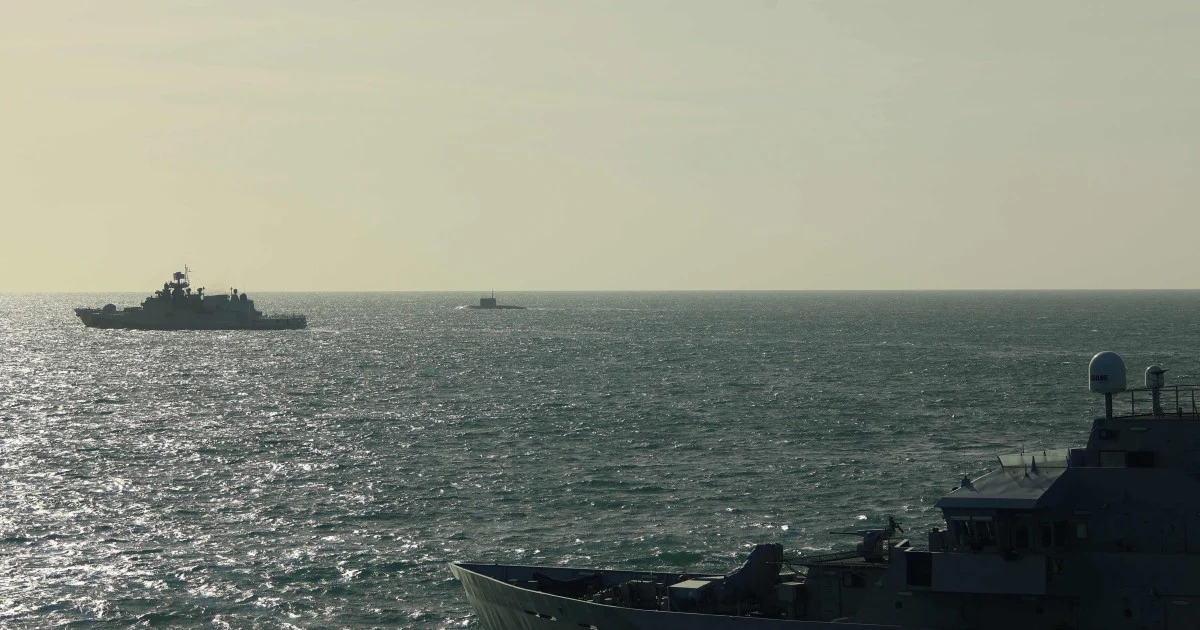
The latest maritime incident involving Russian and British naval assets underscores the fragile state of relations between Moscow and London, with UK Prime Minister Keir Starmer attempting to strike a careful balance between acknowledging Russian provocation and avoiding rhetoric that could inflame broader geopolitical tensions. In a statement on Wednesday, Starmer described the firing of warning shots by a Russian warship near a civilian yacht in the English Channel as "reckless" conduct, while explicitly rejecting characterisations that would suggest a deliberate campaign of intimidation or strategic confrontation.
The choice of language—distinguishing between "reckless" and "sinister"—reveals the nuanced diplomatic calculus Britain must navigate when responding to Russian military activities in its own waters. By labelling the incident reckless rather than sinister, the Prime Minister appears to be framing the event as a dangerous but perhaps isolated act of poor judgment, rather than evidence of a coordinated effort to probe British resolve or test NATO's commitment to defending its members. This rhetorical approach allows London to lodge formal protests and reinforce its security posture without triggering a cycle of tit-for-tat escalation that could spiral beyond either side's intended scope.
The warning shots fired near the yacht represent the latest in a series of encounters between Russian and British vessels in contested or heavily travelled waters. These incidents have become increasingly common as Russia, facing military constraints in Ukraine and seeking to reassert its global naval presence, has intensified operations in European waters. The English Channel, one of the world's busiest maritime corridors, has become a focal point for these tensions, with Russian ships regularly transiting routes that bring them into proximity with NATO member vessels and civilian shipping under British protection.
For Malaysia and other Southeast Asian nations monitoring great power dynamics, the escalating naval tensions in European waters carry significant implications. The pattern of Russian provocations and Western responses establishes precedents for how military powers conduct themselves in contested or strategic maritime zones. If Russia succeeds in normalising aggressive tactics in the English Channel, similar practices could embolden other major powers operating in the South China Sea and other regions of vital importance to Southeast Asian states. The international community's response to Russian naval conduct therefore carries implications far beyond European security.
Starmer's measured characterisation also reflects the broader challenge facing Western democracies in responding to Russian aggression without appearing weak or inviting further provocations. The distinction between reckless and sinister allows the government to maintain moral clarity—warning shots fired near civilian vessels are objectively dangerous and unacceptable—while simultaneously avoiding language that would suggest Britain believes Russia is engaged in a deliberate campaign of strategic intimidation. This parsing of intent may seem like diplomatic hairsplitting, yet it carries real consequences for how the incident is perceived internationally and how it affects public and political pressure for military responses.
The incident occurs against a backdrop of intensifying Russian naval activity in waters surrounding Britain and NATO allies. Moscow has increased the frequency and aggressiveness of its operations as it attempts to counter what Russian leadership perceives as NATO encroachment and Western military aid to Ukraine. These operations serve multiple purposes: they test the responsiveness of British and NATO defences, they demonstrate Russian capability to operate in sensitive areas, and they generate propaganda opportunities by portraying NATO as the aggressor. By characterising the latest incident as reckless rather than sinister, Starmer implicitly rejects this Russian framing whilst maintaining Britain's commitment to stability and proportionate responses.
The Prime Minister's statement must also be understood within the context of domestic politics and alliance management. A more inflammatory response might have satisfied hard-line critics demanding stronger confrontation with Russia, but it could have complicated delicate diplomatic and military coordination with other NATO members, some of whom favour a less confrontational approach toward Moscow. By choosing language that acknowledges the severity of Russian misconduct whilst stopping short of apocalyptic rhetoric, Starmer attempts to maintain consensus within the alliance whilst affirming Britain's security interests and commitment to defending freedom of navigation.
From a legal standpoint, firing on civilian vessels operating in international waters represents a violation of maritime law and the principle of freedom of navigation that underpins the international system. The distinction between reckless and sinister, however, does not alter the fundamental illegality of the Russian action. Instead, it reflects a political judgment about the appropriate level of response and the broader messaging Britain wishes to send about its ability to absorb provocations without overreacting. This approach carries risks: it might be perceived as weakness by adversaries, or it might encourage further Russian provocations if Moscow interprets restraint as an invitation to escalate gradually.
The incident and its characterisation by the Prime Minister also highlight the vulnerability of civilian shipping in strategic waters and the heavy responsibility placed upon naval powers to ensure safe passage. The yacht that drew warning shots was operating in one of the world's most important shipping lanes, serving commerce that sustains entire economies. Any military activity that threatens civilian vessels carries economic implications extending far beyond the immediate incident, affecting insurance rates, shipping routes, and business confidence in regional stability.
Looking forward, Britain faces the challenge of responding firmly to Russian provocations whilst maintaining the diplomatic space for dialogue and crisis management. Starmer's language suggests an administration committed to this balancing act, though it remains unclear whether Russia will interpret such restraint as strength or weakness. The months ahead will likely bring further incidents, and how Britain responds to each will shape the trajectory of Anglo-Russian relations and influence broader patterns of great power competition in maritime zones globally. For Malaysia and Southeast Asia, monitoring how established naval powers manage these conflicts offers valuable lessons as regional tensions similarly intensify.