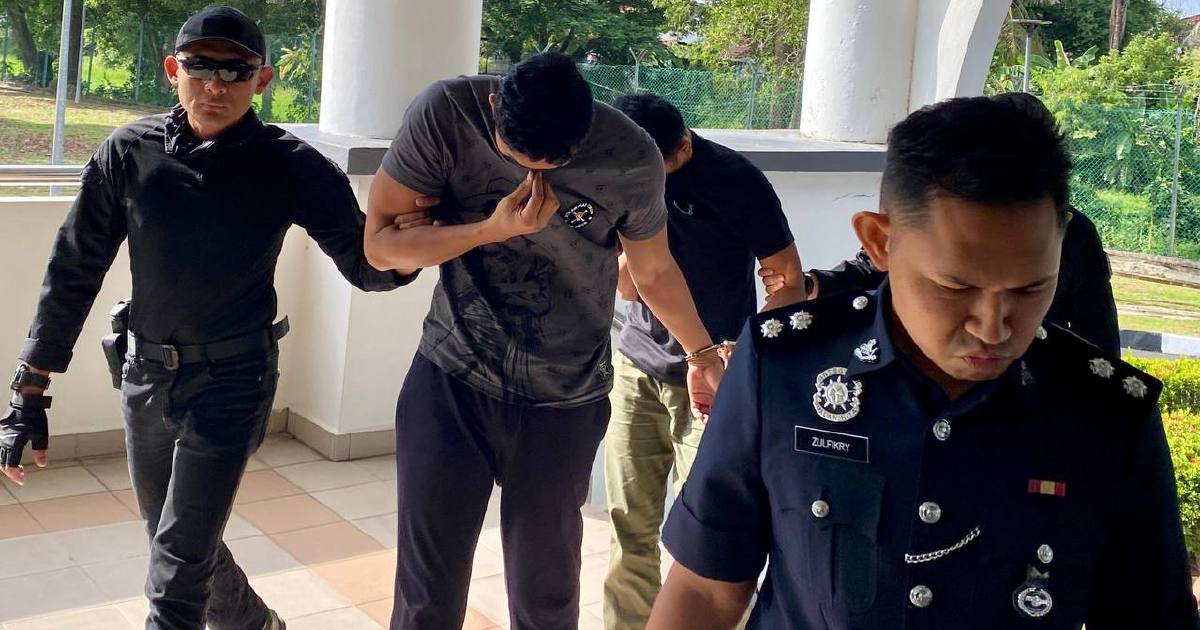
Two members of Malaysia's armed forces appeared before the Sessions Court in Alor Star today, accused of facilitating the unauthorized entry of three Myanmar nationals into Malaysia via the Malaysia-Thailand border during the preceding month. The charges underscore persistent vulnerabilities in border management within Southeast Asia, where human trafficking networks continue to exploit strategic crossing points.
The prosecution's allegations centre on the soldiers' alleged involvement in transporting undocumented Myanmar migrants across an international boundary, a serious breach of both national immigration law and border security protocols. Such incidents expose gaps in the vetting and monitoring systems designed to prevent military personnel from becoming complicit in smuggling operations. The case reflects broader challenges facing law enforcement agencies attempting to intercept organized networks that profit from irregular migration across the region's porous borders.
Migration pressures from Myanmar have intensified since the military coup in February 2021, which triggered widespread civil unrest and economic collapse. Thousands have sought refuge in neighbouring countries, including Malaysia and Thailand, creating demand for illegal facilitation services. Criminal syndicates have capitalized on this desperation, recruiting officials at various levels—including military and customs personnel—to enable crossings that would otherwise be prevented by border security measures.
The involvement of uniformed personnel in such activities represents a particular concern for regional security authorities. Military and police officers occupy positions of trust and possess intimate knowledge of border procedures, checkpoints, and patrol patterns, making them valuable assets to smuggling operations. When individuals in such roles become compromised, they fundamentally undermine institutional credibility and create cascading vulnerabilities that extend beyond individual cases.
Malaysia has been grappling with irregular migration for decades, but the scale and sophistication of smuggling operations have evolved considerably. Three individuals may represent a single transaction, but such networks typically move dozens of migrants monthly across multiple routes. The apprehension of military personnel involved in these activities suggests law enforcement agencies are intensifying scrutiny of official complicity, though observers question whether prosecutions of individual soldiers address systemic institutional weaknesses.
Thailand and Malaysia have intensified bilateral cooperation on border security in recent years, establishing joint patrols and intelligence-sharing mechanisms. However, the vastness of the Malaysia-Thailand frontier—comprising land and maritime boundaries across multiple states—makes comprehensive surveillance extraordinarily challenging. Specialized units now focus specifically on trafficking networks, yet resources remain constrained relative to operational demands.
For Myanmar nationals, irregular migration represents a calculated risk taken in pursuit of economic opportunity or escape from political persecution and violence. Malaysia hosts the largest undocumented Myanmar population in Southeast Asia, with estimates ranging from 100,000 to several hundred thousand individuals. These communities remain vulnerable to exploitation by employers, landlords, and criminal networks, often lacking access to basic services and legal protections.
The Malaysian authorities have periodically intensified enforcement operations against irregular migrants, conducting raids on factories and construction sites. However, critics argue that penalizing migrants addresses symptoms rather than root causes, which include demand for cheap labour and inadequate legal immigration pathways. Simultaneously, prosecuting officials who facilitate smuggling carries different implications—it targets supply rather than demand, potentially disrupting specific networks.
International organizations have long emphasized that effective counter-trafficking requires addressing both migrant vulnerability and criminal networks simultaneously. Regional frameworks must balance security imperatives with humanitarian considerations, particularly given Myanmar's ongoing instability. Malaysia's strategic position as a major transit country means its policies significantly influence broader Southeast Asian migration patterns.
The case will likely proceed through Malaysia's criminal justice system, which imposes substantial penalties for immigration-related offences. Soldiers found guilty face imprisonment and potential dishonourable discharge from military service. However, legal proceedings against individual officers typically prompt broader institutional reviews examining recruitment standards, vetting procedures, and internal discipline mechanisms.
The incident reinforces that border security cannot depend solely on physical infrastructure and technology. Institutional integrity—ensuring that officials resist corruption and remain committed to established procedures—constitutes the foundation upon which all border management systems rest. Military and law enforcement agencies throughout Southeast Asia face comparable pressures from criminal networks seeking to exploit the profits available from irregular migration.
Moving forward, Malaysian authorities face mounting pressure to demonstrate that such misconduct will be detected and prosecuted rigorously. Transparent judicial proceedings and clear consequences for official complicity serve deterrent functions within institutions. Simultaneously, policymakers must address underlying factors driving irregular migration, including Myanmar's humanitarian crisis and regional economic disparities that create powerful incentives for dangerous border crossings.

%22%2F%3E%3C%2Fpattern%3E%3C%2Fdefs%3E%3Crect%20width%3D%22100%25%22%20height%3D%22100%25%22%20fill%3D%22url(%23ph3qcoig)%22%2F%3E%3Crect%20width%3D%22100%25%22%20height%3D%22100%25%22%20fill%3D%22url(%23ph3qcoip)%22%2F%3E%3Ctext%20x%3D%2250%25%22%20y%3D%2250%25%22%20text-anchor%3D%22middle%22%20dominant-baseline%3D%22central%22%20fill%3D%22rgba(255%2C255%2C255%2C0.95)%22%20font-family%3D%22Georgia%2C%20'Times%20New%20Roman'%2C%20serif%22%20font-weight%3D%22700%22%20font-size%3D%22226%22%20letter-spacing%3D%22-0.02em%22%3ESenior%3C%2Ftext%3E%3C%2Fsvg%3E)
%22%2F%3E%3C%2Fpattern%3E%3C%2Fdefs%3E%3Crect%20width%3D%22100%25%22%20height%3D%22100%25%22%20fill%3D%22url(%23ph3r5jwg)%22%2F%3E%3Crect%20width%3D%22100%25%22%20height%3D%22100%25%22%20fill%3D%22url(%23ph3r5jwp)%22%2F%3E%3Ctext%20x%3D%2250%25%22%20y%3D%2250%25%22%20text-anchor%3D%22middle%22%20dominant-baseline%3D%22central%22%20fill%3D%22rgba(255%2C255%2C255%2C0.95)%22%20font-family%3D%22Georgia%2C%20'Times%20New%20Roman'%2C%20serif%22%20font-weight%3D%22700%22%20font-size%3D%22320%22%20letter-spacing%3D%22-0.02em%22%3EPAS%3C%2Ftext%3E%3C%2Fsvg%3E)