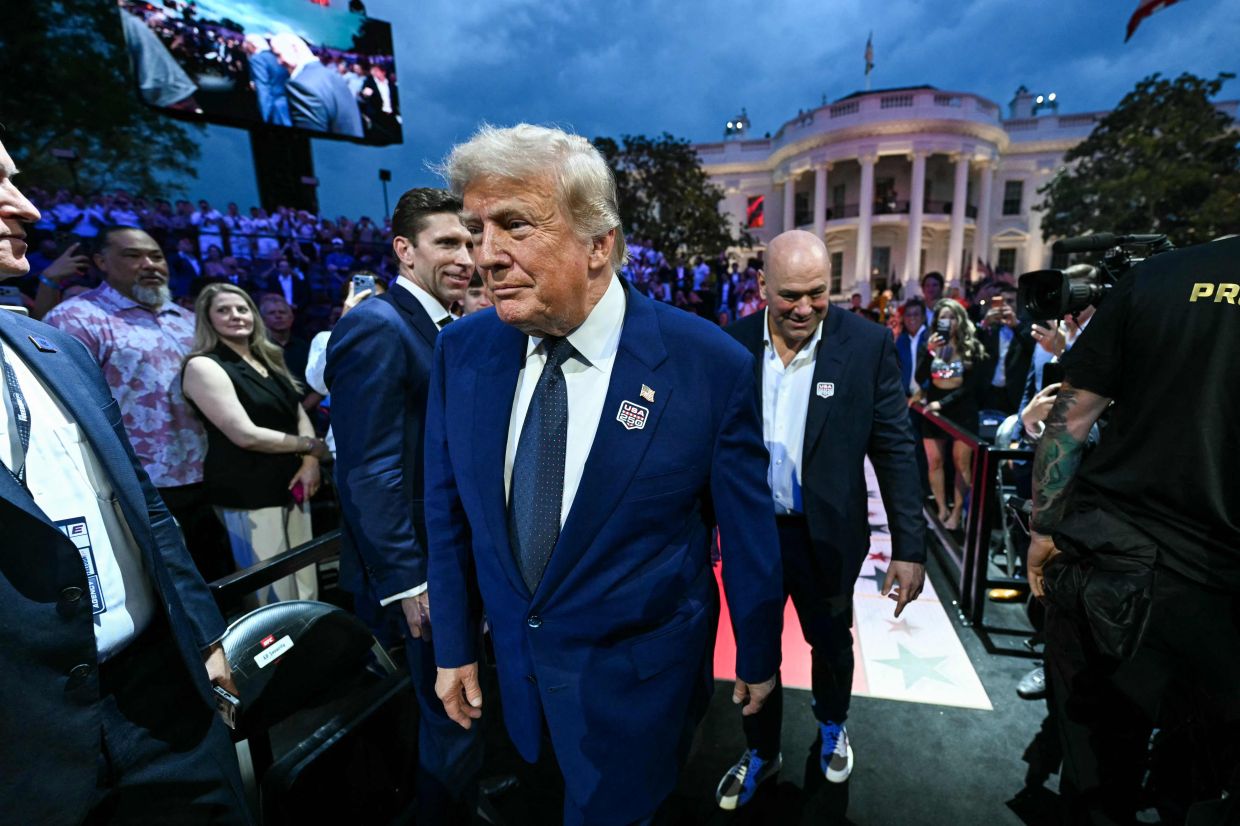
Donald Trump rang in his 80th birthday on Sunday evening by hosting the Ultimate Fighting Championship on the White House South Lawn, an unprecedented spectacle that underscores the growing alignment between professional sports and political power in America. The event, which kicked off just before 8:30pm in Washington, featured seven cage matches held within a nearly 100-foot-tall structure called the "Claw"—a temporary arena that dwarfs most permanent installations on the presidential grounds. The celebration comes just before Trump departs for France to engage with Group of Seven world leaders, a reminder that the president is juggling his domestic constituency management with international diplomatic obligations.
The UFC event serves as the centrepiece of Trump's broader initiative to commemorate the 250th anniversary of American independence, a theme that will persist throughout 2024 with planned festivities including a commemorative gold coin bearing his likeness, a major fair on the National Mall, and an IndyCar race through Washington's streets in August. The birthday spectacle reflects Trump's deep personal enthusiasm for mixed martial arts—UFC President Dana White is a longtime ally—and his administration's strategic embrace of the sport's predominantly young, male fan base, a crucial demographic that delivered his 2024 election victory. The timing and scale of the event signal how thoroughly the Trump administration has integrated sports marketing into its political messaging apparatus.
The gathering drew an impressive roster of attendees from both business and government. Meta Platforms CEO Mark Zuckerberg, Paramount Skydance CEO David Ellison, Treasury Secretary Scott Bessent, and members of Trump's immediate family occupied premium positions. Podcast commentator Joe Rogan, whose influence among young male audiences helped shape the cultural conversation around Trump's candidacy, provided live commentary throughout the matches. Military servicemembers filled portions of the audience, while the broadcast cut to watch parties stationed at military installations worldwide, including in Okinawa, Japan, extending the event's symbolic reach across America's global military footprint.
The logistical undertaking proved substantial despite official claims that UFC covered all costs. Court filings reveal that more than seven federal agencies allocated "significant resources and manpower" to executing the event, and UFC itself spent over US$60 million on production and staging. The Claw structure accommodates 4,300 seated spectators, yet organisers expected as many as 120,000 additional attendees on the adjacent Ellipse, where free tickets were distributed through a lottery system. This massive public turnout raises questions about how such crowds were managed and what security implications arose from converting the historic presidential grounds into a mixed martial arts venue.
The event has drawn substantial legal and public criticism. The Public Integrity Project filed a lawsuit characterising the occasion as a "volcano of corruption," citing concerns about government resources devoted to what some view as a private corporate celebration masquerading as national commemoration. A YouGov poll released on June 5 revealed that 51 per cent of Americans surveyed disapproved of the White House fight, while only 27 per cent approved—a striking disapproval margin that suggests public discomfort with the venture transcends traditional partisan divides. The lawsuit sought unsuccessfully to prevent the event from occurring, indicating judicial hesitation to intervene in presidential discretionary decisions.
Commercial sponsorships underscored the profit-driven nature of the spectacle. The UFC Freedom 250 website listed Crypto.com and Dodge's Ram truck brand as official sponsors, reflecting the event's appeal to specific consumer demographics. More remarkably, Trump's family business venture World Liberty Financial provided an additional US$250,000 bonus to the top two fighters, effectively converting a presidential celebration into a vehicle for promoting a family financial product. While UFC executives claimed the event would operate at a financial loss, such assertions appear difficult to reconcile with the scale of investment and the unprecedented access granted to corporate partners.
The geographic staging of preparatory events highlighted the symbolic weight Trump's team assigned to the occasion. UFC held its official news conference at the Lincoln Memorial, one of America's most revered historic sites, where fighters engaged in the traditional pre-match verbal sparring. Fighters like Michael Chandler articulated the historic significance they attributed to competing on the White House grounds, describing it as a once-in-a-lifetime opportunity to perform for the nation on its founding anniversary. This deliberate deployment of America's most sacred spaces for fight promotion reflected an administration comfortable with repurposing national monuments for contemporary political and commercial messaging.
The logistical footprint extended deep into White House operations. The administration designated the Indian Treaty Room—traditionally reserved for formal state functions—as a fighter locker room, along with other spaces on the grounds. The South Lawn, historically the venue for ceremonial events like the Easter Egg Roll and Congressional Picnic, was transformed into a construction site for the temporary Claw arena. Previous presidents had erected structures like temporary ice rinks on the lawn, but nothing approaching the scale of this installation, which Trump himself compared to the Eiffel Tower in ambition and prominence.
Trump's public comments about the Claw's permanence generated additional controversy. In a June 2 TikTok video, the president suggested he might leave the structure standing indefinitely, remarking, "We're building something in front of the White House that's quite attractive to a lot of people. Maybe we'll never ever take it down." This comment sparked immediate backlash, prompting Trump to clarify he was joking. Court filings subsequently confirmed that dismantling would begin at 10am on Monday, yet the president's initial enthusiasm for maintaining the structure revealed his genuine desire to embed this sporting spectacle into the permanent physical and cultural landscape of presidential power. The contradiction between aspirational permanence and required deconstruction encapsulates the tension between Trump's expansive vision and the legal and procedural constraints that still govern presidential discretion.
The event's implications extend beyond the immediate spectacle. The integration of UFC into high-level presidential ceremonialism reflects broader trends in how American political leaders cultivate support among specific demographic groups through entertainment and consumer brands. Malaysia and other Southeast Asian nations, where sports marketing increasingly intersects with political messaging, should observe how this precedent might influence political communication strategies regionally. The willingness to deploy significant government resources for corporate entertainment, coupled with the minimal legal obstacles to such deployment, suggests a shifting boundary between public service and private corporate benefit that carries implications for democratic governance well beyond American shores.