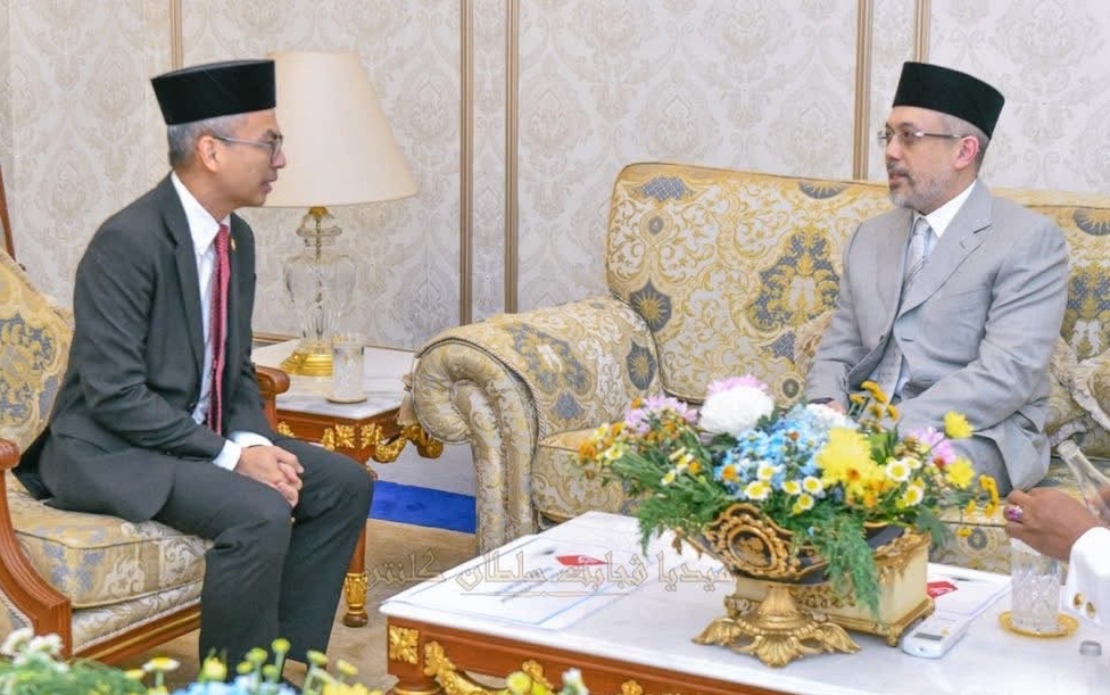
Kelantan's Crown Prince Tengku Muhammad Fakhry Petra received Communications Minister Datuk Fahmi Fadzil at the Kota Lama Palace in Kota Bharu for a formal audience discussing the kingdom's growing social media challenges. The meeting, which commenced at 5 pm and lasted approximately one hour, underscored growing concerns at the highest levels of state leadership about the proliferation of false information circulating online.
The Kelantan Sultan's Media Office confirmed that the primary purpose of the audience was to provide the Crown Prince with comprehensive briefings on current developments and operational updates from the Ministry of Communications. This direct engagement between senior state leadership and federal communications officials reflects heightened attention to digital integrity issues affecting Malaysia's governance landscape. Such palace audiences typically signal issues of sufficient importance to warrant formal discussion with royal institutions.
Among the substantive matters tabled during their conversation were concerning trends in contemporary affairs and the burgeoning problem of fraudulent accounts proliferating across social media platforms. The creation and operation of fake accounts has become increasingly sophisticated, enabling the rapid dissemination of misleading content that undermines public discourse. The prevalence of these accounts poses particular challenges to government communications strategies and institutional credibility.
A significant focus of the discussion centered on false narratives and derogatory content specifically targeting Malaysia's Royal Institution. The monarchy remains central to Malaysia's constitutional framework and national identity, making protection of institutional reputation a matter of state concern. The circulation of fabricated stories and disparaging material about the royalty through coordinated fake accounts represents a concerning trend that authorities have identified as requiring urgent attention and coordinated response.
The misuse of social media infrastructure for spreading disinformation has become a persistent challenge across Southeast Asia, and Malaysia is no exception. Networks of inauthentic accounts can amplify false claims exponentially, reaching millions of users before fact-checking mechanisms can intervene. This asymmetry between the speed of false information dissemination and the pace of verification creates vulnerabilities that bad-faith actors increasingly exploit.
The presence of senior Ministry of Communications staff at the audience, including Senior Private Secretary Mohamad Asif Afifi Mohd Yusof and accompanying officers, indicated this was a substantive policy discussion rather than a ceremonial visit. The formal delegation structure reflected the gravity with which federal authorities view these digital governance challenges. Such high-level engagement with state leadership demonstrates inter-agency coordination on communications policy matters affecting multiple stakeholders.
Minister Fahmi presented a commemorative gift to the Crown Prince as a gesture of respect and appreciation for the audience opportunity. This protocol, standard in formal Malaysian state ceremonies, acknowledged the Crown Prince's elevated status and the significance of the occasion. The exchange of tokens during such meetings also serves symbolic purposes in strengthening institutional relationships between federal and state administrations.
The subsequent informal engagement between the Minister's delegation and senior Kelantan State Office personnel, culminating in a social gathering and photographic documentation, facilitated relationship-building beyond the formal agenda. These less structured components of official visits often prove valuable for discussing implementation challenges and exploring collaborative approaches to emerging problems. The friendly atmosphere suggested constructive dialogue rather than adversarial positioning.
The timing and location of this meeting carry particular significance for Malaysia's digital governance framework. Kelantan has historically been a state where information verification and media literacy remain developing concerns, making it strategically important for the Communications Ministry to engage directly with state leadership on national campaigns addressing these issues. Establishing awareness and support among royal institutions strengthens the credibility of government messaging about online safety.
The focus on fake accounts targeting the monarchy reflects broader concerns about institutional legitimacy in an age of information warfare. Coordinated disinformation campaigns can exploit existing social divisions and amplify marginal viewpoints to dangerous proportions. When such campaigns specifically target constitutional institutions like the monarchy, they represent threats to Malaysia's political stability and social cohesion that transcend ordinary content moderation questions.
The Ministry of Communications has been increasingly visible in addressing digital challenges, balancing free speech considerations against protection of institutional integrity and public welfare. This audience with the Crown Prince provides an opportunity for the ministry to signal that these concerns are being taken seriously at the highest levels and that coordinated responses are being developed. State-level engagement strengthens the legitimacy of these efforts among broader populations.
Moving forward, discussions emerging from this meeting will likely influence how the ministry prioritizes resources for tackling fake accounts and designing public awareness campaigns. Gaining buy-in from state leadership, particularly royal figures, provides critical credibility for national initiatives addressing social media governance. The Crown Prince's receptiveness to these briefings suggests Kelantan may become a testing ground for collaborative approaches between federal communications authorities and state institutions in combating coordinated inauthentic behaviour online.