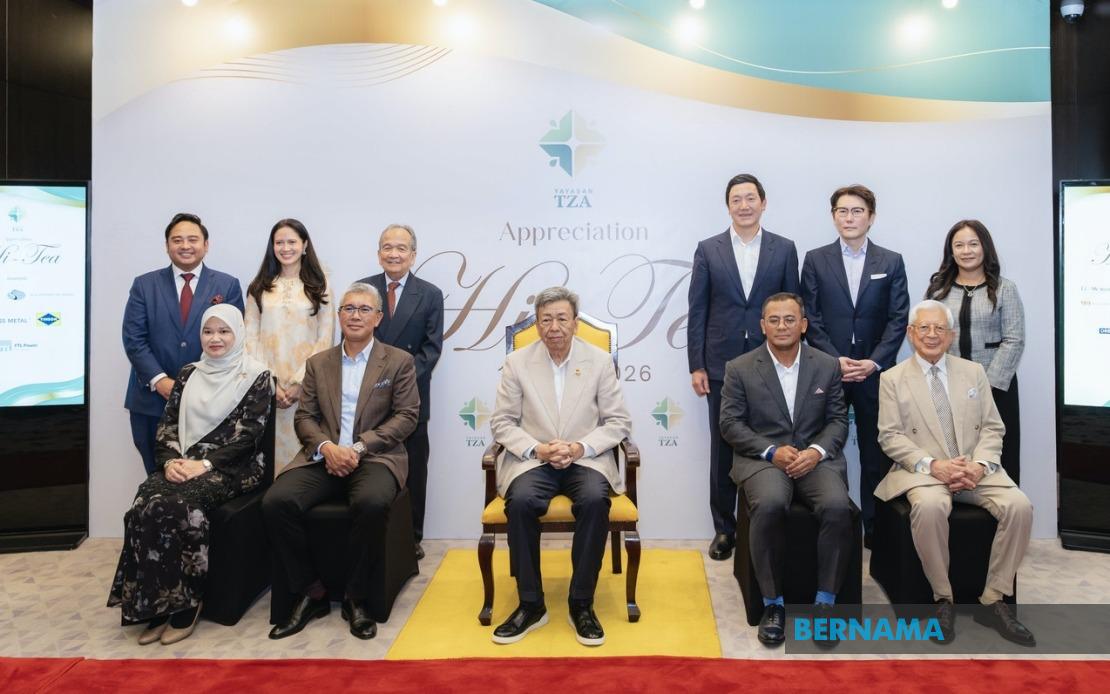
The Sultan of Selangor, Sultan Sharafuddin Idris Shah, lent his royal presence to a significant gathering in Kuala Lumpur where Yayasan TZA presented its vision for community uplift and educational advancement across Malaysia. The hi-tea ceremony underscored the foundation's role in addressing social inequities through structured intervention programmes, drawing together government officials, corporate sponsors, and civil society stakeholders committed to the cause of inclusive development. The occasion demonstrated how traditional ceremonial formats can serve as platforms for mobilising support behind substantive social initiatives.
Arriving in the mid-afternoon, the Sultan was formally received by the foundation's leadership, including chairman Tan Sri Arshad Raja Tun Uda and advisor Tengku Datuk Seri Zafrul Abdul Aziz. The gathering attracted senior government figures, notably Selangor Menteri Besar Datuk Seri Amirudin Shari and Education Minister Fadhlina Sidek, signalling the alignment between Yayasan TZA's work and national policy priorities. The presence of such high-ranking officials reflected broader recognition that poverty-targeted educational intervention has become integral to Malaysia's development strategy, particularly as economic inequality remains a persistent challenge across the country.
Tengku Zafrul's remarks framed the foundation's approach within a comprehensive philosophy of empowerment rather than mere charity. He articulated how Yayasan TZA views its programmes as instruments for sustainable change, designed to address both immediate material hardship and underlying structural barriers that impede social mobility. This conceptual framework distinguishes the foundation's work from traditional philanthropic models, positioning education and community engagement as pathways toward systemic transformation. The statement reflected a growing understanding in Malaysian civil society that durability in social progress requires addressing root causes alongside symptomatic relief.
The ACE SPM initiative emerged as a flagship example of this approach. The programme specifically targets Sijil Pelajaran Malaysia candidates from B40 households, recognising that examination performance serves as a critical juncture determining access to tertiary education and professional pathways. By 2025, the foundation had expanded support to 467 students across ten Selangor schools, whilst its digital offerings had extended reach to over 4,000 learners. The programme's architecture acknowledges that disadvantaged students frequently encounter resource constraints—tutoring access, study materials, exam preparation guidance—that compound inherent academic challenges. Such targeted assistance addresses a documented gap in Malaysia's education system where socioeconomic background remains a strong predictor of academic achievement.
The digital dimension of Yayasan TZA's work carries particular significance for Southeast Asian context. Online learning platforms have fundamentally altered educational accessibility, yet the benefits remain unevenly distributed across income groups. The foundation's ability to reach over 4,000 students through digital channels suggests both technological adoption among target communities and recognition that hybrid delivery models can scale impact beyond traditional classroom boundaries. For Malaysia specifically, where urban-rural digital divides persist and broadband penetration varies considerably, such initiatives help address infrastructure disparities that would otherwise exclude rural B40 students from quality academic preparation.
Corporate participation emerged as a cornerstone of the foundation's operational model. During the ceremony, Sultan Sharafuddin witnessed presentations of substantial financial commitments: RM1 million from Kuok Brothers Sdn Bhd and RM300,000 from YTL Power International Berhad. These pledges reflect corporate recognition that social investment yields returns beyond shareholder value—including workforce pipeline development, community stability, and alignment with environmental, social and governance frameworks increasingly demanded by institutional investors. For Malaysian businesses, participation in targeted education programmes serving disadvantaged communities offers pathways to demonstrate commitment to inclusive capitalism while addressing skills shortages in competitive sectors.
The forthcoming Larian KITA@Klang run, scheduled for October 10 in conjunction with the Sultan's Silver Jubilee celebration, represented another programmatic dimension. As the fourth iteration in the Larian KITA series, the event combines fitness activity with celebration of cultural and culinary heritage specific to locations. Community fun runs have become popular vehicles for building social cohesion across class boundaries, creating occasions where diverse populations share physical space and collective purpose. For Klang, a diverse manufacturing and port town, such events can serve important functions in fostering intercommunal engagement whilst celebrating local identity and heritage.
Tengku Zafrul's emphasis on partnership and volunteerism acknowledged that sustainability of social programmes depends upon building coalitions across sectors. The mention of sponsors, donors, strategic partners and volunteers reflected recognition that governments and individual foundations cannot independently address poverty-linked educational deficits. This multilateral approach aligns with broader sustainable development frameworks where progress on inequality requires coordination among state institutions, private capital, nonprofit organisations and community actors. For Malaysia's federal structure, where education policy coordination involves federal, state and local authorities alongside civil society, such coalition-building becomes essential for coherent implementation.
The educational focus of Yayasan TZA's work responds to documented realities in Malaysian development. Despite decades of economic growth, human capital development remains uneven, with rural and low-income communities lagging in educational attainment and skill acquisition. Sijil Pelajaran Malaysia examinations function as significant sorting mechanisms, determining access to pre-university education and technical training. Students from disadvantaged backgrounds often lack the supplementary support—private tuition, enrichment programmes, counselling—that their more affluent peers access routinely. By intervening at this critical juncture, Yayasan TZA addresses what economists term the equality of opportunity problem: ensuring that talent and potential are not squandered due to circumstance of birth.
The participation of Education Minister Fadhlina Sidek alongside state-level leadership suggested alignment between the foundation's priorities and government policy direction. Malaysia's education sector has increasingly emphasised equity concerns, recognising that inclusive human capital development strengthens overall economic competitiveness. International assessments of education systems consistently demonstrate that countries reducing achievement gaps between socioeconomic groups experience broader-based productivity gains. For Malaysia, where technical skill shortages constrain industrial development and where demographic change necessitates careful workforce planning, programmes identifying and developing talent among traditionally underserved populations represent strategic investments in national capacity.
Looking forward, the foundation's commitment to expand ACE SPM across additional schools and communities reflects confidence in programme efficacy whilst acknowledging the scale of unmet need. Thousands of B40 students across Malaysia continue preparing for examinations without adequate preparation support. Extending successful interventions requires sustained funding, volunteer recruitment, and institutional partnerships. The corporate pledges announced during the ceremony provided resources for near-term programme expansion, yet long-term sustainability demands embedding such initiatives within education policy frameworks and creating permanent institutional structures. For Malaysian policymakers, evidence that targeted, well-designed interventions demonstrably improve outcomes for disadvantaged students strengthens the case for mainstreaming such approaches within national education systems.
The hi-tea ceremony ultimately communicated that addressing educational inequality in Malaysia has transcended marginal charity to become a mainstream concern commanding royal patronage, government participation, and substantial corporate investment. Yayasan TZA's work exemplifies how foundations can operate as catalysts for systemic change, identifying leverage points where intervention produces disproportionate impact. For Southeast Asia more broadly, where educational inequality remains a significant development constraint across the region, Malaysian initiatives like this offer models for how civil society, government, and business might coordinate efforts toward inclusive human capital development. The continued expansion of such programmes will prove essential as Malaysia transitions toward higher-value economic activities requiring sophisticated workforce skills across all population segments.