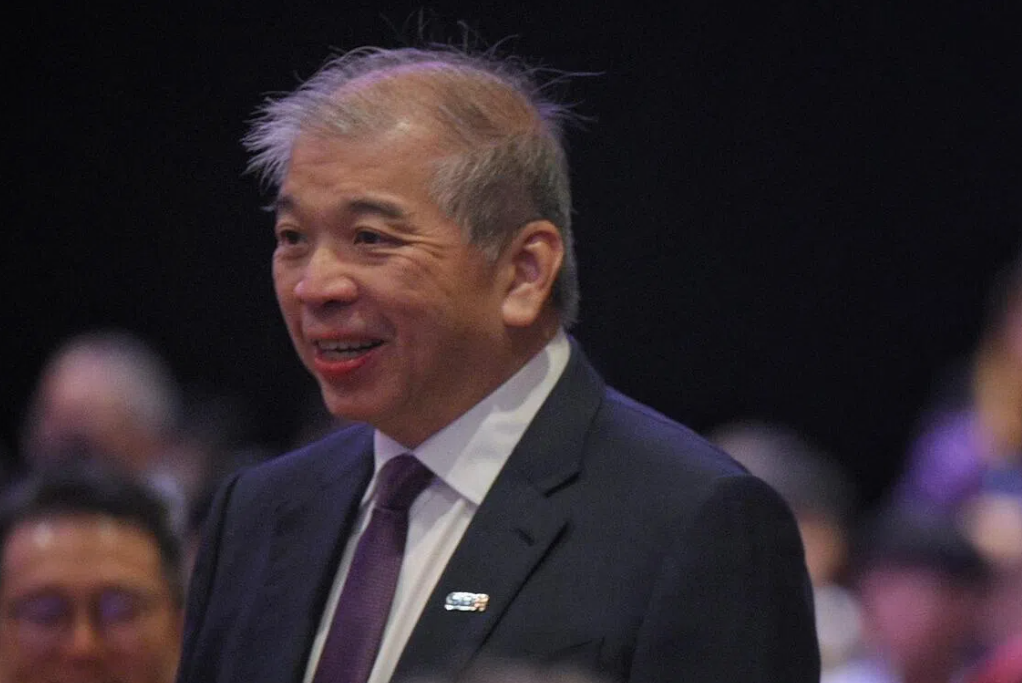
Singapore shipping magnate Teo Siong Seng and several other container industry executives have been named as defendants in two civil lawsuits filed in California's federal court system, marking a significant escalation in the global price-fixing scandal that has already drawn criminal charges from the US Department of Justice. The litigation, filed separately by American manufacturing and logistics companies seeking to recover substantial financial losses, represents a new dimension of legal jeopardy for the executives and their firms beyond the criminal indictment unsealed in May.
The two class-action lawsuits, initiated by C.A. Spalding Company and Daybreak Express on June 2 and 9 respectively, target executives of five major container manufacturers accused of orchestrating a sophisticated scheme to manipulate global shipping container prices. These civil suits complement rather than replace the criminal charges filed against China International Marine Containers, Shanghai Universal Logistics Equipment, CXIC Group Containers, and Singamas Container Holdings—the Singapore-based firm where Teo serves as chief executive. Together, these companies are alleged to have controlled approximately 95 percent of the world's standard dry container production, giving them extraordinary market leverage.
The conspiracy operated through meticulously coordinated restrictions on manufacturing capacity, according to allegations detailed in court documents. Factory managers at participating firms allegedly limited the number of production shifts and operating hours for container manufacturing lines in concert with competitors, fundamentally distorting supply and demand dynamics across the global shipping industry. To enforce compliance with these agreed-upon output limitations, the cartel members installed 87 video surveillance cameras across 49 production lines at their facilities—an extraordinary level of monitoring infrastructure designed specifically to detect and prevent any company from exceeding the quotas the conspirators had established.
The financial impact of this alleged price manipulation was dramatic and immediate. Standard 20-foot shipping containers, the industry's basic unit of trade, more than doubled in price between 2019 and 2021, rising from approximately US$1,600 to US$3,500 according to investigative findings. This surge had cascading effects throughout global supply chains, increasing costs for businesses worldwide that depend on container shipping. For Southeast Asian manufacturers and exporters who rely heavily on these containers for reaching international markets, the price increases represented a significant squeeze on profit margins during a critical period of economic recovery.
The cartel members captured extraordinary profits from their scheme. CIMC's container manufacturing division saw profits surge from approximately 137 million yuan in 2019 to 1.99 billion yuan in 2020 and 11.3 billion yuan in 2021—a nearly 83-fold increase over the two-year period. Singamas Container Holdings, where Teo holds the top executive position, demonstrated even more dramatic financial transformation, swinging from a 110 million dollar loss in 2019 to a profit of 186.8 million dollars by 2021. These extraordinary gains came directly at the expense of shipping companies, manufacturers, and ultimately consumers throughout the global supply chain.
The civil lawsuits carry particularly severe consequences through the application of treble damages provisions under US antitrust law. Should the defendants be found liable, they could be compelled to pay three times the actual amount of losses suffered by the American plaintiffs—a punitive multiplier designed to deter corporate misconduct and compensate victims beyond their direct losses. This legal mechanism transforms what might otherwise be simply a cost of doing business into a potentially devastating financial exposure.
Court records indicate that summonses were issued on June 8 and 11, requiring named defendants and firms to respond formally to the lawsuits within 21 days. Failure to respond could result in default judgments entered automatically against them. The individuals named alongside Teo include Mai Boliang, who served as CIMC's president and chief executive before becoming chairman in August 2020; CIMC vice-president Huang Tianhua; Wan Yongbo, general manager of CIMC's Operation Management Centre; Li Qianmin of Shanghai Universal Logistics Equipment; and Zhang Yuqiang, chief executive of CXIC Group Containers. Additionally, Vick Ma, Singamas's marketing director, was arrested in France in April and is currently awaiting extradition to the United States.
Teo, a 71-year-old Singaporean, has declined to comment publicly on the civil suits. His response to the criminal indictment, however, has involved strategic withdrawal from multiple high-profile positions. He took a leave of absence from Pacific International Lines, where he serves as executive chairman, and stepped back from his roles with the Singapore Business Federation, where he had recently been elected chairman, as well as the Singapore Economic Resilience Taskforce, Enterprise Singapore's board, and the National University of Singapore's leadership structure. These departures represent a significant diminishment of his influence across Singapore's business and public sectors.
Teo's tenure as Singapore Business Federation chairman proved particularly brief. He was elected to the position on May 20, 2025, replacing Lim Ming Yan who departed to become chairman of Changi Airport Group. However, just days after being charged in the US indictment, Teo announced on May 28 that he would not seek re-election when his term expired on June 24—essentially surrendering the role after holding it for less than five weeks. His earlier service as SBF chairman from 2014 to 2020, comprising three consecutive two-year terms, had positioned him as one of Singapore's most prominent business leaders.
In his sole public statement following the allegations, Teo stated that he had proactively decided to take leaves of absence to afford himself adequate time to manage the legal proceedings and to serve the best interests of the organizations from which he was stepping back. The measured language reflected the gravity of his circumstances—facing both criminal and civil liability in the world's largest economy, with prosecution authorities alleging he participated in a conspiracy that affected millions of businesses and consumers globally. The matter carries particular significance for Malaysia and Southeast Asia, where container shipping represents a vital link in regional export supply chains and where the alleged price-fixing scheme directly impacted shipping costs for decades.
The unfolding litigation represents a pivotal moment in global antitrust enforcement. The combination of criminal prosecution and parallel civil suits allows multiple enforcement paths to proceed simultaneously, maximizing pressure on defendants while providing multiple opportunities for victims to recover compensation. As these cases develop, they will likely establish important precedents for how international cartels are prosecuted across jurisdictions, with particular relevance for Southeast Asian businesses that have absorbed the inflated container costs resulting from the alleged conspiracy.