A serious road incident in Singapore has resulted in multiple charges against a 29-year-old motorist who allegedly drove recklessly through morning traffic while impaired, causing a collision that left two young passengers on a school bus requiring hospital treatment. Aaron Tan Yao Cong is now facing five distinct charges stemming from his behaviour on March 6, 2024, and will return to court on July 16 to address the allegations, which carry potentially severe penalties for a repeat offender.
The sequence of events that morning began around 5.50am on Cavenagh Road, when Tan allegedly ignored a straight-only traffic sign and instead turned left towards oncoming traffic. After bringing his vehicle to a stop, he then accelerated away from officers who were approaching the car, initiating what would become a dangerous high-speed pursuit through residential and commercial areas of Singapore's western zones. This flight from police transformed an already problematic traffic violation into a full-fledged public safety emergency.
Between 6.16am and the collision point some minutes later, Tan reportedly pushed his vehicle to an average speed of 114 kilometres per hour along Bukit Timah Road and surrounding thoroughfares, repeatedly weaving between other vehicles. His driving pattern during this stretch demonstrated a complete disregard for traffic conditions and the safety of other road users during the early morning period when pedestrians and school transport were becoming more prevalent on the roads.
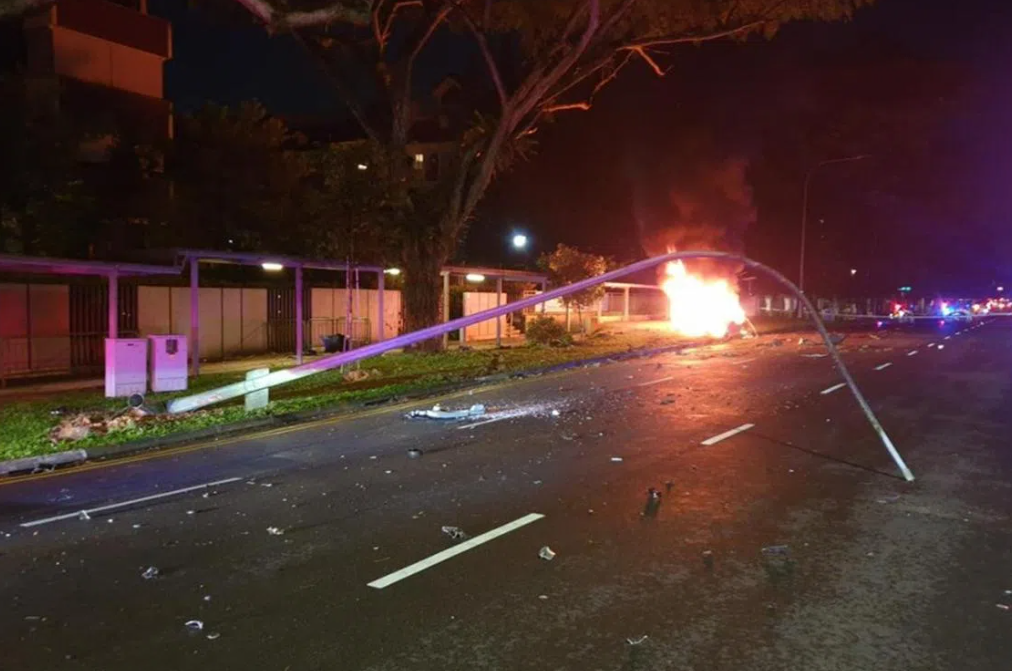
The climax of this dangerous drive occurred at the junction of Sixth Avenue, where Tan allegedly failed to stop at a red traffic light and collided with a private bus that was executing a U-turn. The impact was severe enough that Tan's vehicle subsequently struck a lamp post, causing it to catch fire. The intensity of the collision and resulting damage underscore the dangerous velocity and lack of control Tan was exercising at the moment of impact.
While Tan and his three passengers managed to escape from the burning vehicle, the school bus occupants were not so fortunate. Two children aboard the bus, aged nine and ten, sustained injuries requiring hospitalisation. Beyond these young victims, the bus driver also needed medical attention, and all occupants from both vehicles were transported to hospital, creating a significant emergency response situation and highlighting the ripple effects of dangerous driving across multiple parties.
The circumstances of Tan's arrest revealed concerning details about his physical state. When apprehended, Tan refused to submit to a breathalyser test at the roadside, a refusal itself constituting a separate criminal offence. However, subsequent testing at the police station showed his blood alcohol content at 148 milligrams per 100 millilitres of blood, substantially exceeding Singapore's legal limit of 80 milligrams per 100 millilitres. His resistance to initial testing, coupled with the confirmed high alcohol reading, paints a picture of deliberate evasion and impaired judgement.
Tan's criminal history compounds the seriousness of the present charges. He was previously convicted in 2019 of drink driving and driving without due care and attention, making him a repeat offender in precisely the categories that now dominate the current charges. This prior conviction means that sentencing guidelines allow for substantially harsher penalties, including higher fines and longer potential jail terms than would apply to a first-time offender engaging in similar conduct.
The charges Tan faces are comprehensive and reflect the multiple violations embedded in his conduct that morning. Beyond the drink driving charge itself, he is accused of dangerous driving causing hurt, leaving his vehicle in a position creating danger to others, failing to cooperate with breathalyser testing, and driving against the flow of traffic. Each charge carries distinct sentencing provisions, and the cumulative impact of conviction on all counts could result in substantial imprisonment and financial penalties.
For the drink driving charge as a repeat offender, Tan faces up to two years in jail and a fine reaching $20,000 Singapore dollars. The dangerous driving causing hurt conviction carries potential imprisonment of two years and fines of up to $10,000, with repeat offenders liable for up to $20,000 in fines. The failure to provide a breath specimen when required carries jail time of up to six months and fines up to $5,000, escalating to one year imprisonment and $10,000 fines for repeat offenders. The remaining charges each carry shorter potential sentences but collectively demonstrate the breadth of law enforcement concerns.
This incident resonates beyond Singapore's borders, as it exemplifies a persistent challenge across Southeast Asia regarding impaired driving and high-speed dangerous conduct. The injuries sustained by schoolchildren particularly highlight the vulnerability of young passengers who depend on transport systems to reach educational institutions safely. For Malaysian readers, the case underscores the importance of robust breathalyser enforcement, adequate penalties for repeat offenders, and the real-world consequences when drivers attempt to evade police testing.
The decision by Tan not to indicate whether he would plead guilty suggests the case will proceed to trial, meaning the evidentiary details and judicial assessment of culpability will unfold over subsequent months. The July 16 court date marks the next stage in what is expected to be a lengthy legal process. This timeline also allows for any civil suits that might be pursued by injured parties seeking compensation for medical treatment, trauma, and ongoing care needs.
For transportation authorities and safety advocates throughout the region, the case reinforces why multiple layers of enforcement—from sobriety checkpoints to traffic cameras to strict penalties for evasion—remain essential. The fact that Tan's vehicle caught fire after hitting infrastructure adds another dimension, as the burning car itself became a secondary hazard requiring emergency response resources. Public safety campaigns focusing on drink driving, the consequences of refusing breathalyser tests, and the dangers of fleeing police require sustained investment, particularly given that repeat offenders continue to pose threats despite prior convictions and experience with the justice system.