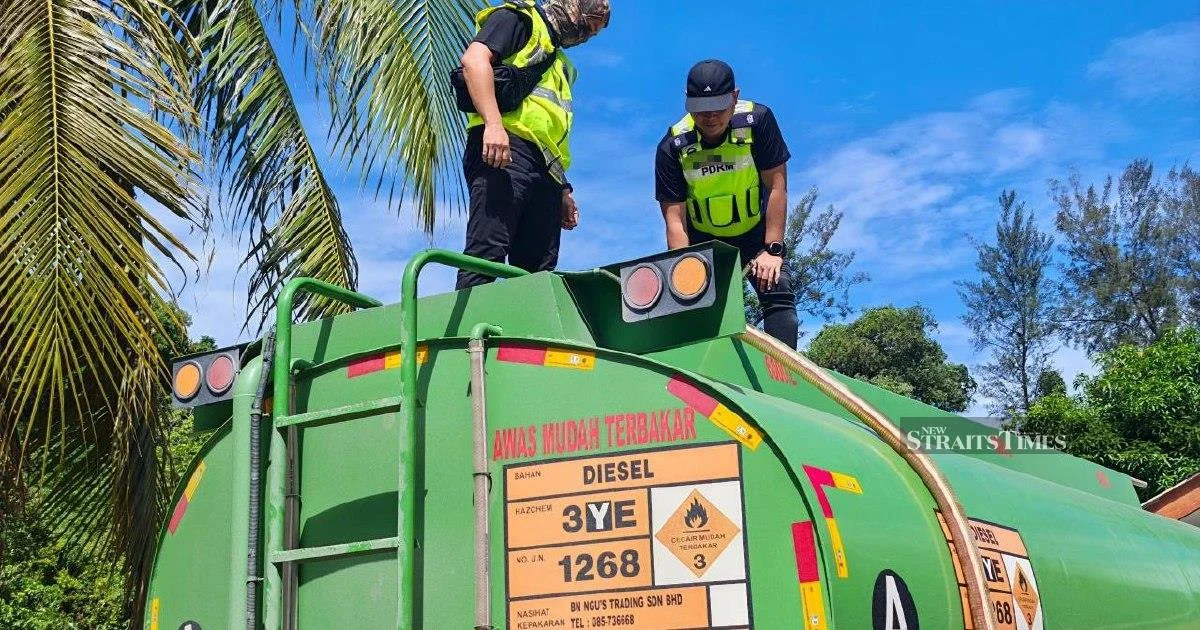
Security forces operating in Sarawak have uncovered yet another clandestine fuel trafficking operation, this time unearthing a sophisticated distribution point concealed within a private bungalow in Tanjung Lobang. The raid resulted in the confiscation of 15,000 litres of diesel fuel and the detention of four individuals suspected of orchestrating the subsidy diversion scheme. The operation underscores the persistent challenge Malaysian enforcement agencies face in combating the illegal diversion of government-subsidised fuel across the eastern states.
The concealed depot, deliberately established within a residential property to evade detection, represents an increasingly common tactic employed by fuel smuggling syndicates operating throughout Sarawak. By embedding distribution operations inside ordinary dwellings rather than industrial facilities, offenders attempt to blend illicit activities into civilian landscapes, complicating regulatory oversight and making detection significantly more difficult for patrol units. The choice of location demonstrates operational sophistication and deliberate obfuscation strategies employed by organised trafficking networks.
Diesel subsidy diversion remains a multimillion-ringgit problem across Malaysia, particularly affecting Sarawak and Sabah where geographic isolation, porous maritime borders, and lengthy coastlines create ideal conditions for smuggling operations. When subsidised fuel intended for domestic consumers and legitimate small businesses instead flows into black markets, the government faces twin losses: direct budgetary expenditure on fuel price controls and foregone tax revenue from legitimate commerce. The cumulative impact of hundreds of such operations compounds into substantial economic leakage annually.
The four detainees are currently assisting investigators determine the operational scope of the syndicate, including supply chain relationships, distribution networks, and customer base. Authorities typically focus on identifying whether such operations function as standalone ventures or comprise nodes within larger transnational smuggling architectures. Understanding these connections proves crucial for disrupting the broader criminal ecosystem rather than merely addressing individual cases.
Subsidised diesel in Malaysia remains significantly cheaper than regional benchmarks, creating powerful economic incentives for arbitrage activities. Neighbouring jurisdictions with higher fuel prices represent lucrative markets for diverted stock, particularly in Brunei where petroleum products command premium prices. Cross-border trafficking exploits these price differentials, with smugglers accepting risks inherent to illegal transport in exchange for substantial profit margins achievable through volume operations.
The seizure adds to mounting evidence that Malaysia's fuel subsidy system, while socially beneficial for low-income households and small enterprises, simultaneously generates perverse incentives that undermine policy objectives. Each subsidy dollar allocated to encourage affordable domestic fuel access simultaneously creates underground markets and criminal opportunities. Policy planners and enforcement bodies continue debating whether maintaining universal subsidies represents sound economic governance or whether targeted mechanisms would more efficiently support vulnerable populations whilst reducing smuggling incentives.
Government agencies including the Customs Department, Sarawak Resources Corporation (SRCB), and local police coordinate enforcement operations targeting fuel trafficking, though resource constraints and the sprawling geography of Sarawak complicate systematic detection. Investigations typically pivot on intelligence gathering, informant networks, and routine inspections rather than random patrols. The Tanjung Lobang discovery likely resulted from actionable intelligence rather than chance encounters, reflecting how serious organised crime syndicates require dedicated intelligence resources to dismantle effectively.
The environmental dimension of uncontrolled diesel trafficking merits consideration as well. Unregulated fuel distribution bypasses quality control mechanisms, with adulterated or contaminated diesel potentially reaching consumers and causing engine damage or emissions violations. The broader ecological consequences of smuggling networks operating without environmental oversight extend beyond immediate fuel diversion concerns.
Prosecution of such cases frequently proves challenging, as authorities must establish not merely possession of fuel but intent to distribute, knowledge of subsidy status, and participation in organised criminal enterprise. Legal frameworks governing fuel trafficking have evolved to address syndicate operations specifically, moving beyond simple smuggling charges to conspiracy and organised crime classifications that carry substantially heavier penalties. However, proving organisational links and establishing culpability across networks requires sustained investigative work extending far beyond the initial arrests.
The Tanjung Lobang operation reflects systemic vulnerabilities that enforcement agencies acknowledge but struggle to overcome comprehensively. Whilst individual raids generate impressive seizure statistics and arrest counts, the underlying economic dynamics driving smuggling persist. As long as substantial price differentials exist between subsidised domestic fuel and international markets, criminal enterprises will continue innovating distribution methods and concealment techniques to exploit these spreads.
Statewide coordinated enforcement initiatives and enhanced surveillance around known smuggling corridors may yield incremental improvements, yet permanently resolving fuel diversion requires either substantially reducing subsidy levels, implementing sophisticated tracking systems for subsidised fuel volumes, or fundamentally restructuring how Malaysia allocates fuel support. Short of such systemic changes, enforcement agencies will likely continue discovering clandestine depots with alarming regularity, each representing not isolated criminal aberrations but rather symptoms of deeper structural economic contradictions inherent to universal fuel subsidies.