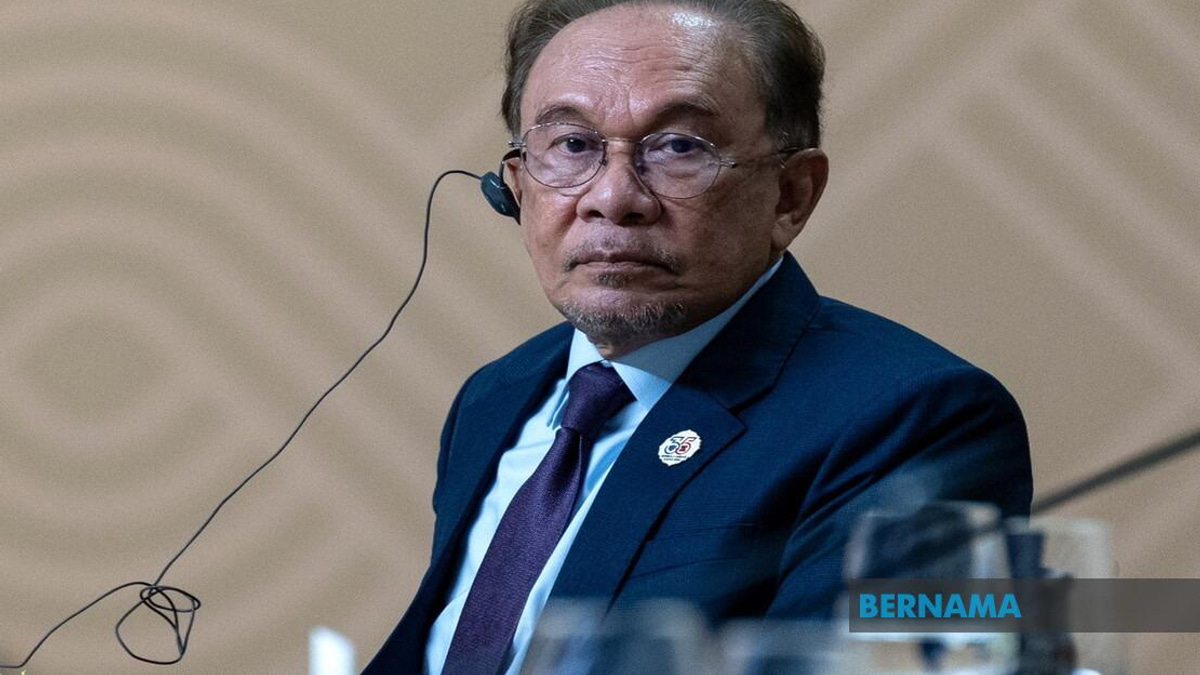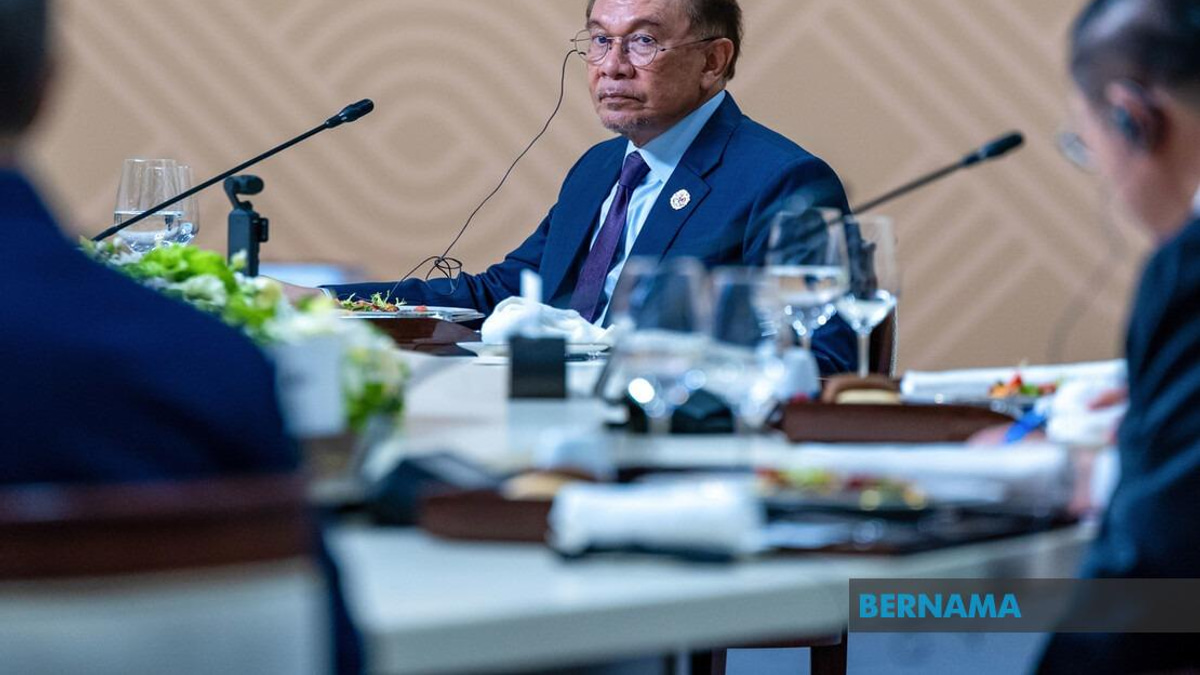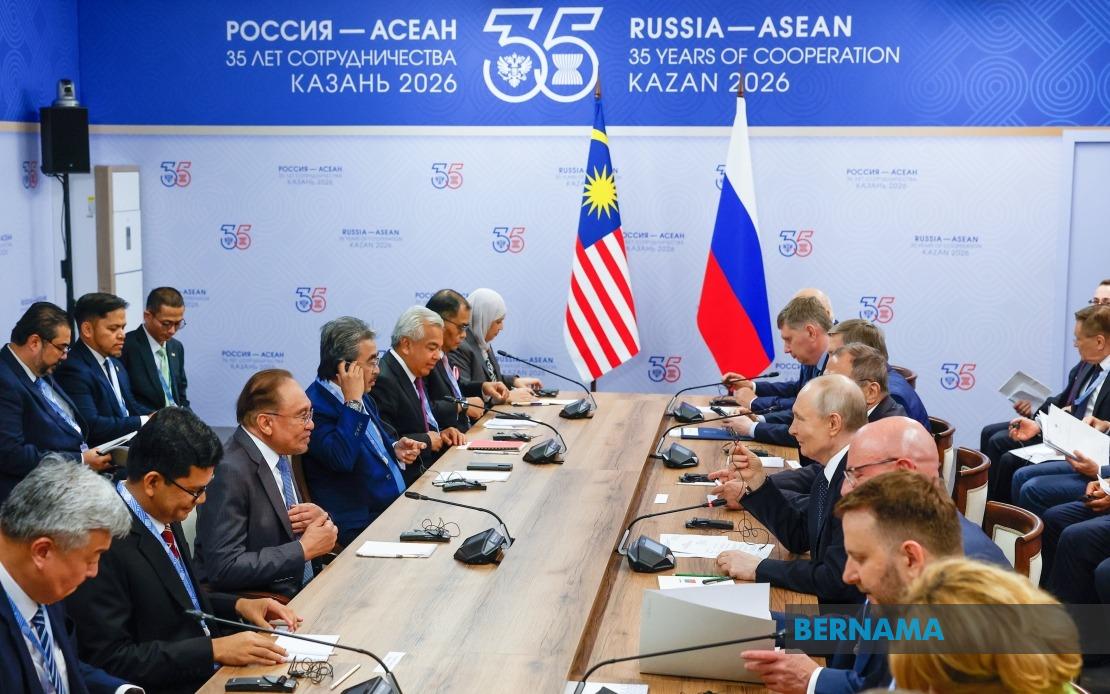
Russian President Vladimir Putin has signalled Moscow's intent to significantly deepen its relationship with Malaysia, emphasising the solid foundation both nations have constructed during their nearly six decades of formal diplomatic engagement. The announcement came during bilateral talks between Putin and Malaysian Prime Minister Datuk Seri Anwar Ibrahim at the ASEAN-Russia Commemorative Summit in Kazan on June 18, where the Russian leader stressed that the two countries are approaching their upcoming diplomatic milestone with concrete achievements and coordinated strategies for future collaboration.
The approaching 60th anniversary of formal relations in 2025 represents a pivotal moment for Moscow-Kuala Lumpur ties, according to Putin, who emphasised the "substantive positive experience" that has accumulated through decades of interaction. This characterisation reflects Russia's view that bilateral engagement extends far beyond ceremonial diplomacy into practical domains affecting both economies and societies. The Russian president highlighted the existence of established mechanisms and regular dialogue channels through which both governments maintain continuous engagement, underscoring the institutional maturity of their relationship.
Structural coordination between the two nations operates through multiple layers of interaction. Putin noted that Russia and Malaysia sustain consistent communications across their ministries, government agencies, and parliamentary bodies. Particularly significant is the intergovernmental commission responsible for overseeing economic, scientific, technical, and cultural cooperation—an institutional framework designed to translate political goodwill into tangible joint projects. This multipronged approach demonstrates how bilateral relations extend across diverse sectors rather than remaining confined to traditional diplomatic channels.
Trade performance has emerged as a barometer of growing economic interdependence. During 2025 alone, bilateral commerce expanded by 12.9 per cent, a trajectory Putin characterised as a positive indicator of expanding economic ties. For Malaysian policymakers and business leaders, this growth rate suggests increasing opportunities within the Russian market across various sectors. The steady expansion of trade flows reflects both countries' commitment to pursuing mutually beneficial economic partnerships despite the complex geopolitical environment characterising contemporary international relations.
Beyond commerce, Putin emphasised Russia's substantial interest in broadening cooperation with Malaysia across education, science and technology, tourism, and humanitarian exchanges. These sectors represent soft-power dimensions of bilateral engagement that cultivate deeper people-to-people connections and foster mutual understanding between societies. Investment in educational partnerships, scientific collaborations, and cultural tourism initiatives creates multiplier effects that reinforce political and economic bonds while generating direct benefits for citizens in both nations.
Malaysia's role within ASEAN structures has acquired additional strategic significance in Putin's assessment. The Russian president specifically commended Malaysian support for strengthening Russia-ASEAN strategic partnership, referring to the historic precedent established when Malaysia hosted the first summit-level meeting between Russia and the entire ASEAN bloc in 2005. By acknowledging Malaysia's chairmanship of ASEAN in the preceding year and its continued advocacy for Russia-ASEAN development, Putin recognised Kuala Lumpur's diplomatic influence within Southeast Asia's premier regional forum.
This regional dimension carries substantial implications for Malaysia's foreign policy architecture. As a trusted bridge between Russia and ASEAN, Malaysia occupies a unique position enabling it to facilitate dialogue and cooperation initiatives between Moscow and Southeast Asian nations. Putin's recognition of this mediating role reflects Russia's appreciation for Malaysia's balanced approach to international relations, particularly its ability to maintain substantive partnerships with multiple major powers while remaining deeply rooted in regional frameworks and institutions.
Characterising Malaysia as a "long-standing global partner," Putin reaffirmed Russia's commitment to a relationship grounded in mutual respect and reciprocal consideration of each other's interests. This rhetorical framing suggests Moscow views its engagement with Malaysia as fundamentally distinct from transactional relationships pursued for short-term advantage. Instead, the Russian perspective emphasises enduring principles of sovereign equality and mutual accommodation that should sustain cooperation across shifting geopolitical circumstances.
The bilateral meeting also conveyed important symbolic dimensions. Putin recalled previous engagements with Anwar Ibrahim within Malaysia's territory, demonstrating the personal dimension underlying state-to-state relations. His request to convey best wishes to His Majesty Sultan Ibrahim, King of Malaysia, reflected appropriate protocol observance while simultaneously affirming respect for Malaysia's constitutional monarchy. Such courtesies, while seemingly ceremonial, reinforce the relational warmth underlying formal diplomatic discourse and signal Russian recognition of Malaysia's governmental and institutional structures.
For Malaysian observers, Putin's emphasis on the upcoming 60th anniversary milestone signals Russia's intention to transform this commemoration into a launching point for substantively expanded partnership rather than merely celebrating historical achievements. The convergence of growing trade momentum, established institutional mechanisms, and explicit leadership commitment suggests opportunities for Malaysian entities across multiple sectors. Whether through expanded commercial ventures, educational exchanges, or technological collaborations, businesses and academic institutions may find expanded space for engagement with Russian counterparts.
The strategic context informing these statements reflects broader patterns in contemporary international relations. Russia's cultivation of partnerships across Asia-Pacific responds partly to geopolitical tensions with Western nations, creating incentives for Moscow to strengthen ties with non-aligned and pragmatic partners like Malaysia. Simultaneously, Malaysia's maintenance of balanced relationships across major powers positions it well to benefit from Russian interest in deepening engagement. This convergence of interests creates genuine scope for expanded cooperation while enabling both nations to pursue foreign policy objectives aligned with their respective regional and global strategies.
The Kazan meeting therefore represents more than ceremonial acknowledgement of historical ties. It signals mutual commitment to translating the substantial foundation of 60 years of diplomatic relations into expanded practical engagement across multiple domains. For Malaysia, this offers opportunities to diversify partnerships and strengthen its position as a key ASEAN player capable of engaging major powers constructively. For Russia, deepening Malaysian ties serves broader strategic objectives of expanding influence within Southeast Asia while building relationships with nations that practice principled non-alignment in contemporary geopolitical contestations.