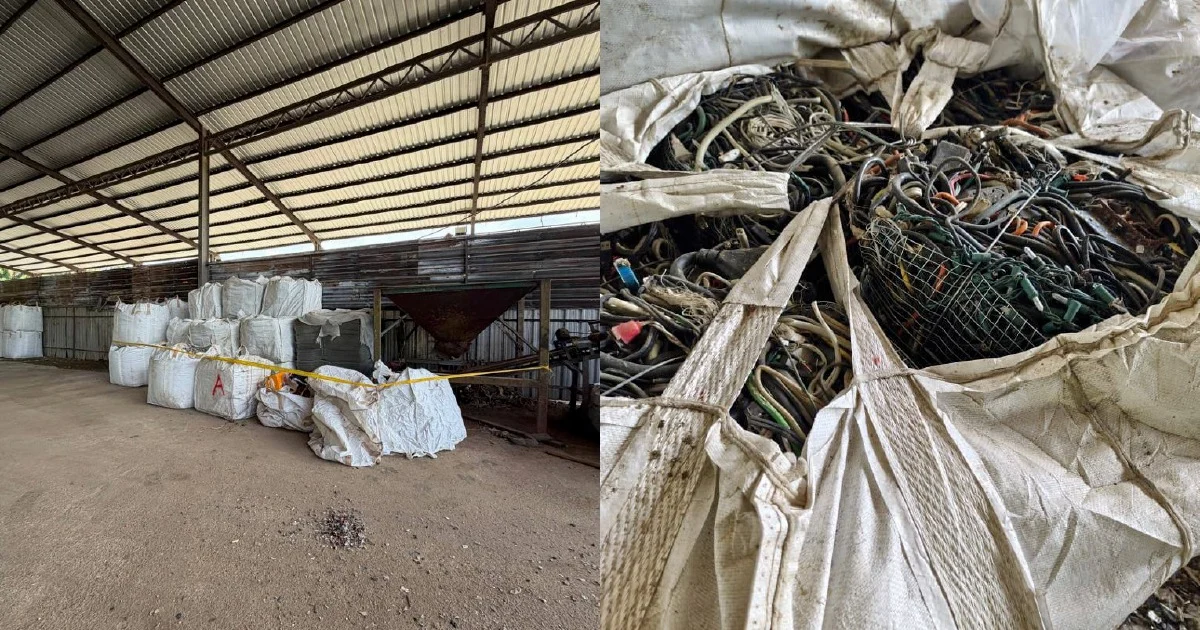
Authorities in Penang have dismantled what investigators describe as a significant illegal electronic waste operation following a raid conducted in the Bukit Mertajam industrial area. The enforcement action resulted in the seizure of materials estimated to be worth RM3 million, representing one of the larger hauls targeting unauthorised e-waste processing in the state in recent months. The operation, which specialised in collecting, processing, and storing discarded electronic equipment, had been functioning without the necessary environmental permits and regulatory approvals required under Malaysian law.
Five individuals were arrested at the scene and are currently being held for questioning regarding their involvement in running the facility. Investigators are working to establish the operational structure of the enterprise, including supply chains and potential distribution networks for processed materials. The detainees are expected to face charges under environmental protection legislation once the initial inquiry phase concludes, though authorities have not yet disclosed specific regulatory violations or provided details regarding the accused persons' identities and backgrounds.
The seizure highlights the persistent challenge facing Malaysian environmental enforcement agencies as demand for electronic goods continues to surge across the region. Malaysia, as a developed manufacturing hub with high consumption of electronics, generates substantial volumes of e-waste annually. Much of this material has historically entered informal processing channels rather than authorised recycling facilities, where workers and surrounding communities face exposure to hazardous substances including lead, mercury, and other toxic compounds found in obsolete devices.
E-waste processing conducted without proper environmental safeguards poses severe public health and ecological risks. Unregulated dismantling operations frequently lack ventilation systems, personal protective equipment, and controlled waste disposal mechanisms. Neighbouring residential areas and water sources can become contaminated through improper handling and disposal of hazardous residues. Workers, many of whom operate without formal training or safety awareness, face particular vulnerability to toxic exposure that can cause respiratory illness, neurological damage, and other serious health complications.
This operation in Bukit Mertajam represents part of a broader pattern that enforcement authorities have documented across Peninsular Malaysia and within Penang state specifically. The proliferation of such facilities reflects economic incentives created by legitimate recyclers' inability to process waste at prices that attract large quantities of discarded electronics. Informal operators have capitalised on this gap, undercutting authorised facilities by offering cash payments to collectors and businesses seeking to discard electronics without incurring proper disposal charges.
Regulatory frameworks governing e-waste management in Malaysia have expanded considerably over the past decade. However, implementation and enforcement remain inconsistent, particularly in detecting and shutting down unauthorised operations that function discreetly in industrial estates and rural manufacturing zones. The Environment and Water Ministry, working alongside local authorities and the Department of Environment, has prioritised intensifying compliance checks targeting suspected illegal processors, though resource constraints continue to limit enforcement capacity.
The economic value attributed to the seized materials reflects the substantial commodity worth embedded within discarded electronics. Circuit boards, copper wiring, and other components extracted during dismantling fetch significant prices in secondary markets, particularly in Asian recycling networks. This value proposition drives the economics of informal e-waste handling, making enforcement interventions essential to preserving the viability of authorised recycling enterprises that operate under environmental compliance requirements and consequently higher operational costs.
Community notification regarding the raid has prompted local residents to report concerns about potential environmental contamination in surrounding areas. Authorities are currently assessing whether soil and water samples require testing to determine whether hazardous substances from the facility have migrated beyond the immediate operational site. Environmental remediation may become necessary depending on initial assessment findings, adding to the overall costs associated with addressing the illegal operation's legacy.
The seizure also underscores challenges that Malaysia faces in competing with regional markets for legitimately recyclable electronic materials. Advanced economies increasingly restrict waste imports and enforce circular economy principles that require manufacturers to manage end-of-life products, limiting the volume of raw materials available to processors. This supply constraint creates pressure on Malaysian recyclers, making enforcement against unfair competition from informal operators increasingly important for sustaining the viability of the legitimate recycling sector.
Moving forward, enforcement officials anticipate pursuing additional investigations into supply relationships and distribution networks connected to this facility. Authorities are examining whether the operation received materials from other sources across Penang and potentially from neighbouring states, which would expand the investigative scope considerably. Such network analysis typically forms the foundation for coordinated enforcement actions targeting multiple connected facilities operating under similar operational models.