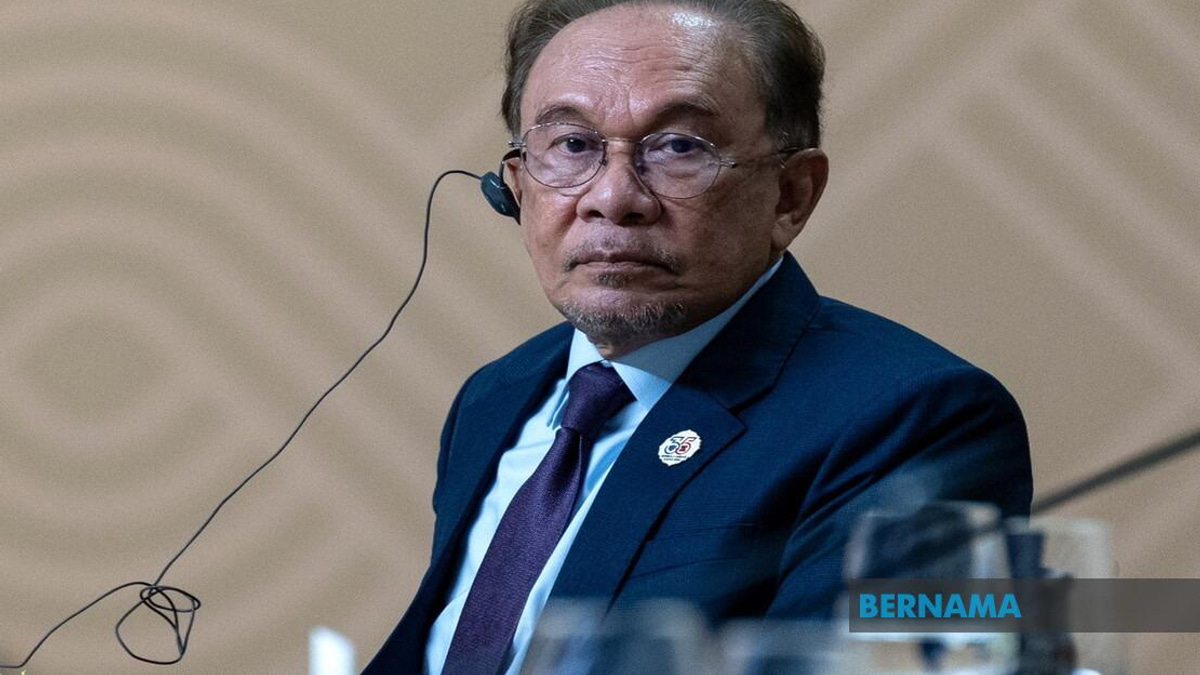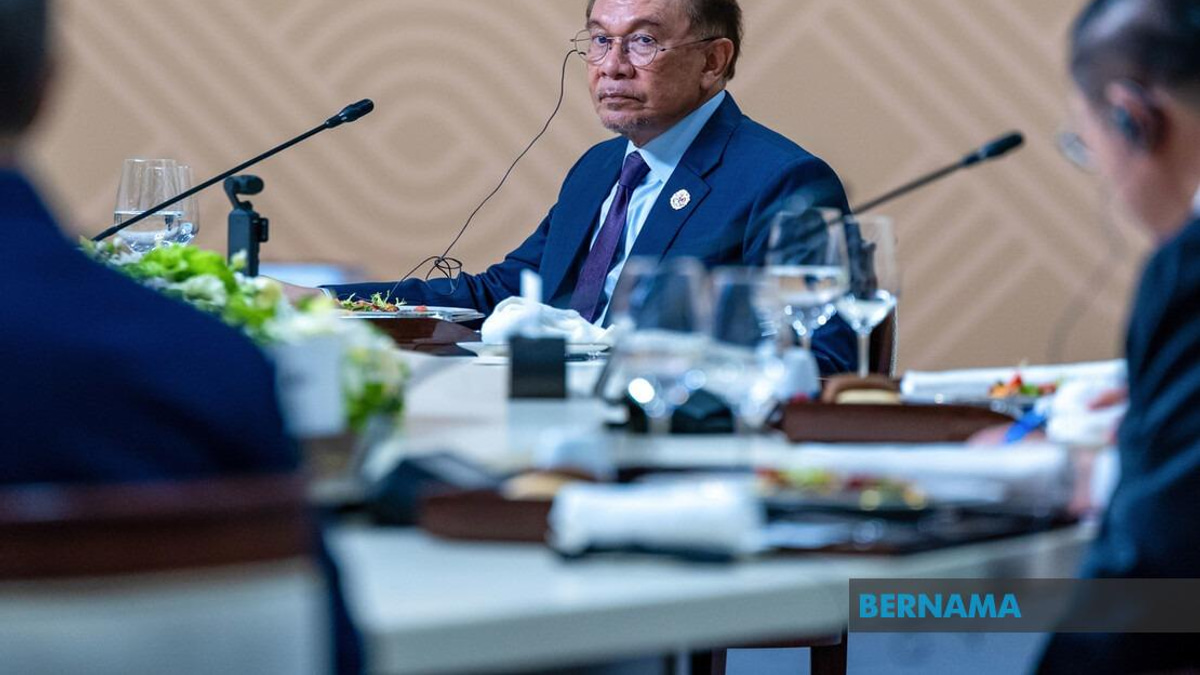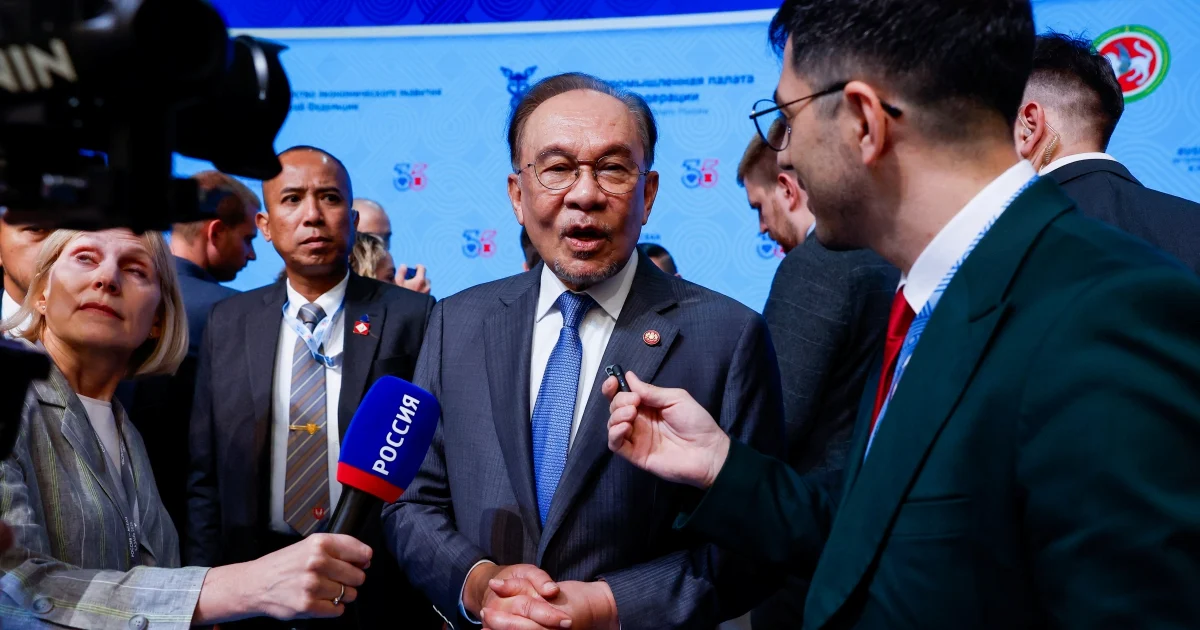
Prime Minister Datuk Seri Anwar Ibrahim has articulated a vision of nation-to-nation relations that extends well beyond conventional trade and investment frameworks, spotlighting his own affinity for Russian cultural traditions during a visit to Kazan. In remarks that reflect a broader diplomatic philosophy, the Premier highlighted how artistic and literary exchanges serve as crucial pillars in constructing enduring partnerships between peoples, complementing the more transactional dimensions of statecraft.
Anwar's appreciation for Russian musical traditions and literary heritage represents more than idle personal preference. His public acknowledgment of these cultural interests sends a deliberate signal about Malaysia's approach to international engagement, particularly as Kuala Lumpur seeks to diversify partnerships and deepen relationships across the Eurasian sphere. For a Southeast Asian nation that has historically anchored its foreign policy around economic pragmatism and security considerations, the explicit valorisation of soft cultural power demonstrates an evolving understanding of what sustained diplomatic influence requires.
The significance of such gestures becomes apparent when considered against Malaysia's broader geopolitical positioning. While the country maintains robust trade relationships with major powers across multiple regions, cultural diplomacy offers a pathway to connection that transcends commercial calculation and speaks to shared human values and aesthetic appreciation. By positioning himself as an interlocutor familiar with Russian cultural achievements, Anwar projects an image of Malaysia as a nation whose leadership possesses intellectual breadth and cosmopolitan sensibility.
Russian literature, with its profound philosophical dimensions and historical weight, carries particular symbolic resonance. The works of figures like Tolstoy, Dostoevsky, and Pushkin have long exercised influence across global intellectual circles, and a Malaysian Prime Minister's engagement with this literary tradition signals an appreciation for intellectual complexity and humanistic values. Such references also facilitate personal rapport and mutual recognition between leaders from different civilisational backgrounds, creating informal channels of understanding that complement official negotiations.
The emphasis on cultural exchange as a foundation for bilateral cooperation aligns with broader trends in contemporary international relations, where soft power and cultural influence increasingly determine a nation's ability to project authority and attract partnerships. For Malaysia specifically, cultural diplomacy offers particular advantages. The country's own diverse heritage of Malay, Chinese, Indian, and Islamic traditions has long constituted a form of soft power, and Anwar's emphasis on mutual cultural appreciation invites reciprocal recognition of Malaysia's own rich cultural contributions to global discourse.
In the context of Russia-Malaysia relations, cultural outreach helps to humanise international connections and provide ballast against the transactional dimensions of geopolitics. As both nations navigate complex regional and global environments, the cultivation of people-to-people understanding through artistic and intellectual exchange creates constituencies within each society invested in the health of bilateral relations. Musical performances, literary translations, and academic collaborations generate networks of individuals connected by shared aesthetic and intellectual interests.
Moreover, Anwar's articulation of this philosophy reflects lessons drawn from Malaysia's experience with multilateral engagement across ASEAN, where cultural sensitivity and mutual respect form essential foundations for successful cooperation. Southeast Asian diplomatic traditions have long emphasised the importance of understanding and accommodating the values and worldviews of partners, and Anwar's remarks demonstrate the application of these principles to relations beyond the regional sphere.
The reference to Russian music and literature also carries implications for how Malaysia might encourage similar cultural exchanges within Southeast Asia and with other strategic partners. By modelling this approach himself, the Prime Minister implicitly encourages other Malaysian leaders and institutions to engage more deeply with the cultural traditions of partner nations. This could encompass expanded educational exchanges, translation initiatives, artistic collaborations, and academic partnerships that deepen mutual understanding.
For Russian policymakers, Anwar's enthusiastic engagement with their cultural heritage offers a tangible expression of Malaysia's genuine interest in sustained partnership. Rather than treating the relationship as primarily transactional, the Malaysian leadership demonstrates appreciation for Russian civilisational contributions and intellectual traditions, signalling respect that transcends narrow commercial interests. Such recognition can prove particularly valuable in contexts where economic cooperation faces external constraints or complications.
The comments also subtly underscore Malaysia's independence in its approach to international relations. By speaking personally about cultural affinities rather than merely articulating official policy positions, Anwar demonstrates space for individual initiative and authentic connection within Malaysia's diplomatic framework. This humanised approach to statecraft contrasts with more rigidly scripted diplomatic interactions and may enhance Malaysia's appeal as a partner nation.
Looking forward, Anwar's championing of cultural exchange suggests that Malaysia will likely seek to expand institutional mechanisms for artistic and intellectual cooperation with Russia and other strategic partners. This could include expanded cultural centres, enhanced translation programmes, scholarly exchange initiatives, and collaborative cultural projects that cement mutual understanding at levels beyond governmental relations.
Ultimately, the Prime Minister's candid remarks about his personal engagement with Russian arts and letters reveal a sophisticated understanding of how modern diplomacy functions. In an era increasingly characterised by nationalist impulses and zero-sum calculations, explicit appreciation for another nation's cultural achievements represents a subtle but significant assertion of shared human values and mutual respect. For Malaysia and Russia, as for all nations seeking durable partnerships, such cultural bridges may prove as essential to long-term relations as any trade agreement or security accord.