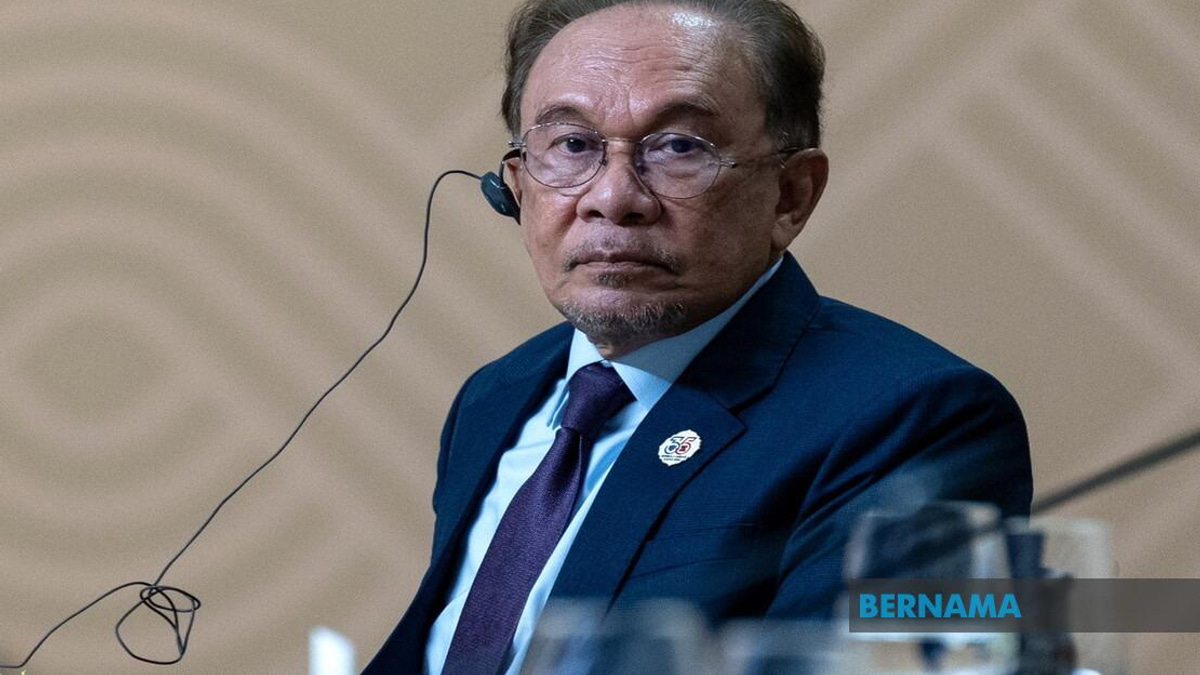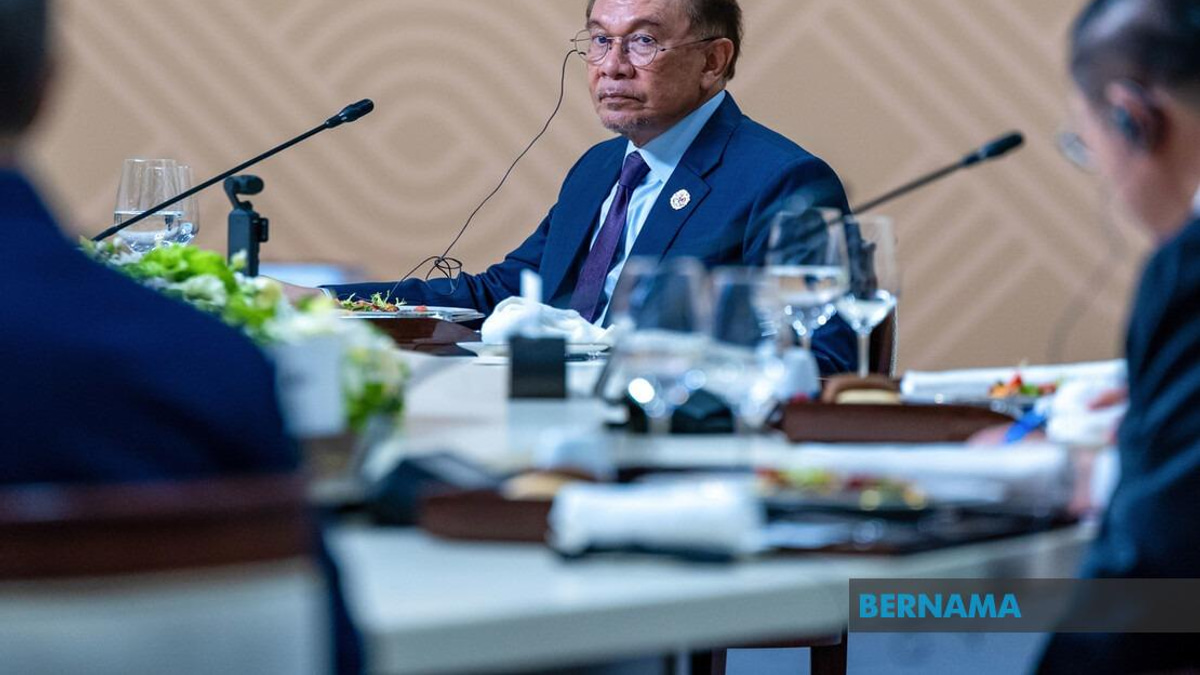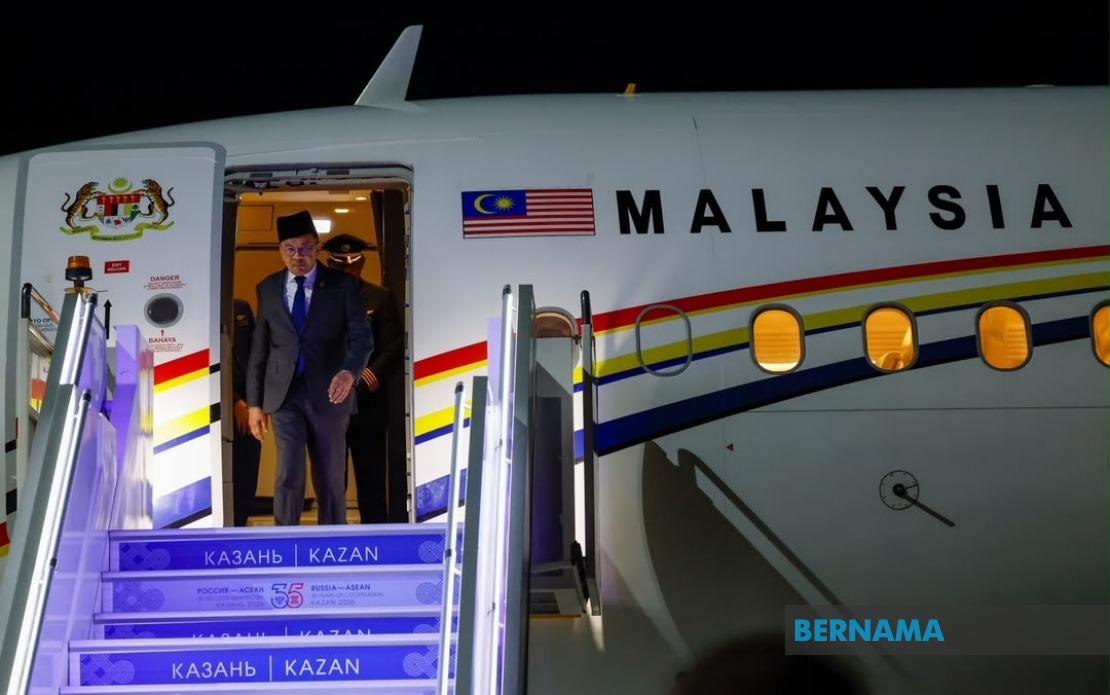
Prime Minister Datuk Seri Anwar Ibrahim touched down in Kazan on Tuesday evening to begin a two-day working visit centred on attending the ASEAN-Russia Commemorative Summit, a landmark gathering designed to reinforce longstanding ties between Southeast Asia's leading political bloc and the Russian Federation. The premier's aircraft arrived at Kazan International Airport at 10.20 pm local time, marking the start of what officials describe as a critical engagement at a time when regional and global dynamics are shifting rapidly. The delegation accompanying him included Minister of Investment, Trade and Industry Datuk Seri Johari Abdul Ghani and Minister of Economy Akmal Nasrullah Mohd Nasir, reflecting the government's emphasis on leveraging the summit for economic advancement.
The summit, scheduled for June 17 and 18, represents a significant milestone as it commemorates three and a half decades of formal relations between ASEAN and Russia, a partnership first established in Kuala Lumpur in 1991 when Cold War tensions were beginning to thaw. For Malaysia, this engagement underscores the nation's role as a bridge-builder within ASEAN, promoting what officials term ASEAN Centrality—the principle that the bloc should maintain its agency and influence in an increasingly multipolar world. The timing of the summit carries particular weight given the geopolitical turbulence affecting global trade, energy markets, and security architectures, all issues where ASEAN and Russia have shared or complementary interests.
Though three and a half decades may seem a lengthy diplomatic timeline, the ASEAN-Russia relationship has historically operated below the radar of most regional watchers, overshadowed by more publicised partnerships with Western powers. The Kazan summit aims to change this perception by positioning the relationship as substantive and forward-looking rather than merely ceremonial. By convening at this moment, both sides signal that deepening practical cooperation serves their respective strategic objectives. For ASEAN nations, Russia represents a major energy supplier, a growing market, and a permanent UN Security Council member whose interests in regional stability merit serious engagement. For Russia, ASEAN's ten members collectively represent an enormous economic zone and a crucial factor in Asian geopolitics.
The agenda reveals the breadth of areas where the two entities see mutual benefit. Trade and investment feature prominently, as ASEAN members seek to diversify their economic partnerships beyond traditional Western markets and reduce dependency on any single power or bloc. Energy cooperation holds particular significance for Southeast Asia, where demand for resources continues to surge alongside economic development and industrialisation. Food security—a perennial concern for densely populated archipelagic and peninsular nations—offers another practical dimension where Russian agricultural capacity and Southeast Asian markets can find complementary advantages. The digital economy and science and technology partnerships reflect recognition among ASEAN leaders that technological advancement will determine competitive positioning in coming decades.
Cultural cooperation and people-to-people exchanges, while sometimes dismissed as soft diplomacy, serve critical functions in building genuine understanding and preventing misperceptions that can escalate geopolitical tensions. For Malaysia specifically, these dimensions resonate with the government's emphasis on building bridges across civilisational and ideological divides. Educational partnerships offer Malaysian students and scholars access to Russian expertise while creating networks that transcend official channels. Tourism and cultural sharing humanise international relations, moving them beyond the transactional sphere into the realm of shared experience and mutual respect.
The four outcome documents anticipated from the summit—including the Kazan Declaration marking the anniversary, joint statements on energy and cultural cooperation, and a Comprehensive Plan of Action for 2026-2030—will establish the framework guiding bilateral and multilateral engagement for the coming years. These instruments carry weight beyond ceremonial significance; they provide specific commitments, timelines, and mechanisms through which cooperation translates from rhetoric into tangible projects and investments. The Plan of Action's five-year horizon suggests confidence among signatories that the partnership warrants medium-term institutional commitments and resource allocation.
While in Kazan, Anwar is anticipated to hold bilateral discussions with Russian President Vladimir Putin, a meeting that carries symbolic and substantive importance. Such high-level exchanges often produce announcements of new initiatives, investment pledges, or diplomatic understandings that filter into national policy. The Malaysian premier will also engage with the Rais of Tatarstan and other ASEAN counterparts, creating multiple forums for dialogue. The issues Anwar intends to emphasise—dialogue and peace, economic resilience, energy and food security, and people-to-people links—reflect Malaysia's positioning as a nation concerned with stability and inclusive development rather than zero-sum competition.
This Kazan visit constitutes Anwar's third engagement with Russia since he assumed the premiership in November 2022, a frequency that underscores the government's commitment to maintaining substantive engagement despite Malaysia's traditional alignment with Western institutional frameworks like ASEAN dialogue partnerships with the United States, European Union, and others. His first visit in September 2024 took him to Vladivostok for the Eastern Economic Forum, a platform attracting regional investors and policymakers interested in Russia's Far East development. The subsequent official visit to Moscow in May 2025 involved detailed discussions with Putin on trade, investment, agriculture, education, aerospace, and energy cooperation, indicating that the relationship extends beyond ceremonial visits into sectors critical to Malaysia's economic future.
The trajectory of Anwar's Russia engagement suggests a deliberate strategy to position Malaysia as a serious economic and diplomatic partner to Moscow while maintaining ASEAN unity and not alienating Western partners. This balancing act, while challenging, reflects the reality that Southeast Asia's development and security depend on preventing great power competition from fragmenting the region into hostile camps. Malaysia's experience—as a nation with deep Western institutional ties, significant Chinese investment, Japanese technological partnerships, and Indian economic links—provides experience in managing multiple great power relationships without sacrificing autonomy or national interest.
For broader Southeast Asian audiences, the Kazan summit signals that ASEAN's engagement strategy extends comprehensively across the global landscape. Rather than passively responding to external pressures, ASEAN members are actively cultivating relationships with diverse powers, including Russia, to advance collective and individual interests. This approach requires sophisticated diplomacy and clear-eyed assessment of where cooperation serves mutual benefit. The summit's focus on pragmatic areas—energy, trade, food security, technology—rather than ideological alignment suggests that ASEAN's principal concern remains development, stability, and prosperity for its citizens rather than alignment in abstract geopolitical competitions.
The significance of the summit for Malaysia extends beyond immediate diplomatic outcomes. Successfully leveraging Russia engagement while maintaining ASEAN cohesion and Western partnerships enhances Malaysia's standing as a trusted bridge-builder within the bloc and internationally. For Malaysian businesses, the summit creates opportunities to identify Russian partners, explore joint ventures, and access markets previously underutilised. For Malaysian policymakers, the ASEAN-Russia Strategic Partnership framework provides mechanisms to address challenges—from maritime security to digital governance—that transcend bilateral relationships. The Kazan summit thus represents not merely a ceremonial marking of 35 years of relations, but a recalibration of engagement between two significant global actors seeking practical cooperation in an increasingly multipolar world.