The Philippine Department of Justice has opened an investigation into the possible culpability of public officials in connection with a shooting incident at the Senate building on May 13 and the subsequent escape of Senator Ronald dela Rosa from protective custody early on May 14. Justice Secretary Fredderick Vida confirmed that prosecutors are actively gathering evidence and examining the circumstances surrounding both events, which have raised serious questions about security lapses and potential coordination among individuals with access to state institutions.
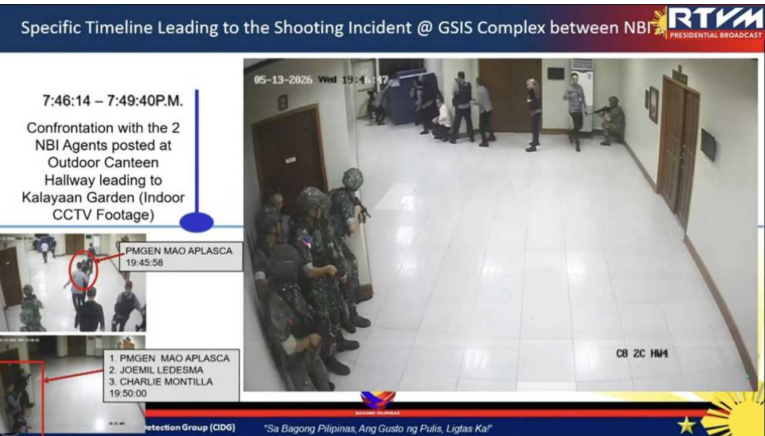
The sniper attack, according to preliminary findings presented by Vida, involved gunfire discharged from the fifth floor of the Senate building directed at a clearly identifiable National Bureau of Investigation vehicle stationed at the Government Service Insurance System premises. This suggests a deliberate and targeted assault rather than random violence, indicating either foreknowledge of the vehicle's location or real-time surveillance of NBI operations. The specificity of the target raises questions about how an identifiable government security asset became exposed to direct fire from within a supposedly secure legislative building.
Vida's investigation team has assembled evidence from multiple sources to construct a timeline and establish connections between the shooting and dela Rosa's subsequent departure from custody. Accounts obtained from NBI personnel, security camera footage, and statements from journalists who witnessed or covered the incident form the evidentiary foundation for the inquiry. This multi-sourced approach suggests investigators are attempting to rule out coincidence and establish whether the shooting served as a distraction or cover for the senator's escape, or whether the two events are related through common actors or orchestration.
The timing of the incidents—a shooting in the late hours of May 13 followed by dela Rosa's escape in the early morning hours of May 14—naturally invites speculation about coordination. Dela Rosa, formerly a prominent police official and vocal supporter of President Rodrigo Duterte's drug war, had been placed under protective custody, suggesting he faced credible threats. His escape during the chaos following the Senate building shooting raises the possibility that security arrangements were deliberately compromised or that the incident created an opportunity for his departure.
While Vida acknowledged that preliminary findings point toward the involvement of multiple public officials, he emphasized that no specific individuals have yet been formally named as suspects. This measured approach reflects both the complexity of the investigation and the political sensitivity of pursuing charges against government figures. The phrase "many of the personalities involved are public officials" suggests a web of potential misconduct extending across multiple individuals or agencies, rather than isolated wrongdoing by a single actor.
The Justice Secretary's cautionary remarks about evidence examination and the presumption of innocence appear deliberately calibrated to address public concerns about political influence in the investigation. His assertion that "no individual is above the law" carries particular weight in the Philippine context, where powerful officials have historically evaded accountability. Simultaneously, his warning against premature judgment signals an attempt to insulate the investigation from accusations of persecution or selective prosecution based on political considerations.
For Malaysian and Southeast Asian observers, this episode illustrates the vulnerability of institutional security within legislative spaces and the challenges facing investigations that implicate government insiders. The incident raises troubling questions about whether public officials can maintain impartiality when investigating alleged misconduct by colleagues or superiors. In jurisdictions where political loyalty sometimes supersedes legal obligation, such investigations can become tools for factional struggle rather than genuine accountability mechanisms.
The shooting at the Senate building itself represents a significant breach of physical security at the heart of the Philippine government. That gunfire could be directed from within the building itself at external targets indicates either a severe failure in access controls, security screening, or cooperation by individuals with legitimate presence in the facility. The incident suggests that threats to security and stability may originate not merely from external actors but from compromised state personnel.
Dela Rosa's background as a former police general and public figure adds another dimension to the investigation. His protection needs presumably arose from his role in or association with controversial security operations, yet his escape from custody eliminates him as a witness or potential defendant, at least temporarily. His whereabouts and the circumstances enabling his departure become central questions in determining whether officials acted to facilitate his escape or negligently failed in their custodial duties.
The investigation's success will depend significantly on whether prosecutors can overcome institutional resistance and investigate their colleagues or superiors without fear or favor, as Vida pledged. In many jurisdictions, investigations involving multiple public officials risk becoming bogged down in jurisdictional disputes, claims of privilege, or pressure from politically connected individuals seeking to limit the inquiry's scope. The DOJ's commitment to pursuing the matter professionally while respecting due process will face real tests as evidence points toward specific individuals.
For the broader Southeast Asian region, the Philippine investigation carries implications for confidence in institutional checks and the rule of law. Citizens across the region watch how established democracies handle cases where security failures or misconduct reach the highest levels of government. A thorough, impartial investigation that holds powerful officials accountable strengthens democratic norms; conversely, a compromised or incomplete investigation undermines faith in legal institutions and suggests that political position provides immunity from consequences.
As the DOJ continues gathering evidence and examining the links between the shooting and dela Rosa's escape, the investigation will reveal whether Philippine institutions can effectively police themselves. The preliminary findings already indicate involvement of public officials, but moving from suspicion to proven charges requires overcoming significant obstacles. The coming weeks and months will demonstrate whether Vida's pledge of professionalism and objectivity can translate into actual accountability or whether institutional and political pressures will constrain the investigation's reach and conclusions.