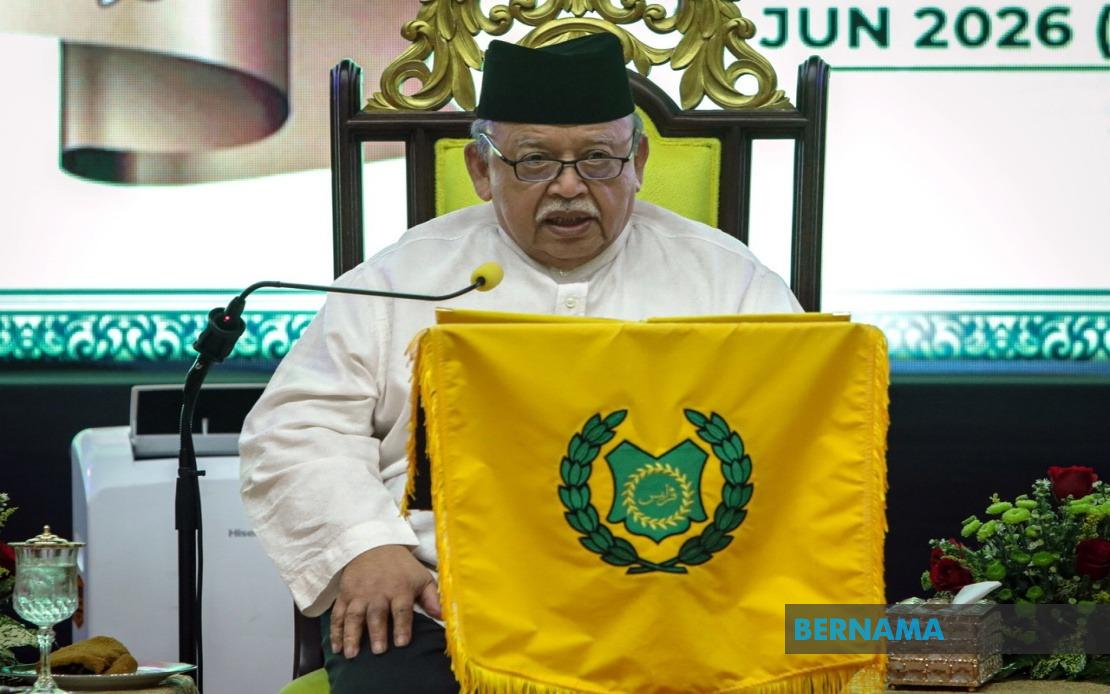
Tuanku Syed Sirajuddin Jamalullail, the Raja of Perlis, has delivered a pointed message to Malaysians about the foundations needed for national advancement, urging them to conduct their affairs with honesty, view employment as a spiritual duty and decisively oppose all manifestations of graft. Speaking during the state-level Maal Hijrah 1448H/2026M celebration in Kangar, the Ruler articulated a vision of progress that extends beyond infrastructure and economic metrics to encompass the moral and intellectual fabric of society.
In his address, Tuanku Syed Sirajuddin stressed that authentic development requires populations grounded in learning, characterised by principled behaviour, anchored in respect for others and bound by shared purpose. His framing of progress as multidimensional rather than purely material reflects a growing emphasis among Malaysia's leadership on addressing concerns about ethical standards in public and private institutions. The Ruler's intervention comes against a backdrop of ongoing efforts to combat graft and strengthen governance systems across the region.
The concept of MADANI progress, which the Ruler invoked, represents Malaysia's broader development framework prioritising human advancement alongside economic growth. According to Tuanku Syed Sirajuddin, this model cannot be judged solely by concrete achievements or GDP figures but must encompass educational advancement, the refinement of individual character, cultural vitality, intellectual maturity and the robustness of institutional values. This articulation suggests a conscious pivot toward benchmarking national success through indicators of social cohesion and ethical conduct rather than conventional development statistics alone.
The Ruler presented a comprehensive agenda for citizens, calling on them to integrate civilised conduct into everyday interactions, reinforce communal bonds, commit to lifelong learning, maintain standards of courtesy and execute duties with clarity of purpose and accountability. These principles, when adopted collectively, form the bedrock of what Malaysian leadership conceptualises as a truly advanced society. The emphasis on accountability particularly resonates in a Malaysian context where public trust in institutions has periodically faced challenges.
Tuanku Syed Sirajuddin also underscored the importance of deepening Islamic understanding grounded in the Quran and Sunnah while simultaneously cultivating sophisticated political culture and fostering citizens capable of greater self-reliance and competitive capability. This dual emphasis reflects the delicate balance Malaysian institutions must maintain between religious authenticity and modern governance standards. The Ruler's insistence on balancing these elements suggests recognition that prosperity depends on neither exclusively secular modernisation nor insular religious approaches, but rather their thoughtful integration.
Central to the Ruler's remarks was an appeal for comprehensive ummah development spanning religious, political, economic and social spheres. He advocated for nurturing qualities of courage, intellectual rigour and self-sufficiency within Perlis society, positioning these attributes as essential for constructing sustainable pathways toward improved conditions for future generations. Such multilayered development strategy acknowledges that progress emerges from simultaneous advancement across multiple dimensions rather than concentration in single sectors.
Recognising that contemporary societies face unprecedented pressures, Tuanku Syed Sirajuddin highlighted the imperative for Malaysians to equip themselves for emerging challenges including accelerating technological change, artificial intelligence integration, rapid social transformation and fluctuating global economic conditions. His characterisation of these as challenges demanding proactive engagement rather than passive observation reflects awareness that reactive approaches risk marginalising communities unable to navigate rapid shifts. Southeast Asian nations face particular urgency in this regard, competing globally while managing internal pressures of technological adoption.
The Ruler rejected a posture of passive spectatorship, instead exhorting citizens to position themselves as originators of innovation, architects of transformation and active participants in advancement. This framing empowers individuals and communities to see themselves as agents of change rather than victims of circumstances, a psychological reorientation potentially impactful for mobilising societal participation in development initiatives. For Malaysia specifically, such messaging may galvanise greater civic engagement across the diverse population.
During the ceremony, Tuanku Syed Sirajuddin conferred the Perlis Tokoh Maal Hijrah award upon Datuk Izham Mahmud, a board member of Yayasan Tuanku Syed Putra, in acknowledgement of his sustained contributions to community advancement. This recognition mechanism reinforces the Ruler's message by highlighting and celebrating individuals embodying the principles he articulated, creating exemplars for broader emulation. Accompanying the Ruler at the event were Tuanku Syed Faizuddin Putra Jamalullail, the Raja Muda of Perlis, and Tuanku Dr Hajah Lailatul Shahreen Akashah Khalil, the Raja Puan Muda, signifying institutional commitment to these values at the highest levels of state leadership.