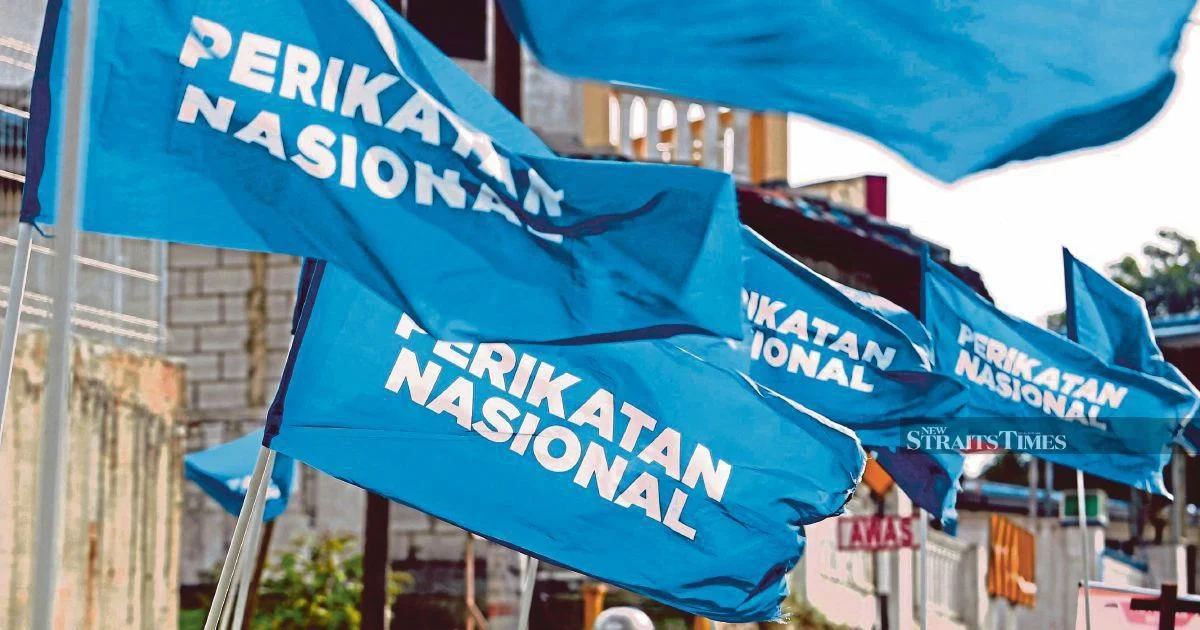
Cracks in the Perikatan Nasional coalition widened significantly as PAS leadership publicly questioned Bersatu's entitlement to deploy the multi-party alliance's logo during the forthcoming state elections in Johor and Negri Sembilan. The challenge represents an escalation of existing friction within the opposition coalition, with PAS asserting strict governance rules around the use of shared symbols that define the bloc's unified identity.
During remarks made in Kota Baru yesterday, PAS officials emphasised that the right to authorise logo usage falls exclusively within the purview of Perikatan Nasional's coalition chairman, establishing a clear hierarchical precedent that had apparently not been followed in Bersatu's campaign preparations. This assertion underscores deeper questions about internal decision-making structures and the extent to which individual member parties can act unilaterally on matters affecting the coalition's public representation and branding.
The logo dispute carries implications extending beyond administrative protocol. In Malaysian coalition politics, symbols carry enormous weight in voter perception and party unity messaging. The ability to use a coalition logo represents both recognition and legitimacy within a broader political structure. By restricting this authority to the chairman level, PAS appears to be reasserting hierarchical control and preventing individual parties from leveraging collective brand identity without explicit permission from designated leadership.
Bersatu's apparent decision to proceed without formal authorisation suggests either a miscommunication regarding protocol or a deliberate assertion of autonomy that has unsettled coalition partners. Such unilateral actions can be interpreted as overreach by smaller coalition members viewing themselves as equals rather than subordinates. The fact that PAS felt compelled to publicly lodge this objection indicates that behind-the-scenes discussions may have already failed to resolve the matter amicably.
The timing of this conflict proves particularly significant given that Johor and Negri Sembilan elections represent crucial battlegrounds for the opposition coalition. These state elections serve as bellwethers for broader political momentum, and any perception of internal disunity could undermine PN's electoral prospects by suggesting to voters that the bloc lacks cohesion and clear leadership structures. Malaysian voters historically view coalition infighting as a vulnerability, often punishing divided opposition blocs at the ballot box.
This controversy also highlights structural weaknesses in how Perikatan Nasional was assembled. Unlike Barisan Nasional, which evolved over decades with established protocols and hierarchies, PN remains a relatively young coalition born from specific political circumstances rather than organically integrated partnership frameworks. The absence of granular operational procedures for routine matters such as logo authorisation now poses practical governance challenges that more established coalitions might handle through settled convention.
PAS's insistence on strict protocol adherence may reflect the party's attempts to assert relevance within an alliance where membership remains somewhat fluid. As a coalition partner that contributed significantly to PN's formation, PAS has institutional interests in demonstrating that its voice carries weight in collective decision-making. By enforcing logo rules, PAS signals that informal power dynamics cannot override formal procedures, a position that particularly strengthens parties that might otherwise be marginalised in decision-making.
Bersatu, conversely, faces pressure as the party most associated with PN's public face and electoral machinery. Datuk Seri Muhammad Zahid's influence and Bersatu's organisational capabilities have positioned the party as a driving force within the coalition. However, this prominence simultaneously creates friction with partners who may perceive themselves as being sidelined in strategic decisions. The logo dispute thus represents a broader power-sharing struggle within the alliance.
For Malaysian observers and voters, these internal disputes raise questions about PN's viability as a long-term governmental alternative. Coalition governments succeed only when member parties subordinate narrow interests to collective objectives and when internal decision-making structures command genuine respect from all participants. The current public bickering over administrative matters suggests these foundational elements may be underdeveloped, potentially affecting PN's ability to govern effectively should it win electoral mandates.
The resolution of this specific logo controversy will likely involve formal restatement of coalition rules that were apparently never clearly communicated to all member parties. More consequentially, it signals that PAS and Bersatu, two of PN's largest components, operate with fundamentally different assumptions about internal governance and individual party prerogatives. Such misalignment on basic operational matters foreshadows more contentious disputes over policy and resource allocation should the coalition expand its political influence.
Moving forward, Perikatan Nasional faces a critical moment in either formalising transparent governance structures that all members genuinely accept, or risking the kind of incremental fragmentation that has historically weakened opposition coalitions throughout Malaysian politics. The logo dispute, while appearing procedural on the surface, actually reveals deeper questions about whether the coalition's constituent parties share sufficient commitment to collective frameworks, or whether they view PN primarily as a tactical convenience.