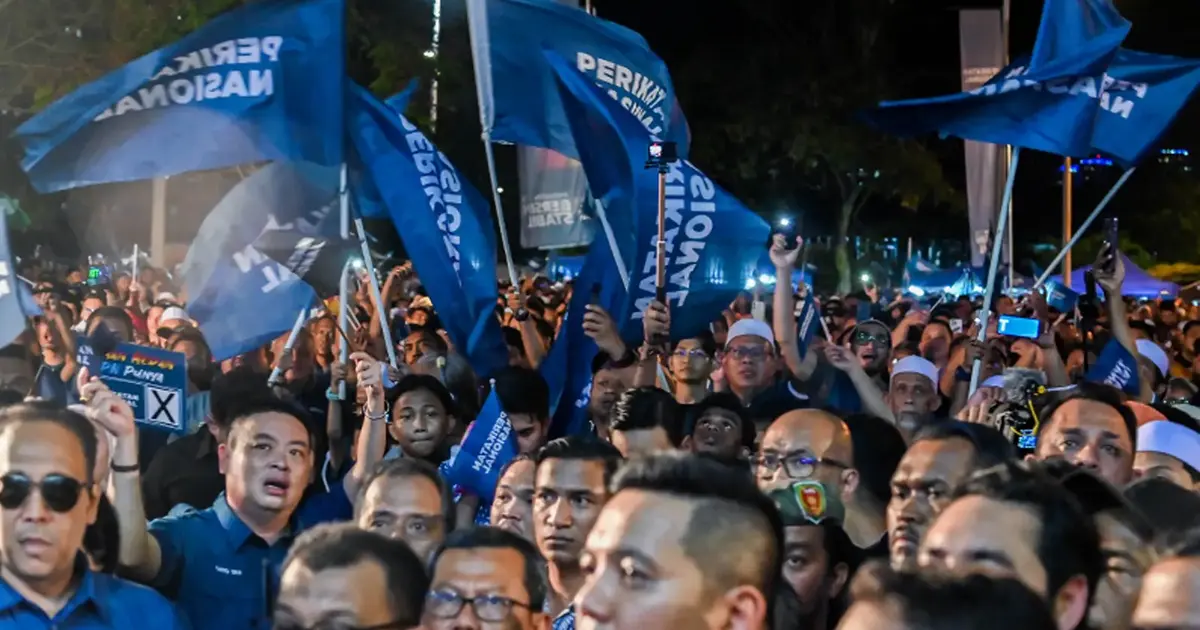
The Perikatan Nasional coalition that has shaped Malaysian politics over recent years stands on increasingly fragile ground, with deepening animosity between its two largest components—PAS and Bersatu—threatening to pull the alliance apart entirely. Yusri Ibrahim, chief researcher at the Ilham Centre, characterises the deteriorating relationship as having progressed beyond conventional political disagreement into what he describes as a "guerrilla war" phase, marking a critical juncture for the coalition's viability.
The PN alliance, which emerged as a significant force in Malaysian politics following the 2020 general election, brought together parties with distinct ideological foundations and political interests. PAS, rooted in Islamic conservatism with considerable grassroots support particularly in the Malay heartland, partnered with Bersatu, a splinter faction led by former Prime Minister Muhyiddin Yassin. This partnership provided both organisations with leverage and representation in federal politics, yet fundamental differences in their visions and territorial ambitions have continuously simmered beneath the surface.
The transition from standard political rivalry to what observers characterise as guerrilla-style conflict carries profound implications for Malaysia's political landscape. Guerrilla warfare in a political context typically involves sustained, asymmetric confrontation where actors employ unconventional tactics—whether through media campaigns, internal party manoeuvres, or procedural obstruction—rather than direct negotiation. This characterisation suggests that PAS and Bersatu have moved beyond seeking compromise and are instead engaged in tactical positioning designed to damage each other's standing and influence.
For Malaysian voters and the broader political ecosystem, such intra-coalition conflict presents complex consequences. When coalition partners openly compete against one another rather than coordinate, the unified message that attracts electoral support becomes fragmented. State-level politics, particularly in regions where both PAS and Bersatu hold significant presence, could become venues for intensified proxy battles. Decisions on candidate selection, policy direction, and resource allocation within coalition structures become contentious flashpoints rather than matters of routine administration.
The structural vulnerabilities within PN have become increasingly apparent through recent months of tension. Unlike more established coalitions with deeper institutional integration and clearer power-sharing arrangements, PN's framework has remained relatively informal and dependent on the continued willingness of its members to prioritise coalition unity over individual party interests. The absence of robust conflict-resolution mechanisms means that disagreements escalate quickly without institutional safeguards to contain them.
Bersatu's position within the coalition appears particularly precarious given its smaller organisational footprint compared to PAS. The party has relied heavily on Muhyiddin's personal political capital and strategic positioning to maintain relevance at the national level. Any significant erosion of coalition unity threatens Bersatu's ability to influence national policy and maintain its claim to resources and ministerial positions. This vulnerability likely intensifies its willingness to engage in confrontational tactics rather than acquiesce to PAS dominance within PN.
PAS, conversely, possesses deeper grassroots networks and electoral consistency, particularly in states such as Kelantan and Terengganu where the party commands substantial support. This foundational strength may embolden PAS to take harder stances within coalition negotiations, believing its organisational capacity insulates it from coalition dissolution. The party's confidence in its independent electoral viability could translate into less willingness to compromise on matters it considers fundamental to its interests.
The Malaysian political context adds additional layers of complexity to PN's internal dynamics. The tripartite competition involving Barisan Nasional, Pakatan Harapan, and PN creates incentives for actors within each coalition to consider their individual party interests relative to broader alliance coherence. If either PAS or Bersatu perceives greater electoral advantage in fragmenting PN and positioning itself as an independent operator or alternative coalition partner, the calculation toward maintaining unity shifts dramatically. This possibility has likely crossed the minds of both parties' leadership.
Regional implications extend beyond Malaysian borders given PN's significance within Southeast Asian politics. Perikatan Nasional has positioned itself as representing particular ideological currents and voter constituencies within the broader Malaysian electorate. Coalition instability reverberates through regional political networks and could influence how neighbouring governments assess Malaysian political trajectories. Furthermore, if PN's collapse permits alternative coalition formations, the regional balance of political orientations across Southeast Asia could shift accordingly.
The characterisation of current tensions as a guerrilla war phase suggests that visible reconciliation efforts or negotiated settlements may prove insufficient to restore genuine unity. Once relationships deteriorate to the point where parties employ unconventional competitive tactics, rebuilding trust requires sustained commitment that may be incompatible with the short-term political incentives facing PAS and Bersatu. The mutual damage inflicted through guerrilla-style conflict makes return to partnership progressively more difficult.
Those monitoring Malaysian politics should recognise that PN's potential collapse would represent more than merely the failure of a specific coalition arrangement. It would signal the difficulty of maintaining alliance structures in a political environment where ideological differences, territorial ambitions, and personal rivalries create perpetual strain. The coalition's fate depends on whether its leadership can recognise mutual interest in preservation before tactical conflicts become irreversibly destructive.