%22%2F%3E%3C%2Fpattern%3E%3C%2Fdefs%3E%3Crect%20width%3D%22100%25%22%20height%3D%22100%25%22%20fill%3D%22url(%23ph3igigg)%22%2F%3E%3Crect%20width%3D%22100%25%22%20height%3D%22100%25%22%20fill%3D%22url(%23ph3igigp)%22%2F%3E%3Ctext%20x%3D%2250%25%22%20y%3D%2250%25%22%20text-anchor%3D%22middle%22%20dominant-baseline%3D%22central%22%20fill%3D%22rgba(255%2C255%2C255%2C0.95)%22%20font-family%3D%22Georgia%2C%20'Times%20New%20Roman'%2C%20serif%22%20font-weight%3D%22700%22%20font-size%3D%22226%22%20letter-spacing%3D%22-0.02em%22%3EPenang%3C%2Ftext%3E%3C%2Fsvg%3E)
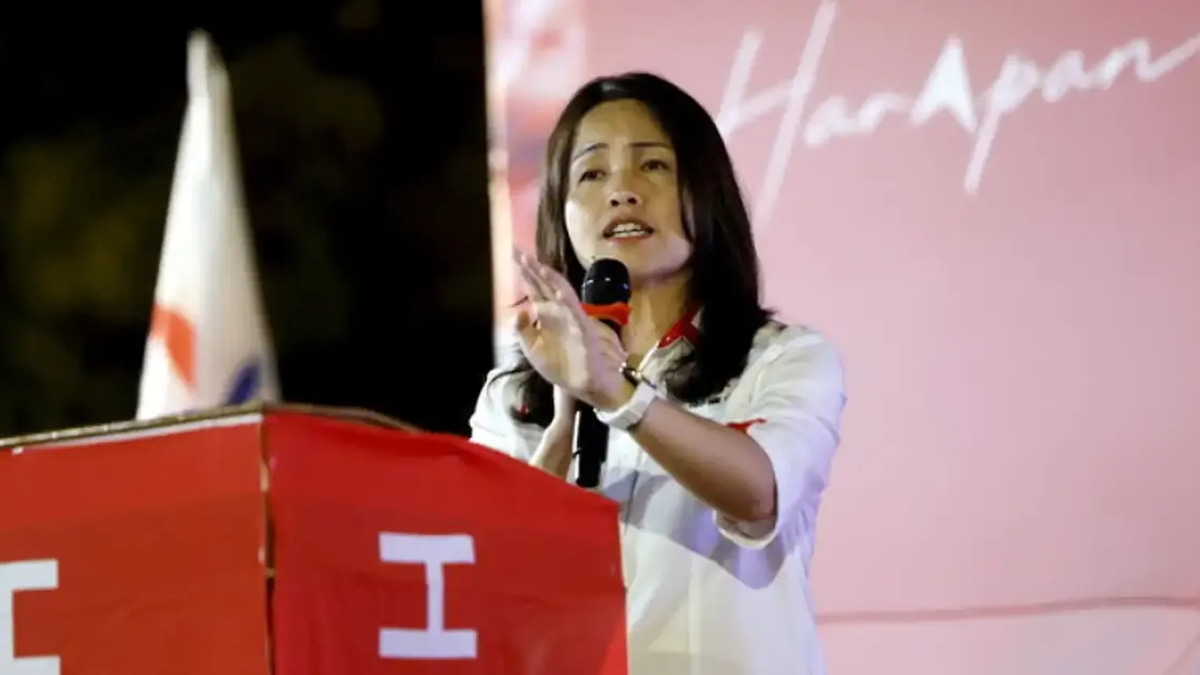
Penang's Pakatan Harapan leadership has signalled its determination to increase the number of women candidates contesting the next state election, yet the coalition continues to grapple with a fundamental challenge: securing a sufficient pool of qualified women prepared to enter the political arena. Speaking after opening the World Women Economic and Business Summit 2026 in George Town, Chief Minister and PH chairman Chow Kon Yeow acknowledged that while the commitment to gender parity in politics remains firm, translating aspiration into electoral practice presents formidable obstacles that go beyond simple candidate selection mechanics.
At the heart of Penang PH's dilemma lies a paradox that reflects broader dynamics across Malaysian politics. The party has adopted the national target of achieving 30 per cent women's representation in political office and decision-making structures, a benchmark first established nationally in 2009. Yet despite this formal commitment and the party's proactive stance on gender inclusion, the actual number of women stepping forward during candidate recruitment remains far below what would be needed to meet the target. Chow emphasised that the coalition requires a deeper bench of potential female candidates before it can meaningfully increase women's participation in elections, underscoring that the bottleneck exists upstream from the formal selection process itself.
The statistical reality underscores the persistence of Malaysia's gender gap in political representation. Currently, women comprise merely 13.5 per cent of Members of Parliament and 12 per cent of state assemblypersons nationwide—figures that reveal how distant the nation remains from its own stated 30 per cent objective after more than a decade of formal commitment. These numbers carry particular weight for Penang, which has positioned itself as a more progressive state within Malaysia's political landscape. The gap between aspiration and achievement suggests that institutional barriers and social attitudes continue to discourage female political participation at rates far exceeding what formal policies alone can address.
Chow's analysis attributes the recruitment challenge to the distinctive pressures and obstacles that women encounter when contemplating political careers. While Malaysian women have achieved considerable prominence in education, business, engineering, and the public service, the transition into electoral politics remains substantially more difficult. The Chief Minister's candour about this disparity is notable; he did not dismiss the issue as merely a supply-side problem of insufficient candidates but rather framed it as a structural challenge rooted in how political participation itself is experienced differently by women. The burdens of public scrutiny, family considerations, workplace inflexibility, and the combative nature of political campaigning may each play roles in dissuading potential candidates.
The initiatives Penang PH has already undertaken demonstrate recognition that voluntary encouragement alone proves insufficient. The coalition has sought to be proactive in supporting the 30 per cent target through various mechanisms, yet these efforts have yielded only incremental progress. This suggests that the barriers confronting women candidates operate at multiple levels simultaneously—from internal party culture and selection processes through to the broader electoral environment and societal expectations regarding women's roles in public life. Addressing one dimension without tackling others may explain why party commitment has not yet translated into dramatically higher female participation.
During his formal remarks at the economic summit, Chow called for political parties to institutionalise the 30 per cent target directly into their candidate selection frameworks rather than treating it as a general aspiration. This recommendation points toward a potential pathway forward: moving beyond voluntary targets to embedding gender considerations into the machinery of party governance and decision-making. Such formalisation could help counteract unconscious bias in selection processes and signal organisational commitment to candidates already hesitant about entering politics. The proposal reflects international experience suggesting that structural quotas and formal procedures prove more effective than informal preferences in achieving gender parity.
Beyond candidate selection processes, Chow advocated for complementary reforms designed to support women's advancement in political life. He emphasised the importance of ensuring equal representation of women on the decision-making committees that shape party policy and strategy, recognising that influence and power within political organisations often concentrate within these bodies. Additionally, he highlighted the necessity of strengthening access to resources, mentoring, and leadership development for emerging women politicians. These supporting structures could help mitigate some of the distinct disadvantages women face when navigating male-dominated political systems, thereby making political careers more feasible and attractive.
For Penang specifically, the state's electoral timeline creates an implicit urgency around these discussions. State elections typically occur every five years, meaning the next Penang polls will represent a defined opportunity to demonstrate whether the coalition can translate its stated commitment into concrete change. The question of how many women candidates Penang PH fields in that election will serve as a measurable indicator of whether the party has successfully deepened its candidate pool or whether the recruitment challenge persists. For opposition parties and civil society observers, the outcome will provide insight into whether Malaysia's largest urban state can progress beyond the current 13.5 per cent national benchmark.
The broader implications extend beyond Penang's political landscape. As Malaysia navigates questions about representation and inclusivity in its democratic institutions, the experience of Pakatan Harapan in recruiting women candidates offers insights applicable across the political spectrum. If even a coalition explicitly committed to gender equity struggles to field substantially more female candidates, it suggests that supply-side constraints reflect deeply embedded societal and institutional factors rather than simple lack of party will. Addressing this systemic challenge would require coordinated efforts spanning political parties, business organisations, educational institutions, and civil society to reshape incentive structures and cultural attitudes surrounding women's political participation.
The conversation initiated by Chow at the World Women Economic and Business Summit reflects growing recognition among Malaysian policymakers and business leaders that women's underrepresentation in political decision-making constitutes a substantial governance deficit. Economic forums increasingly highlight the correlation between gender diversity in leadership and improved organisational and national performance. As Penang and other Malaysian states contemplate their next electoral cycles, the extent to which they can overcome recruitment barriers to field more women candidates will signal whether Malaysia is prepared to move meaningfully toward its stated gender equity objectives or whether these targets will remain persistently aspirational.