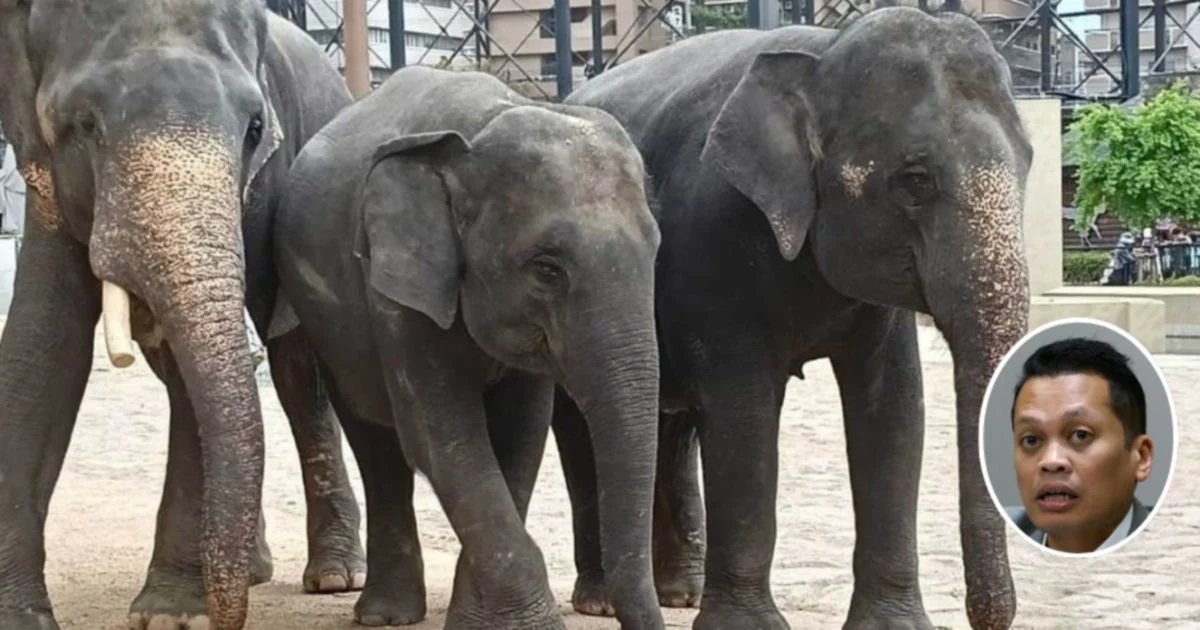
Nik Nazmi Nik Ahmad, who previously served as Malaysia's Natural Resources and Environmental Sustainability minister, has moved swiftly to separate himself from emerging allegations concerning substantial payments purportedly connected to the relocation of three elephants destined for a zoo in Japan. The former government official's denial comes amid mounting scrutiny over whether corrupt practices may have underpinned the controversial wildlife transfer arrangement, raising fresh questions about institutional accountability within Malaysia's environmental and natural resources sector.
The allegations centre on payments totalling RM53 million that reportedly facilitated the movement of the three elephants from Malaysian territory. The scale of the financial transaction has triggered considerable concern among observers monitoring wildlife management and government procurement practices in Southeast Asia. Such sums represent a substantial commitment of resources that would ordinarily warrant transparent justification and comprehensive oversight to ensure legitimacy and public interest protection.
The elephant transfer itself represents part of broader diplomatic and zoological cooperation arrangements between Malaysia and Japan, reflecting the two nations' engagement on wildlife preservation matters. However, the financial dimensions surrounding this specific transaction have become increasingly contentious. Wildlife experts and governance analysts have questioned whether the costs associated with the transfer were proportionate to the services rendered, a concern that extends beyond the immediate bilateral arrangement to touch upon Malaysia's reputation for sound environmental stewardship.
Nik Nazmi's tenure as Natural Resources and Environmental Sustainability minister positioned him as a central figure in wildlife management decisions during his period in office. His ministry would have wielded significant influence over any major wildlife relocation involving Malaysian animals, making his categorical denial significant for understanding the scope and potential reach of any alleged impropriety. The former minister has not merely distanced himself from the allegations but appears intent on fully exonerating himself from any association with suspect financial arrangements.
The timing of these revelations carries particular weight within Malaysia's ongoing governance reform agenda. As the country continues efforts to strengthen institutional integrity and combat corruption across various sectors, accusations involving high-profile wildlife transactions inevitably attract heightened public and official attention. Such incidents shape broader perceptions regarding the effectiveness of Malaysia's anti-corruption frameworks and the extent to which officials can be held accountable for significant government dealings.
The allegations underscore ongoing challenges in monitoring large-scale government transactions, particularly those involving wildlife and international agreements where transparency mechanisms may be less developed than in other administrative domains. Environmental and wildlife management sectors across Southeast Asia have historically attracted less rigorous public scrutiny compared to defence procurement or infrastructure projects, creating conditions where irregularities might potentially emerge with limited detection.
The elephant transfer arrangement itself reflects international conservation cooperation, with zoos in developed nations frequently acquiring animals from Southeast Asian sources for breeding programmes and public education. However, the financial mechanisms facilitating such transfers require appropriate oversight to prevent exploitation. Malaysia, as a megadiverse nation with significant elephant populations, occupies a position of environmental responsibility that demands heightened vigilance regarding wildlife-related transactions.
International dimensions of this matter merit consideration, particularly regarding implications for Malaysia's standing within global wildlife conservation networks. Japanese institutions maintain high standards for procurement and contract management, raising the possibility that scrutiny may emerge from partner nations regarding the financial structures underpinning the elephant transfer. Such collaborative arrangements depend fundamentally on trust and transparent dealings between participating parties and institutions.
The allegations also intersect with broader questions about Malaysia's elephant conservation strategy and population management. Decision-making regarding elephant transfers should prioritize conservation outcomes and species welfare rather than financial considerations or hidden benefits to individual officials. Establishing clear, publicly defensible rationales for such transfers represents an essential component of credible environmental stewardship.
Moving forward, comprehensive investigation and transparent documentation of the transfer arrangement's financial and procedural dimensions will likely prove necessary to restore confidence in government wildlife management decisions. Nik Nazmi's denial requires substantiation through institutional records, contractual documentation, and procedural oversight mechanisms. The resolution of these allegations will significantly influence how Malaysia manages future international wildlife arrangements and whether confidence in such decisions can be maintained among both domestic stakeholders and international partners engaged in conservation cooperation.