Nepal's fledgling administration is attempting to navigate a delicate diplomatic course between its two giant neighbours, seeking to harness Chinese investment and technology while preserving crucial economic ties with India. Foreign Minister Shishir Khanal's first overseas foray to Beijing this week underscores how the Himalayan nation intends to leverage its geographic position to accelerate growth and fulfill electoral mandates that propelled the three-year-old Rastriya Swatantra Party to commanding parliamentary dominance.
The March election, which delivered 182 of 275 parliamentary seats to the party, came as a decisive rebuke to decades of political dysfunction. Youth-driven unrest in September had claimed 76 lives and forced the resignation of the sitting government, reflecting deep frustration with corruption, economic stagnation, and institutional paralysis. The subsequent electoral victory handed Prime Minister Balen Shah, a 36-year-old musician-turned-politician, a mandate to restore governmental stability, accelerate job creation, and combat graft. The scale of the parliamentary majority offers the government an unusual opportunity to implement reforms without the constant threat of coalitional collapse that has characterised Nepalese politics.
Yet Nepal confronts profound structural challenges that no single government can easily resolve. Over three and a half decades, the country has cycled through 32 governments, a pace of instability that has deterred foreign investors and undermined long-term planning. This chronic political turbulence has proved particularly damaging in extracting value from trade arrangements. Despite China granting Nepal tariff-free access to over 8,000 goods in its $20 trillion economy, Kathmandu has been unable to meaningfully expand exports eastward. Khanal acknowledged this disparity, framing the trip as an opportunity to convince Chinese policymakers that Nepal offers a stable investment environment and can finally capitalise on commercial openings previously squandered through governance failures.
The Foreign Minister's conversations in Beijing focused on pragmatic sectoral cooperation. He emphasised agriculture, health services, and tourism development alongside technology transfer and research collaboration, signalling that the government sees China as both a capital source and a repository of technical expertise. Nepal's trade imbalance with China—historically weighted heavily in Beijing's favour—reflects not merely a lack of competitiveness but the absence of reliable, investor-grade institutional frameworks. By committing to political stability, the government implicitly promises that future Chinese-financed ventures will proceed uninterrupted by cabinet collapses or policy reversals.
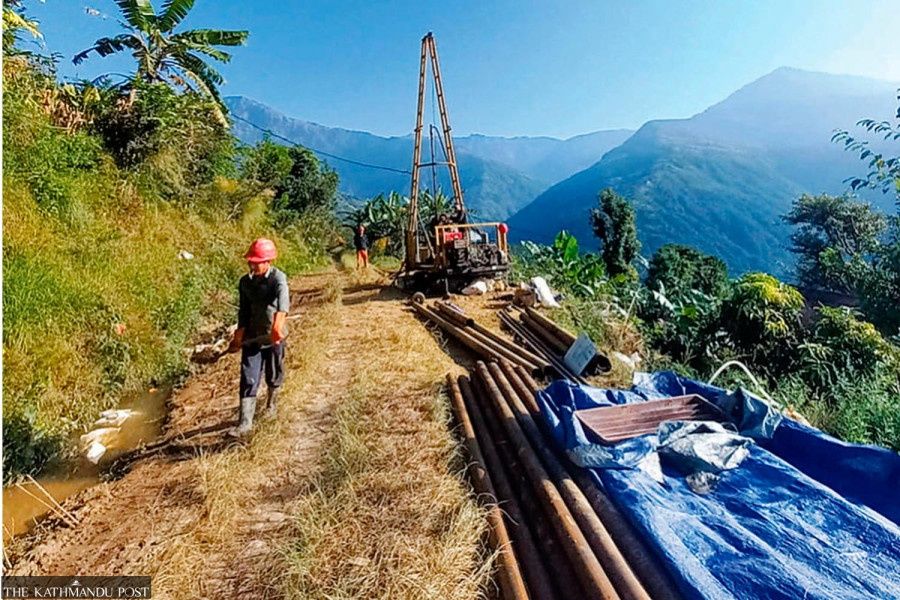
China's response, articulated through Foreign Minister Wang Yi, reaffirmed Beijing's traditional rhetoric about neighbourhood diplomacy while emphasising infrastructure expansion across power generation, highways, ports, and aviation. Yet this framing masks underlying tensions. Previous Belt and Road Initiative projects have stalled over financing disagreements and implementation snags, raising questions about whether renewed declarations of intent translate into tangible capital flows. Beijing's emphasis on infrastructure development reflects its broader strategic interest in enhancing connectivity throughout South Asia, but the pattern of delays suggests that both sides struggle with alignment on project timelines, risk-sharing mechanisms, and debt sustainability.
Wat Yi's reassurances also carried a diplomatic subtext directed at Washington and New Delhi. Analysts suggest that Beijing may have been surprised and discomfited by the March electoral outcome, particularly the emergence of a youthful, reform-oriented government less tethered to traditional great-power alignments. The Chinese Foreign Minister's insistence that Nepal remains central to Beijing's neighbourhood strategy appeared designed to preempt any perception that the new government might tilt excessively toward India or the United States. Beijing's concern reflects a broader anxiety about popular movements that overthrow incumbent governments without Beijing's prior blessing, since such transitions introduce unpredictability into regional calculations.
Khanal's diplomatic messaging attempted to address these anxieties by articulating a doctrine of differentiated partnerships. He indicated that Nepal would cultivate relationships with each major power according to distinct comparative advantages: India as a market for energy exports, China as a generator of tourist arrivals and technological capability. This formulation suggests a transactional approach that prioritises economic returns over ideological alignment or exclusive partnerships. For Southeast Asian observers, the Nepalese strategy offers an instructive example of how smaller nations attempt to preserve autonomy while securing investment from competing powers.
One area crystallising these tensions involves internet infrastructure. The government is conducting active discussions with both Elon Musk's Starlink and Huawei regarding service provision, with Khanal explicitly noting that Beijing has not raised objections to Starlink's potential deployment across its Nepalese border, despite previously criticising the satellite system at the United Nations. This apparent inconsistency may reflect Chinese pragmatism about Kathmandu's autonomy in domestic technological decisions, or it may indicate that Beijing judges the benefits of maintaining positive relations with Nepal's new government as outweighing objections to American-backed infrastructure. The ultimate choice will reveal whether the government genuinely intends balanced engagement or whether competitive pressures ultimately force alignment with one pole.
The broader context for Nepal's diplomatic recalibration extends beyond bilateral relationships. The region is witnessing accelerating geopolitical competition as the United States deepens engagement with the Quad framework and China expands connectivity initiatives. Nepal's position as a landlocked nation with limited strategic resources but significant geographic centrality means it attracts attention disproportionate to its economic weight. Washington has hosted at least three delegations since April, signalling American interest in the new administration. The government's strategic challenge lies in extracting maximum benefit from this competitive interest without acquiring obligations that foreclose future flexibility.
The youth-led electoral upheaval that enabled this government also created expectations for tangible improvement in living standards and opportunities. Unemployment, underemployment, and chronic outmigration remain persistent problems, with Nepalese workers remitting substantial sums from employment abroad. Investment-focused diplomacy represents an attempt to create domestic employment pathways that might reduce dependence on labour migration. Whether the government can translate Foreign Minister Khanal's Beijing conversations into actual capital inflows, technology transfer, and job creation will determine whether the Gen-Z political mobilisation of 2023 translates into genuine transformation or merely cyclical political rotation.
Analysts caution against assuming that Beijing's welcoming posture signifies genuine commitment to transformative partnership. The pattern of stalled Belt and Road projects suggests structural impediments to rapid execution, whether rooted in financing constraints, implementation capacity, or shifting priorities. For Nepal's government, the diplomatic window created by electoral legitimacy and Beijing's desire to maintain influence may prove fleeting. The administration's ability to navigate between Chinese and Indian interests while delivering on promises of stability and growth will ultimately determine whether it transcends the pattern of dysfunction that has characterised recent decades.