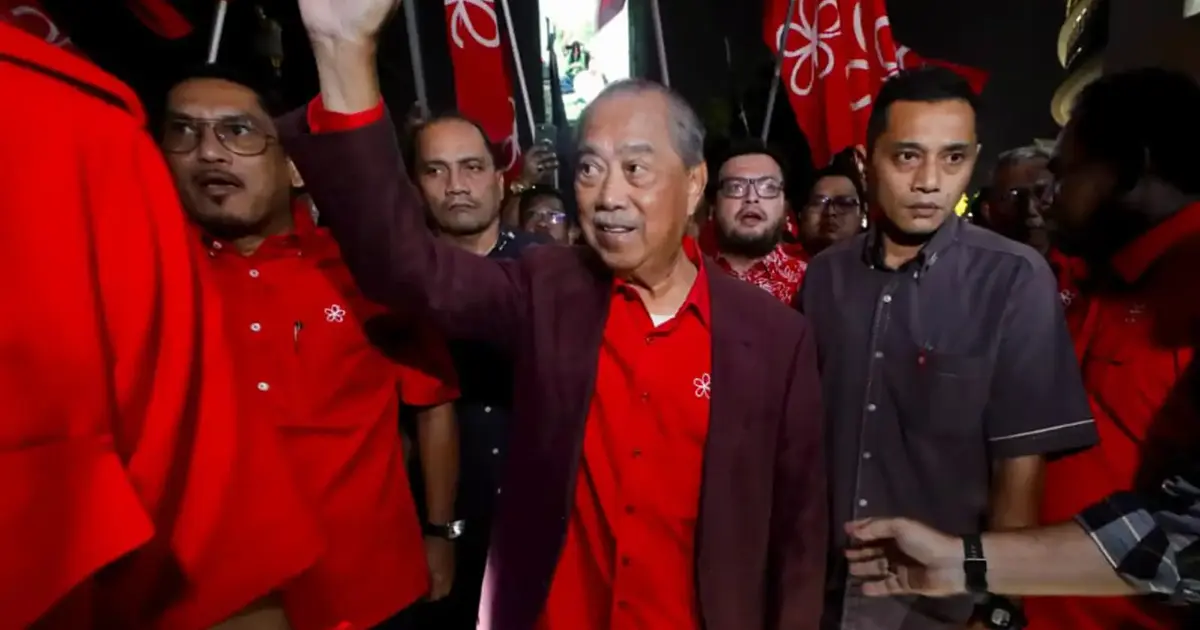
Tan Sri Muhyiddin Yassin demonstrated considerable grassroots backing when over 200 supporters assembled behind him in the lead-up to a significant Bersatu party meeting. The gathering underscored the former Prime Minister's continued influence within the party structure, even as Malaysia's political landscape remains fractious and coalition dynamics shift. The show of numbers comes at a critical juncture for Bersatu, which has been navigating complex power-sharing arrangements while attempting to strengthen its electoral footprint across multiple states.
The forthcoming Bersatu assembly will address several interconnected priorities that reflect the party's broader strategic positioning. Among the key agenda items is detailed planning for the Johor state elections, where Bersatu has been seeking to expand its representation and consolidate influence within the ruling coalition. Johor, as Malaysia's southernmost peninsular state and a traditional power base for several political factions, holds particular significance for any party aspiring to national relevance. The party's performance in this state carries weight beyond mere seat counts, signalling to other coalition partners and voters the extent of its political viability.
Equally pressing is Bersatu's approach to the Negeri Sembilan state election, another contest that will test the party's organisational capacity and appeal. The state, located in the heartland of peninsular Malaysia, represents an opportunity for Bersatu to consolidate middle-ground support. Success in these elections would strengthen Muhyiddin's hand within the party hierarchy and provide evidence of electoral momentum as larger national contests loom. Conversely, disappointing results could invite internal scrutiny and emboldened rival factions.
The meeting also signals that Bersatu is undertaking a comprehensive review of its relationship with PAS, the Islamist party that has emerged as a significant political force in recent years. This reassessment is noteworthy because PAS and Bersatu have maintained varying degrees of coordination, particularly following the 2022 general election. The relationship has been marked by both cooperation on certain electoral fronts and underlying tensions regarding resource allocation, seat distribution, and ideological positioning. How Bersatu calibrates its partnership with PAS will determine its strategic options in the coming elections and its ability to attract or retain voters seeking a moderate Islamic-oriented alternative.
For Malaysian political observers, this gathering illuminates the competitive dynamics within the broader ruling coalition. Bersatu, despite its size relative to larger parties like UMNO, has positioned itself as a kingmaker capable of swinging electoral outcomes and coalition configurations. The party's grassroots mobilisation under Muhyiddin's leadership demonstrates that internal cohesion remains reasonably intact, though factional tensions persist beneath the surface. The fact that over 200 supporters could be assembled reflects the party's ability to activate its base, a crucial asset in Malaysia's electoral system where voter turnout and ground organisation often determine outcomes.
The timing of this rally also merits consideration within the regional political context. Johor and Negeri Sembilan state elections carry implications beyond their respective borders, affecting the overall composition of the Dewan Rakyat should they trigger by-elections or reshape state-level coalitions. Bersatu's performance in these contests will provide early indicators of voter sentiment and could influence calculations by other political actors planning their own electoral strategies. For Malaysian voters, particularly those in these states, the coming contests will offer an opportunity to assess Bersatu's track record in governance and determine whether the party merits continued support.
The relationship between Bersatu and PAS also reflects broader questions about Islamic representation in Malaysian politics. Both parties appeal to segments of the Muslim-majority electorate, yet they position themselves differently on the spectrum of religious conservatism and economic liberalism. Their coordination, or lack thereof, shapes the choices available to voters concerned with religious governance, educational policy, and economic distribution. Understanding how Bersatu intends to navigate this partnership will be critical for voters seeking clarity on the party's vision for Malaysia's future.
Muhyiddin's visible mobilisation of party support suggests he remains confident in his leadership position within Bersatu, despite occasional reports of internal dissent. The gathering serves both a practical purpose—energising the grassroots ahead of elections—and a symbolic one, demonstrating to rival factions and coalition partners that his faction commands considerable resources and loyalty. This matters substantially in Malaysian politics, where intra-party negotiations often determine ministerial appointments, budget allocation, and policy direction.
Looking forward, the outcomes of the upcoming Bersatu meeting will likely shape the party's electoral strategy not just for the state contests but for any future general election. The party's planning for Johor and Negeri Sembilan, combined with its recalibration of the PAS partnership, will establish the framework within which Bersatu operates for at least the next electoral cycle. For Malaysian voters and political analysts, these developments warrant close attention as they signal how the nation's political coalitions may evolve and whether Bersatu can sustain its relevance in an increasingly competitive landscape.