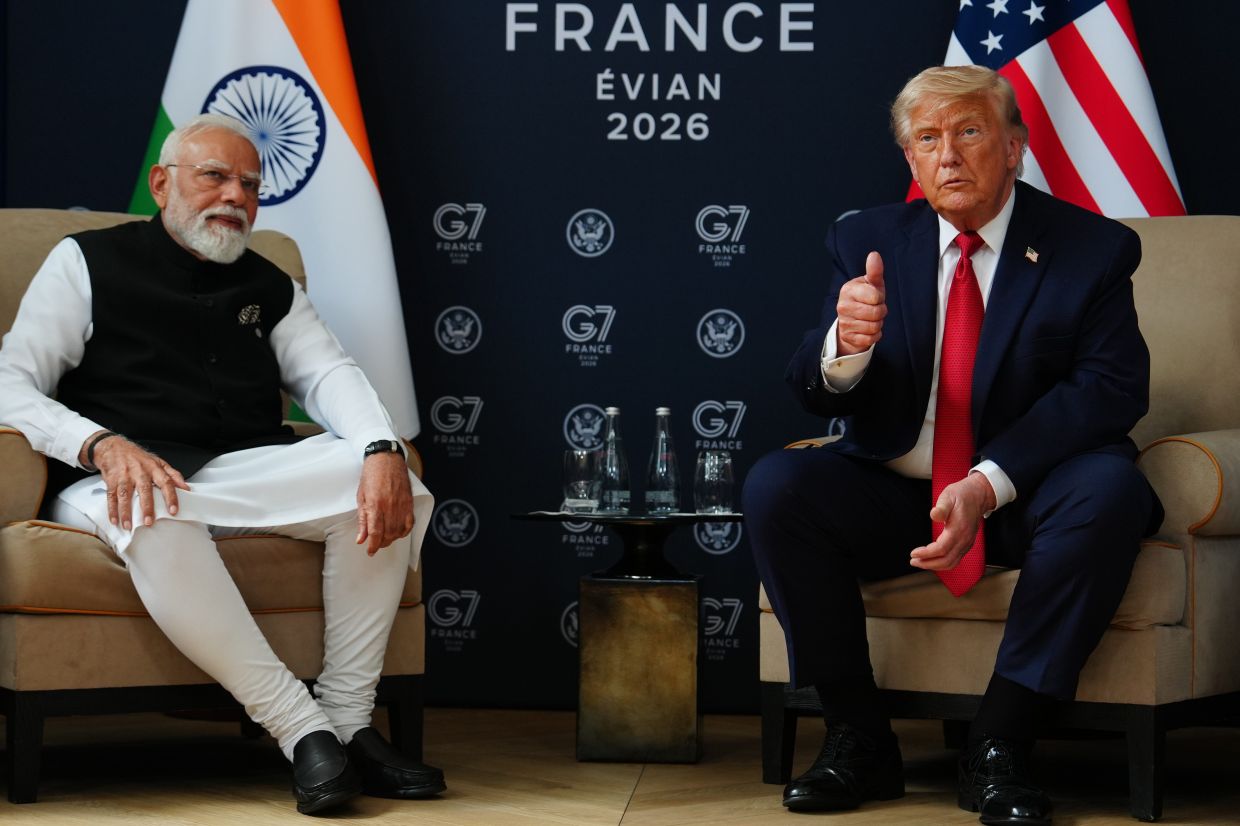
Indian Prime Minister Narendra Modi and US President Donald Trump reported significant momentum in their trade negotiations during a meeting at the G7 summit in Evian, France on Wednesday, signalling that the two economies are moving closer to resolving a prolonged commercial standoff. According to India's foreign ministry, the leaders expressed particular satisfaction with progress made towards an interim bilateral trade agreement, marking the most optimistic development in talks that have stretched across multiple administrations and economic cycles. Trump told reporters in Evian that the two nations were "very close" to finalising terms, though he refrained from specifying a concrete timeline for completion.
The meeting between Modi and Trump represented their first direct engagement since February 2025, when both leaders met in Washington to chart the course for expanded economic ties. These intervening months have witnessed considerable turbulence in the negotiation process, with multiple rounds of talks conducted by commerce officials from both countries attempting to bridge persistent gaps on market access, tariff structures, and agricultural trade. The backdrop of their latest meeting underscores the strategic importance both nations place on their bilateral relationship, not merely as a commercial partnership but as a cornerstone of their broader geopolitical alignment in the Indo-Pacific region.
US Trade Representative Jamieson Greer is scheduled to visit New Delhi the week following the G7 summit to conduct the next phase of formal negotiations, suggesting that both sides intend to maintain momentum toward finalising terms. This diplomatic choreography indicates active engagement at the highest levels of trade bureaucracy, with Indian Commerce Minister Piyush Goyal having stated in early June that the countries had completed approximately 99 percent of the first tranche of the overall trade agreement. Such a characterisation raises questions about what remains to be resolved in final negotiations, though officials have remained circumspect about the precise stumbling blocks.
The ambition underpinning these negotiations is substantial. Washington and New Delhi have established a target of raising bilateral trade to US$500 billion by 2030, a figure that would represent a near-tripling of current commerce volumes. This objective reflects the broader strategic calculus of both governments, which view deepened economic integration as essential to counterbalancing China's dominance in regional trade and investment flows. For India, expanded access to American markets for manufactured goods, information technology services, and agricultural products represents a critical avenue for generating employment and enhancing foreign exchange earnings. For the United States, greater market access in India's vast consumer base and integration into supply chains represent valuable offsets to manufacturing disruptions elsewhere in Asia.
The negotiation process has been complicated by Trump's aggressive tariff regime, which imposed blanket duties on multiple trading partners and prompted investigations into alleged unfair trade practices. When the US Supreme Court struck down certain sweeping tariff measures, the Trump administration responded by launching formal investigations against several countries, including India, while simultaneously imposing a 10 percent blanket tariff across broad categories of imports. This regulatory uncertainty initially created friction in bilateral trade talks, as Indian negotiators grappled with the possibility of further tariff escalation even as they sought to reach consensus on underlying commercial terms.
For Malaysian and broader Southeast Asian observers, the progress of US-India trade negotiations carries implications beyond the two principal parties. A successful agreement could establish a template for how Washington approaches regional commercial partnerships in the post-pandemic era, signalling whether the Trump administration views free trade agreements as viable instruments or prefers transactional, tariff-based approaches to commerce. Moreover, substantial US-India trade integration could influence the competitive positioning of other Asian economies within global supply chains, particularly as multinational corporations evaluate alternative manufacturing hubs outside China.
Beyond commercial considerations, Modi raised humanitarian concerns during his meeting with Trump regarding the safety of Indian seafarers operating in the Middle East. Three Indian sailors were killed in a US strike against a commercial vessel off Oman on June 10, an incident that underscored the broader perils facing Indian maritime workers amid escalating regional tensions. Modi pressed Trump to implement safeguards protecting Indian nationals as part of the administration's Iran-US deal framework aimed at de-escalating Middle Eastern conflict. This intervention reflects India's acute vulnerability to regional instability, given its dependence on maritime energy supplies routed through critical chokepoints.
The Prime Minister used his G7 platform to articulate concerns about the broader impact of Middle Eastern turmoil on the Global South, emphasising that disruptions to fuel, fertiliser, and food supply chains would impose prolonged economic costs on developing nations. Iran's closure of the Strait of Hormuz, one of the world's most critical petroleum transit corridors, has throttled energy supplies to Asia and imposed substantial costs on energy-importing economies. India, as one of the world's largest crude oil importers and a major consumer of imported fertiliser, faces particular exposure to these supply chain disruptions. Modi's warnings about lengthening adjustment periods underscores how geopolitical crises in distant regions cascade across integrated global economic systems.
Trump's characterisation of Modi as a tough negotiator—albeit delivered in the characteristic hyperbolic style that frequently accompanies his public commentary—suggested genuine respect for the Indian leader's approach to commercial negotiations. The US president's remarks, whilst unconventional in diplomatic vernacular, conveyed an implicit message that India has leveraged its strategic importance effectively in trade discussions. This dynamic reflects the broader geopolitical context in which these negotiations occur: both nations view their partnership as essential to their respective regional strategies, creating mutual incentives for successful conclusion of trade talks despite tactical disagreements over specific provisions.
The path forward remains conditional on resolving outstanding technical issues that have proven difficult in previous negotiating rounds. Indian exporters have long sought greater market access for agricultural products, textiles, and pharmaceuticals, sectors in which India possesses competitive advantages but faces protectionist barriers in the American market. Conversely, American corporations and service providers have targeted India's regulatory barriers in telecommunications, aviation, and financial services. Balancing these competing interests within a framework that both governments can present as commercially meaningful and politically defensible to their respective constituencies represents the core challenge ahead.
For Indian policymakers, successful completion of a US trade agreement would represent a significant diplomatic achievement, demonstrating the government's capacity to negotiate outcomes that expand market access and employment opportunities whilst managing domestic political sensitivities around agricultural and manufacturing sectors. The timing of progress announcements, coinciding with India's presidency of the G20 and the nation's ongoing efforts to position itself as a voice for developing economies, suggests that Modi views this agreement as part of a broader assertion of India's rising economic weight and diplomatic influence. Conversely, Trump's willingness to prioritise an agreement with India ahead of other potential trade negotiations signals that the administration sees the relationship as a strategic priority in competition with China and other regional powers.