The Malaysian Indian Congress (MIC) will contest four seats in the forthcoming Johor state election, according to party vice-president Datuk T. Murugiah, following confirmation from MIC president Tan Sri SA. Vigneswaran at recent coalition discussions involving Barisan Nasional component parties. The allocation marks the party's continued participation in BN's broader electoral strategy for the state, though negotiations regarding MIC's seat share in Negeri Sembilan remain ongoing as the coalition fine-tunes its candidate selections across multiple constituencies.
The four-seat allocation represents a stable commitment from BN's leadership towards the party's electoral ambitions in Johor, a state where minority representation and community-specific messaging have become increasingly significant in competitive polling cycles. Vigneswaran's personal involvement in inter-party discussions signals the importance BN places on coordinating candidacies and resource allocation, particularly as the coalition seeks to maintain its parliamentary strength amid shifting electoral dynamics across the country's key states.
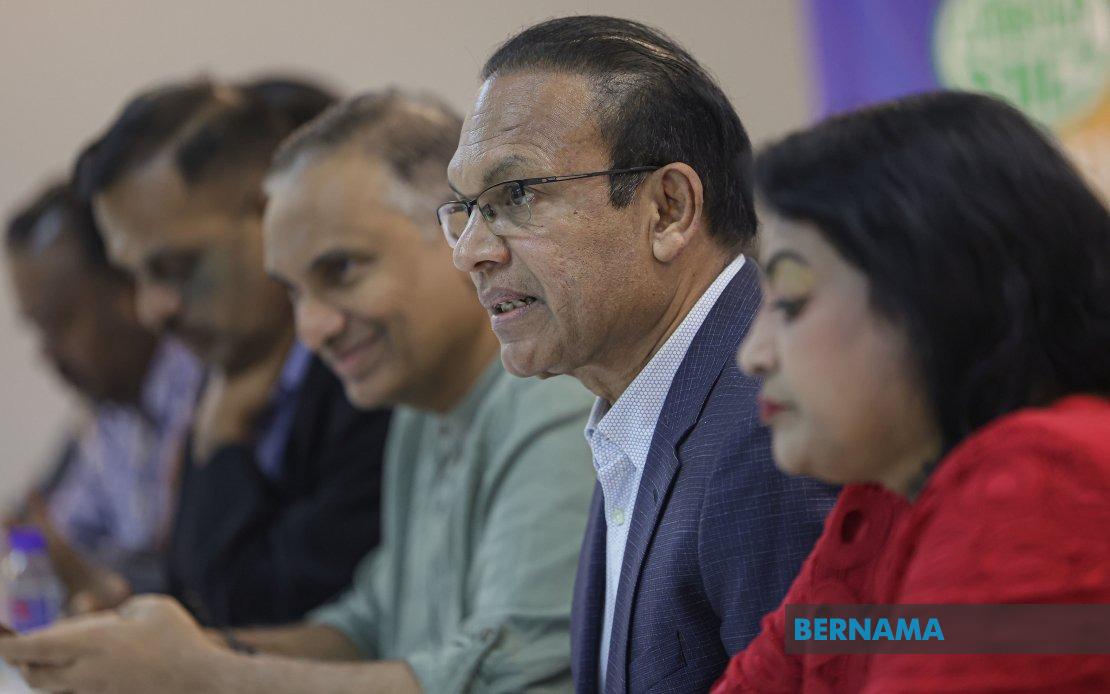
To maximize outreach effectiveness, MIC has launched an intensive training programme targeting approximately 150 party speakers who will be deployed across Johor's 56 state constituencies contested by BN candidates. This weekend-long session in Johor Bahru focuses on public speaking proficiency and message consistency, equipping activists to articulate the coalition's policy positions when engaging with Indian voters throughout the state. The training approach reflects a strategic recognition that community-specific voter outreach requires dedicated preparation and locally-calibrated communication strategies rather than generic campaign messaging.
Looking at MIC's recent electoral history provides context for understanding the party's current positioning. In the March 2022 Johor state election, MIC successfully captured three of its four contested seats—Kemelah, Kahang, and Tenggaroh—while losing Bukit Batu to opposition forces. This three-of-four success rate demonstrates the party's residual voter appeal within Malaysia's Indian community, though it also highlights vulnerability in certain constituencies where demographic shifts or local political dynamics favour competitors.
For the upcoming election, MIC is expected to reconfigure its constituency focus based on both performance data and coalition negotiations. Party insiders indicate that Kemelah, Kahang, and Bukit Batu will feature MIC candidates, while the party has agreed to relinquish Tenggaroh to UMNO in exchange for contesting the Perling seat. This strategic swap exemplifies how BN component parties engage in seat-sharing arrangements, attempting to optimize each party's electoral prospects by concentrating candidacies in constituencies where voter demographics and previous results suggest stronger performance potential.
Candidacy renewal will constitute a major feature of MIC's election campaign strategy. Approximately half of the party's candidates are anticipated to be newcomers entering electoral politics for the first time, a substantial injection of fresh faces that may signal generational transition within the party hierarchy while potentially complicating campaign messaging as newer candidates lack established voter relationships. For Negeri Sembilan, MIC is reportedly positioned to contest two seats, though final negotiations continue as BN coordinates its overall coalition allocation across multiple states.
The Election Commission has established July 11 as polling day for Johor, with candidate nominations occurring on June 27, providing a compressed campaign timeline of roughly two weeks between nomination closure and actual voting. Negeri Sembilan's election follows on August 1, with nominations scheduled for July 18, creating a sequential electoral schedule that allows BN to concentrate campaign resources on Johor first before redirecting efforts toward Negeri Sembilan.
MIC's strategy extends beyond electoral mechanics to encompass broader community engagement initiatives. The party plans to organize sports competitions across 152 nationwide locations this Saturday as part of its 80th anniversary commemoration, with events including football, badminton, bowling, carrom, and hiking designed to attract participants from all communities. This non-partisan approach to community celebration serves multiple functions: generating positive party visibility during the election season, demonstrating inclusive values that transcend ethnic boundaries, and providing grassroots networking opportunities where political messaging can occur within social contexts rather than formal campaign settings.
For Malaysian observers, MIC's electoral positioning illuminates broader patterns within BN coalition politics, where minority representation remains contested territory requiring explicit seat allocation agreements and specialized outreach strategies. The party's four-seat target in Johor, combined with potential two-seat participation in Negeri Sembilan, suggests MIC leadership views these state elections as opportunities to reassert organizational relevance following years of political volatility and coalition realignment that have challenged the party's traditional support base.
The intensive speaker training programme reflects sophisticated understanding that Indian community voters—a demographically diverse group spanning multiple socioeconomic classes and regional origins—respond to targeted messaging delivered through trusted community voices rather than generic BN publicity. By investing in grassroots communicator development, MIC signals commitment to sustained community engagement rather than episodic election-season politicking, potentially building longer-term party loyalty among constituencies that have demonstrated electoral volatility in recent years.
The Johor election carries particular significance for MIC as a bellwether of minority party viability within BN's contemporary coalition structure. Strong MIC performance could affirm the party's continued relevance and secure expanded seat allocations in future elections, while disappointing results might prompt further marginalization and reduced coalition influence. This electoral cycle thus represents a consequential moment for testing whether targeted community outreach and strategic seat allocation can reverse broader trends of declining minority party representation within Malaysia's evolving political landscape.