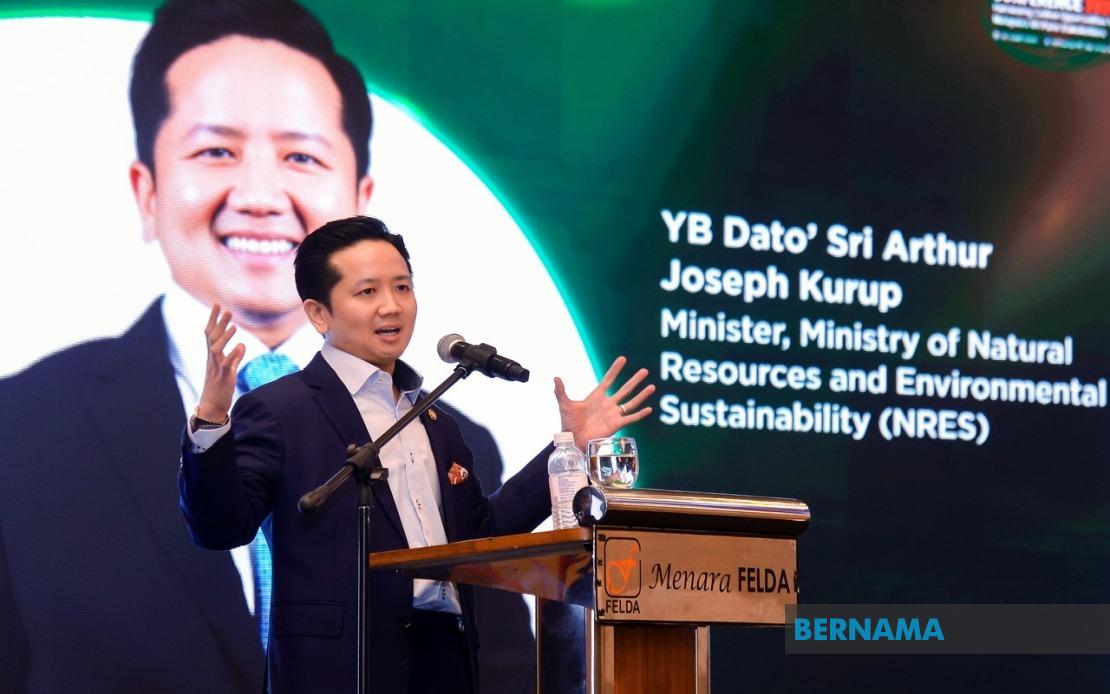
The Malaysian government remains in the refinement phase for its carbon tax policy, with implementation decisions still pending, according to Natural Resources and Environmental Sustainability Minister Datuk Seri Arthur Joseph Kurup. Speaking at the Malaysia Palm Carbon Conference 2026 in Kuala Lumpur on June 16, the minister emphasized that while the tax will eventually be introduced, the government is carefully considering the appropriate timing and mechanisms to ensure both environmental effectiveness and economic viability.
Arthur's remarks signal a pragmatic approach to carbon pricing that acknowledges the complex interplay between climate ambitions and industrial competitiveness. The minister stressed that the government is evaluating several critical factors, including the preparedness of Malaysian industries to adapt to new compliance requirements and the broader policy architecture needed to support the transition. This deliberative stance reflects international best practices in carbon tax design, where success often depends on careful sequencing and stakeholder engagement rather than rapid implementation.
Crucially, Arthur framed the carbon tax not as a punitive instrument but as an incentive mechanism designed to encourage businesses to invest in cleaner technologies and production methods. This messaging is particularly important for Malaysia's manufacturing sector, which remains sensitive to additional operational costs. By positioning the tax as a positive driver for innovation and sustainability rather than a mere revenue-raising measure, the government attempts to build broader support among industry participants who might otherwise resist regulatory changes.
The deferred timeline has practical roots in Malaysia's current economic environment. In April, Arthur indicated that the implementation schedule, originally targeting 2024 and focused on energy-intensive sectors such as steel, cement, and construction, would likely be pushed back. This decision reflects government sensitivity to the cumulative pressures facing these industries amid global supply chain disruptions, elevated energy costs, and persistent geopolitical uncertainties that have constrained business expansion and profitability across the region.
A particularly noteworthy dimension of Malaysia's approach involves the proposed revenue allocation framework. Rather than allowing carbon tax proceeds to flow into general treasury accounts, the government is examining how these funds could be specifically directed toward climate adaptation projects, forest conservation initiatives, and sustainable land management programs. For Southeast Asia's largest palm oil producer, this focus on forest conservation carries symbolic and practical significance, addressing both international scrutiny of Malaysian deforestation and the genuine need to protect remaining forest assets that provide carbon sequestration benefits.
The revenue recycling strategy also reflects a growing recognition among policymakers that successful carbon pricing requires demonstrable reinvestment in climate resilience. Malaysian businesses and communities increasingly face climate impacts ranging from flooding to drought stress, making adaptation investments both economically rational and politically defensible. By explicitly linking carbon tax revenue to these tangible benefits, the government can potentially maintain public support and corporate buy-in over the medium to long term.
Parallel legislative developments will shape the carbon tax's ultimate form. Arthur confirmed that the National Climate Change Bill is expected to be presented to the Dewan Rakyat during the current parliamentary session. This comprehensive legislation will establish the governance framework within which carbon pricing mechanisms operate, determining everything from institutional responsibilities to enforcement powers. The bill's passage is essential not merely as a procedural formality but as a signal of sustained political commitment to climate action across electoral cycles and ministerial changes.
Malaysia's deliberate approach to carbon tax implementation contrasts with the more rapid rollouts pursued by some regional neighbors and developed economies. Indonesia, for instance, has implemented its own carbon pricing scheme, while Singapore adopted an early-mover stance in regional climate policy. Malaysia's more measured trajectory reflects both the legitimate complexities of coordinating carbon policy across a diverse industrial base and the political economy of climate action in a nation where energy-intensive industries remain economically significant.
The timing considerations also intersect with Malaysia's broader climate commitments under international frameworks. As a signatory to the Paris Agreement, Malaysia has pledged to reduce economy-wide carbon emissions intensity by 45 percent by 2030 relative to 2005 levels. Achieving such ambitious targets requires multiple policy instruments working in concert—carbon pricing alone cannot deliver the necessary reductions. The government's concurrent development of the climate change bill suggests recognition that complementary measures including renewable energy mandates, efficiency standards, and forestry protection must accompany any carbon tax to maximize environmental effectiveness.
The involvement of the Federal Land Development Authority (Felda), whose chairman Datuk Seri Ahmad Shabery Cheek attended the conference, underscores connections between carbon policy and agricultural land management. Felda's extensive landholdings and development programs have longstanding environmental sensitivities, and the agency's engagement in climate policy discussions signals an effort to integrate agricultural and land-use considerations into Malaysia's carbon pricing architecture. This is particularly relevant given that land-use change, particularly in the palm oil sector, represents a significant portion of Malaysia's carbon footprint.
Industry observers will likely view the extended refinement timeline with mixed reactions. Some will welcome the opportunity for deeper stakeholder consultation and more sophisticated policy design. Others may worry that indefinite delays reflect insufficient governmental commitment to climate action. The challenge for Malaysian policymakers lies in demonstrating that deliberation serves genuine policy improvement rather than becoming an excuse for inaction. The promised parliamentary presentation of the climate change bill later this year will provide one important test of whether momentum continues toward implementation.
Looking ahead, Malaysia's carbon tax will inevitably be compared with approaches adopted in Thailand, Vietnam, and other regional competitors. The country's ability to design and implement an effective, broadly accepted carbon pricing mechanism could enhance its positioning as a responsible developing nation taking climate action seriously while maintaining industrial competitiveness. Conversely, persistent delays risk damaging Malaysia's climate credibility while potentially ceding first-mover advantages to regional peers.