Malaysia is implementing a landmark legislative approach to combat bullying with the Anti-Bullying Act 2026, which uniquely extends legal responsibility beyond the perpetrator to encompass parents and family members. The groundbreaking provision represents a departure from conventional criminal law frameworks, where accountability rests solely with the offender. By introducing the concept of parental joint liability, the legislation signals an intention to create a shared ecosystem of responsibility within families, with legal and financial consequences that bind household members collectively.
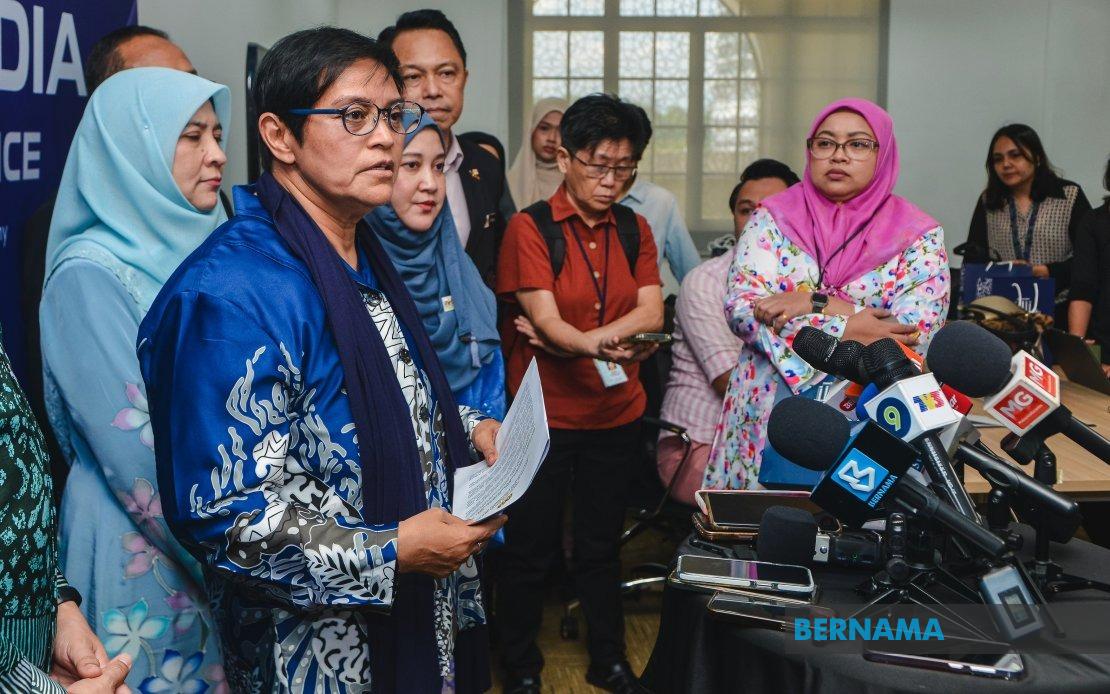
Datak Seri Azalina Othman Said, Minister in the Prime Minister's Department (Law and Institutional Reform), unveiled the framework during the official launch of the Anti-Bullying Tribunal headquarters at the Asian International Arbitration Centre (AIAC) in Kuala Lumpur on June 16. She explained that the parental responsibility clause extends beyond mere moral accountability, embedding enforceable obligations into the legal structure. Significantly, financial penalties imposed on young perpetrators become the legal burden of the family unit, a mechanism designed to incentivize parental engagement in preventing bullying behaviour before it escalates into formal proceedings.
The decision to pursue joint family liability reflects growing concern over the escalating prevalence of bullying incidents across Malaysian schools and communities, with documented cases resulting in tragic outcomes including loss of life. The government's response acknowledges that bullying rarely occurs in isolation; rather, it emerges from complex family dynamics, inadequate supervision, and social environments where harmful behaviour is enabled or overlooked. By holding parents accountable through legal mechanisms, policymakers aim to shift the burden of prevention earlier into the causal chain, compelling families to actively monitor and discourage abusive conduct among their children.
The Anti-Bullying Tribunal has been constituted with substantial institutional capacity to deliver timely justice. Fifty-six tribunal members, selected from the ranks of legal practitioners and specialists in child welfare and psychology, have been appointed to adjudicate disputes and determine liability across the nation. This deliberate investment in human resources underscores the government's commitment to ensuring that the tribunal operates with sufficient expertise to navigate the sensitive intersection of family law, child protection, and restorative justice. The breadth of professional backgrounds ensures that decisions reflect both legal rigour and nuanced understanding of developmental and behavioural contexts.
Access to the tribunal has been deliberately decentralized to remove geographical and procedural barriers that might otherwise prevent victims from pursuing complaints. While the tribunal maintains its central headquarters at AIAC, its jurisdiction extends nationwide through six strategically positioned hearing zones—both physical and virtual—established by repurposing existing infrastructure within the Legal Affairs Division, Insolvency Department, Legal Aid Bureau, and unused court facilities. This pragmatic approach maximizes resource efficiency whilst ensuring that rural and urban populations enjoy equivalent access to dispute resolution mechanisms.
The tribunal's procedural framework has been further simplified to accommodate victims seeking redress beyond institutional boundaries. Previously, students bullied outside school premises or within residential facilities would have been constrained by institutional management protocols, potentially limiting their recourse to formal justice mechanisms. The new legislation empowers victims to file cases directly with the tribunal regardless of where bullying occurs, eliminating the requirement to navigate school or hostel administration before accessing judicial remedies. This direct pathway represents a significant empowerment mechanism for young people and their families.
To facilitate complaint registration and case initiation, the tribunal has established a public-facing digital portal enabling individuals to submit complaints online. This infrastructure responds to contemporary expectations for accessible public services whilst accommodating diverse literacy levels, time constraints, and geographical distances. The digital gateway reduces transactional costs for complainants whilst generating systematized data that enables the tribunal to identify patterns, track emerging trends in bullying behaviour, and inform future policy refinements based on empirical evidence drawn from actual caseloads.
The implications of joint parental liability extend beyond immediate legal consequences for individual families. The provision signals a fundamental reconceptualization of bullying from a purely interpersonal or disciplinary matter into a family systems issue requiring coordinated intervention. Parents become stakeholders in their children's conduct in ways that criminal law traditionally reserves for the direct perpetrator. This approach acknowledges that many bullying behaviours originate within family contexts characterised by modelled aggression, inadequate emotional regulation skills, or normalised disrespect for others' dignity. By making parents financially and legally vulnerable to their children's actions, the legislation creates powerful incentives for parental supervision, engagement in character development, and early intervention when warning signs emerge.
For Malaysian schools and institutional administrators, the new framework potentially redistributes responsibility for bullying prevention. Rather than relying solely on school-based interventions, counselling services, and disciplinary measures, institutions can now leverage parental accountability as an additional deterrent and corrective mechanism. Teachers and administrators may find that parental involvement intensifies when financial liability creates tangible stakes, potentially accelerating resolution processes and reinforcing preventative measures within homes.
The tribunal's establishment also reflects Malaysia's broader alignment with international best practices in specialised justice mechanisms. Many Commonwealth and Southeast Asian jurisdictions have introduced specialist tribunals addressing family law, juvenile justice, and child protection matters, recognizing that issues involving minors require procedurally and substantively distinct approaches from mainstream criminal courts. Malaysia's tribunal incorporates this international learning whilst tailoring mechanisms to local institutional capacity and cultural contexts surrounding family responsibility.
From a regional perspective, Malaysia's legislative innovation may influence neighbouring jurisdictions grappling with similar bullying epidemics. The approach of extending liability to parents offers a model distinct from purely punitive frameworks that focus on perpetrators or schools as solely accountable entities. By distributing responsibility across the family system, the legislation acknowledges complex causation and creates multi-level intervention points. Whether this approach generates measurable reductions in bullying incidents will provide empirical evidence relevant to policy discussions across Southeast Asia.
The implementation of the Anti-Bullying Act 2026 will unfold gradually as the tribunal machinery becomes operational, tribunal members gain caseload experience, and the public portal achieves widespread awareness among potential users. Early monitoring of outcomes—case volumes, demographic patterns, settlement rates, and long-term recidivism—will prove critical to assessing whether joint parental liability functions as an effective deterrent or whether unintended consequences emerge. The success of this legislative experiment will largely depend on how effectively the tribunal executes its mandate and how Malaysian families and communities adapt to new accountability structures within their everyday social interactions.