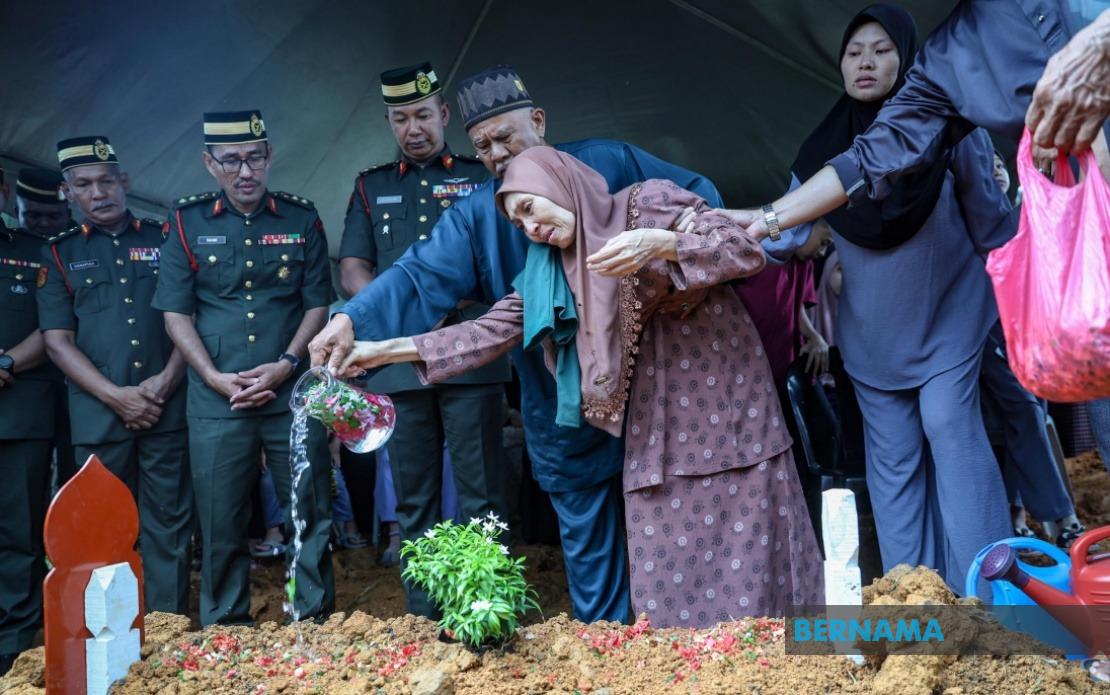
Private Siti Khadijah Sungip, a 24-year-old soldier with the Malaysian Army's Royal Engineer Regiment, was committed to her final resting place on June 17 in Kluang, two days after a catastrophic training accident claimed her life at Hobart Camp in Gurun, Kedah. The funeral ceremony, held at Taman Sri Lambak Muslim Cemetery, drew military colleagues and grieving family members to pay solemn respects to the serviceman whose promising military career ended during a routine grenade throwing exercise. The burial, conducted at 1.15 pm local time, marked the conclusion of a painful process set in motion when an explosion erupted during weapons training on the preceding day.
The incident that claimed Private Siti Khadijah's life occurred at 10.57 am at the target range facility, where she and Corporal Norazmi Abu Bakar from the Sixth Battalion of the Royal Malay Regiment were undergoing prescribed grenade throwing drills. Both personnel sustained severe injuries from the blast and were immediately evacuated to nearby medical facilities. Despite emergency medical response, neither soldier survived the journey to treatment—they were pronounced dead en route to Sultan Abdul Halim Hospital in Sungai Petani, bringing an abrupt end to what should have been a standard military training day.
The impact of this tragedy extended far beyond the immediate loss of two trained personnel. The Malaysian Army's statement confirmed that both victims were serving members actively engaged in operational readiness exercises, underscoring the inherent risks that military training, despite rigorous safety protocols, can present. The incident has raised questions within defence circles regarding safety procedures at the facility and whether all precautions were adequately observed during the training session at Hobart Camp, one of the Malaysian military's key training installations.
Private Siti Khadijah's remains underwent post-mortem examination at Sultanah Bahiyah Hospital in Alor Setar, a standard procedure in suspicious or accidental deaths involving military personnel. Medical examination was completed by approximately 2.30 am on June 17, after which the body was transported back to Kluang to be received by her family. The timing of the post-mortem completion meant that funeral arrangements could proceed with minimal delay, allowing the family to conduct burial rites according to Islamic tradition on the same calendar day.
The ceremonial aspects of the military funeral reflected the formal protocols observed by the Malaysian Army for personnel who die in service-related incidents. At 12.10 pm, the deceased's body, escorted by Lieutenant Muhammad Lutfil Hadi Osman of the First Field Troop and four members of the First Squadron of the Royal Engineer Regiment stationed at Sangro Camp in Taiping, arrived at the family home in Taman Sri Lambak. This military escort formed part of the ceremonial recognition of her service and sacrifice, a gesture intended to honour both the fallen soldier and her bereaved family.
Following arrival at the residence, the funeral prayer was conducted at Darul Iman Mosque, led by Major Mohd Azlan Shah Abdul Razak from the Malaysian Army Field Engineering Institute. The religious observance drew personnel from her unit and other military colleagues, creating a visible display of institutional solidarity with the grieving family during their period of mourning. Such ceremonies serve multiple functions within military culture—they honour the deceased, reinforce unit cohesion among surviving members, and provide public acknowledgment of sacrifice.
The symbolic presentation of the national flag formed a centrepiece of the funeral proceedings. Brigadier General Datuk Zulhelmy Masdar, Commander of the 7th Brigade and Headquarters of the 7th Malaysian Infantry Brigade based at Mahkota Camp, personally officiated the formal handover of the Jalur Gemilang to her father, Sungip Jais, 65 years old. This ceremonial act, deeply significant within military tradition, represents official recognition of the deceased's service and conveys institutional respect to the family members left behind. The presence of a senior brigade commander underscored the military hierarchy's acknowledgment of the loss and its commitment to honouring those who die while serving the nation.
The death of Private Siti Khadijah raises broader considerations about occupational safety within the Malaysian military training establishment. Grenade throwing exercises, while essential for developing combat-ready personnel, carry inherent risks that must be carefully managed through strict adherence to safety procedures, continuous oversight, and regular equipment inspections. The incident at Hobart Camp will likely trigger comprehensive reviews of training protocols at the facility, investigations into the specific circumstances that led to the explosion, and potentially new directives regarding how such exercises are conducted across the Malaysian Armed Forces.
For the Malaysian military establishment, such incidents carry profound implications beyond the immediate tragedy. Each fatal accident during training prompts internal assessments of whether existing safety frameworks remain adequate or require modification. The loss of trained personnel represents not only personal tragedy for families but also the loss of human resources in which the military has invested considerable training and development. The incident will inevitably influence how the institution approaches risk management in future training exercises and may lead to recalibration of protocols.
The presence of two fatalities in a single training accident is particularly significant, as it suggests that the circumstances were unusually severe or that safety systems may have been overwhelmed simultaneously. Military establishments worldwide continuously grapple with balancing the need for realistic, challenging training with the imperative to minimize preventable accidents. The investigation into exactly what triggered the explosion at Hobart Camp will determine whether systemic improvements are necessary or whether the incident represented an unusual confluence of circumstances despite adequate precautions being in place.
For Private Siti Khadijah's family and extended circle, the loss represents the end of a life of service and potential. Young military personnel like her represent the future generations of Malaysia's defence capabilities, and their deaths in training accidents are particularly poignant because they occur not in active conflict but during preparation for potential service. The funeral ceremony, attended by military colleagues and overseen by senior commanders, represented the institutional acknowledgment of her contributions and sacrifice, though no ceremony can fully address the grief of those who loved her.