The Prime Minister's Department (Religious Affairs) has committed to amplifying its youth engagement initiatives, taking guidance from a recent royal address by the Sultan of Perak, Sultan Nazrin Shah, who emphasised the critical role religious leaders must play in tackling extremism and the spread of false information in digital spaces. This commitment signals a strategic pivot toward preventive measures in countering radicalization and divisive narratives among Malaysia's younger demographics, recognising that young people are particularly vulnerable to online manipulation and extremist recruitment tactics.
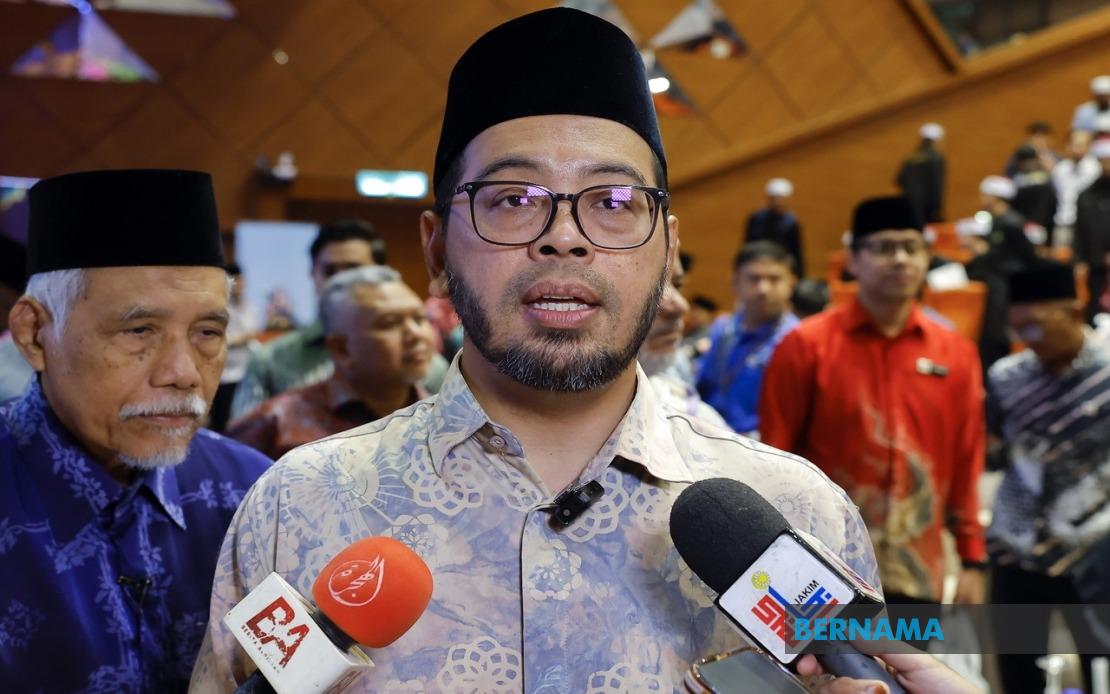
Dr Zulkifli Hasan, the Minister in the Prime Minister's Department (Religious Affairs), confirmed that his ministry would adopt the Sultan's address as a foundational framework for designing and rolling out future programmes and initiatives aimed at youth empowerment and religious education. Speaking after opening the National and International Tokoh Ma'al Hijrah Premier Lecture 1448/2026 in Putrajaya, Dr Zulkifli stressed the department's dedication to translating the royal directives into concrete action on the ground, ensuring that the Sultan's vision reaches implementation across various government and community touchpoints.
Sultan Nazrin Shah's remarks, delivered the previous Friday, underscored an increasingly urgent challenge facing Southeast Asia's societies: the intersection of youth vulnerability, digital technology, and ideological extremism. The Sultan articulated that religious leaders possess unique moral authority and community trust that positions them to engage meaningfully with young people in ways that secular institutions often cannot, making their involvement indispensable in constructing counter-narratives to extremist propaganda.
The royal address identified multiple interconnected pressures confronting today's youth, extending beyond religious extremism to encompass broader societal anxieties. Climate change, ongoing regional and international conflicts, economic instability, and the polarizing nature of social media platforms have created an environment in which young Malaysians experience heightened stress and uncertainty about their futures. This precarious psychological landscape, the Sultan implied, creates openings for extremist recruiters who offer simplistic ideological solutions and a sense of belonging to vulnerable teenagers and young adults.
Particular emphasis was placed on the phenomenon of digital polarisation, whereby social media algorithms and echo chambers fragment society into increasingly hostile ideological camps, eroding shared understanding and community cohesion. The Sultan identified declining confidence in established institutions—including government, media, and civil society organisations—as a consequence of this polarisation, which in turn weakens the countervailing forces that traditionally protect young people from radicalization.
For Malaysia, which has experienced significant terrorist attacks perpetrated by homegrown extremists in recent years, the Sultan's call carries particular weight. The country has invested substantially in deradicalization programmes and counter-extremism initiatives, yet the evolving sophistication of online recruitment tactics has meant that traditional approaches require continuous adaptation. Religious leaders, as custodians of Islamic theological interpretation and moral guidance within Muslim communities, occupy an essential frontline position in this ongoing struggle.
The Religious Affairs Ministry's commitment to operationalizing the Sultan's vision will likely involve coordination with Islamic educational institutions, mosques, and grassroots community organisations to create platforms for youth dialogue and mentorship. Such programmes might include digital literacy training to help young people critically evaluate online content, theological discussions that address common extremist narratives, and mentoring relationships that provide emotional and spiritual support during periods of identity formation and ideological questioning.
The timing of this initiative reflects broader regional concern about digital radicalization. Across Southeast Asia, intelligence agencies and civil society organisations have documented cases of young people, sometimes as young as twelve or thirteen, being groomed online by extremist networks and eventually recruited into militant organisations. Malaysia's approach—anchoring counter-extremism efforts in religious authority and community engagement rather than solely in security and surveillance—represents an alternative model worthy of attention and potential regional collaboration.
Beyond immediate security considerations, the Sultan's address and the Religious Affairs Ministry's response signal recognition that young Malaysians require comprehensive support addressing their multifaceted challenges. Economic uncertainty about employment prospects, climate anxiety about environmental futures, and social fragmentation from polarized discourse cannot be solved through deradicalization messaging alone. A holistic approach must simultaneously tackle root causes of disaffection while building the institutional trust and community resilience necessary for long-term social stability.
The challenge ahead will be translating ministerial commitment into resource allocation and sustained implementation. Programme effectiveness will depend upon recruiting and training qualified religious leaders capable of communicating with young people in their digital native context, avoiding messaging that feels patronising or disconnected from lived experience. Success requires genuine listening to youth concerns alongside transmission of counter-narrative messages, treating young people as participants in solution-building rather than passive recipients of institutional guidance.
Regional observers will be monitoring whether Malaysia's renewed emphasis on youth engagement through religious institutions proves replicable in other Southeast Asian Muslim-majority nations facing similar challenges. The approach aligns with international best practices emphasizing community-based counter-extremism over purely state-security models, potentially offering valuable lessons for countries throughout the region wrestling with digital-age radicalization.