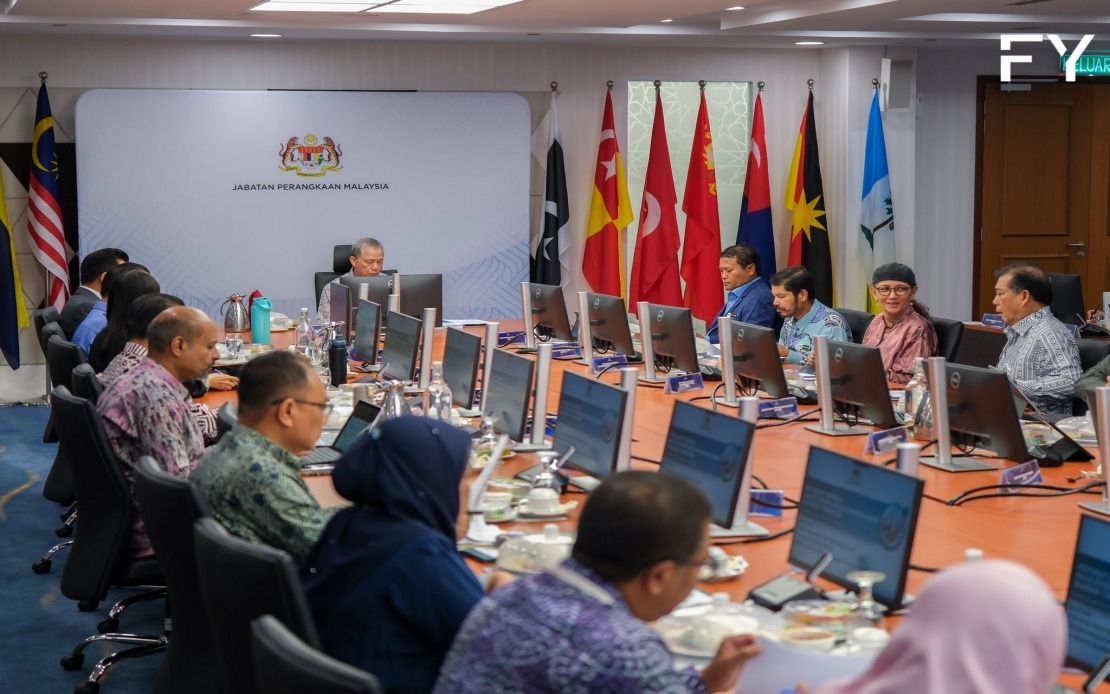
Malaysia's government has committed to substantially upgrading its data infrastructure and artificial intelligence capabilities as foundational drivers of the 13th Malaysia Plan (13MP), spanning 2026 to 2030. Deputy Prime Minister Datuk Seri Fadillah Yusof signalled this strategic pivot following a high-level meeting of the National Statistics and Data Council (MSDN), positioning data and statistical prowess as essential national assets rather than administrative conveniences. The shift reflects a broader recognition that policymaking in an era of rapid technological change, climate urgency and geopolitical volatility demands evidence-based approaches grounded in robust information systems.
Fadillah's emphasis on data-driven governance comes as Malaysia navigates multiple concurrent pressures: economic uncertainties rippling across global markets, geopolitical repositioning in the Indo-Pacific, the imperative of digital transformation, climate adaptation challenges and the accelerating pace of technological innovation, particularly generative AI. These headwinds underscore why statistical integrity and analytical capacity have become competitive advantages for nations seeking to allocate resources efficiently and respond decisively to emerging threats. For Malaysia, strengthening the National Statistical System represents both a defensive measure—protecting economic stability—and an offensive one, enabling faster capitalisation on opportunities in sectors like green energy and digital services.
The timing of this strategic emphasis aligns with encouraging macroeconomic indicators. Malaysia recorded gross domestic product expansion of 5.4 per cent during the first quarter of 2026, a performance Fadillah attributed directly to development policies grounded in rigorous data analysis. This achievement underscores a virtuous cycle: solid statistical foundations enable better policy design, which drives economic outcomes, which in turn validates continued investment in data infrastructure. For Southeast Asian observers, Malaysia's experience offers a template for how emerging economies can compete globally through institutional investment in analytical capacity rather than relying solely on commodity exports or low-wage manufacturing advantages.
The Strengthening of the National Statistical System (SNSS) initiative requires deepening collaboration across multiple tiers and sectors of Malaysian governance. Fadillah outlined a deliberately inclusive architecture: strategic partnerships spanning federal ministries, state governments, private enterprises, universities and research institutions must function as an integrated ecosystem. This multi-stakeholder approach addresses a perennial challenge in developing nations—data fragmentation, where government agencies, corporate entities and academia maintain siloed information systems that prevent comprehensive analysis. By contrast, sophisticated economies like Singapore and South Korea have long prioritised data integration, allowing policymakers to identify patterns and correlations invisible to isolated data holders.
The digital transition demands particular attention to data security and ethical governance. Fadillah stressed that integrating information from disparate sources—government administrative databases, corporate transaction records, academic research findings—must occur within frameworks ensuring privacy protection and ethical safeguards. Malaysia's progress here matters not only domestically but regionally; Southeast Asia faces mounting scrutiny over data governance standards as foreign technology firms expand operations and regional governments experiment with surveillance and analytics technologies. Malaysia's commitment to secure, ethical data integration positions it as a potential standard-setter within ASEAN, contrasting with nations where data protection remains underdeveloped.
Big data analytics and artificial intelligence emerge as multipliers of statistical capacity. Rather than relying solely on traditional survey methodologies and administrative records, modern governments harness machine learning to identify patterns in large datasets, forecast trends and simulate policy impacts. Fadillah's emphasis on leveraging AI specifically targets productivity gains and enhanced competitiveness, recognising that Malaysian firms and government agencies lag regional peers in AI adoption. Building talent pipelines and institutional capacity in data science becomes urgent; the council's initiatives include developing a dedicated science, technology and innovation talent database to systematically identify, train and deploy analytical expertise.
Several strategic domains receive particular priority under this data-intensive governance model. Energy transition represents a defining challenge for Malaysia, whose economy remains fossil-fuel dependent; comprehensive data systems tracking energy consumption patterns, renewable resource availability, grid dynamics and consumer behaviour enable evidence-based transition planning that minimises economic disruption. Similarly, climate adaptation and water sector transformation—critical given Malaysia's vulnerability to extreme weather and transboundary water challenges—require granular, real-time data on environmental conditions, consumption patterns and infrastructure performance. Without such information, Malaysia risks investing in mitigation strategies misaligned with actual risk profiles or population needs.
Youth development programmes exemplify how data democratisation can improve targeting. By integrating datasets on educational attainment, employment outcomes, skills gaps and geographic distribution of opportunity, policymakers can identify cohorts most at risk of being left behind by technological change and design interventions accordingly. This contrasts with conventional approaches where programmes reach intended beneficiaries unevenly. Similarly, national road asset management—seemingly technical but fiscally consequential—benefits enormously from integrated data systems that track infrastructure condition, maintenance histories, usage patterns and deterioration rates, enabling preventive strategies that extend asset lifespans and reduce costly emergency repairs.
The council's focus on standardising official statistical standards addresses a foundational weakness in many developing nations. When different agencies employ inconsistent methodologies, definitions and quality standards, aggregate data becomes unreliable, undermining policy confidence. Fadillah's emphasis on standardisation thus targets a critical governance vulnerability. Strengthening data governance frameworks—establishing clear responsibilities for data collection, storage, access and analysis across institutions—similarly addresses coordination failures that plague multi-agency initiatives. The centralisation of road asset data management exemplifies this principle: fragmentary information held by different local authorities provides far less policy value than consolidated, standardised datasets accessible to central planning authorities.
The broader context involves Malaysia's positioning within evolving regional and global hierarchies of technological capacity. Southeast Asian nations compete intensely for foreign direct investment, particularly in high-value sectors like semiconductors, artificial intelligence and digital services. Countries demonstrating sophisticated data governance and analytical capacity attract technology firms seeking markets with strong regulatory frameworks and skilled workforces. Conversely, nations perceived as data-insecure or administratively opaque face investor caution. By visibly strengthening its statistical and data systems, Malaysia signals institutional maturity and reliability to international business decision-makers.
Implementation challenges will test this commitment. Building truly integrated national data ecosystems requires sustained investment, institutional coordination across competing bureaucratic interests, cultivation of scarce technical talent, and navigation of privacy-security-openness tensions without consensus solutions globally. The council's inclusion of representatives from Health, Communications, Digital, Works and Economy ministries, alongside the chief statistician, suggests awareness of these complexities. Yet maintaining momentum through leadership transitions, budget cycles and shifting political priorities represents a recurring obstacle in developing democracies.
For Malaysian citizens and businesses, these developments carry immediate implications. More sophisticated government analytics could improve public service delivery—healthcare systems that anticipate disease patterns, education systems that identify student needs earlier, infrastructure planning that reduces congestion and enhances reliability. Private sector competitiveness depends increasingly on data-driven decision-making; firms operating within an economy characterised by high-quality statistical information and transparent data governance enjoy structural advantages over competitors in environments with information asymmetries and opacity.
Ultimately, Fadillah's articulation of data and AI as strategic national assets reflects a maturing recognition that governance quality in the twenty-first century correlates strongly with analytical sophistication. Malaysia's commitment to strengthening the National Statistical System under the 13MP framework demonstrates that policymakers understand institutional foundations matter as much as individual projects. Whether this commitment translates into sustained investment, effective coordination and tangible improvements in policy outcomes will significantly influence Malaysia's economic trajectory and regional standing over the coming decade.