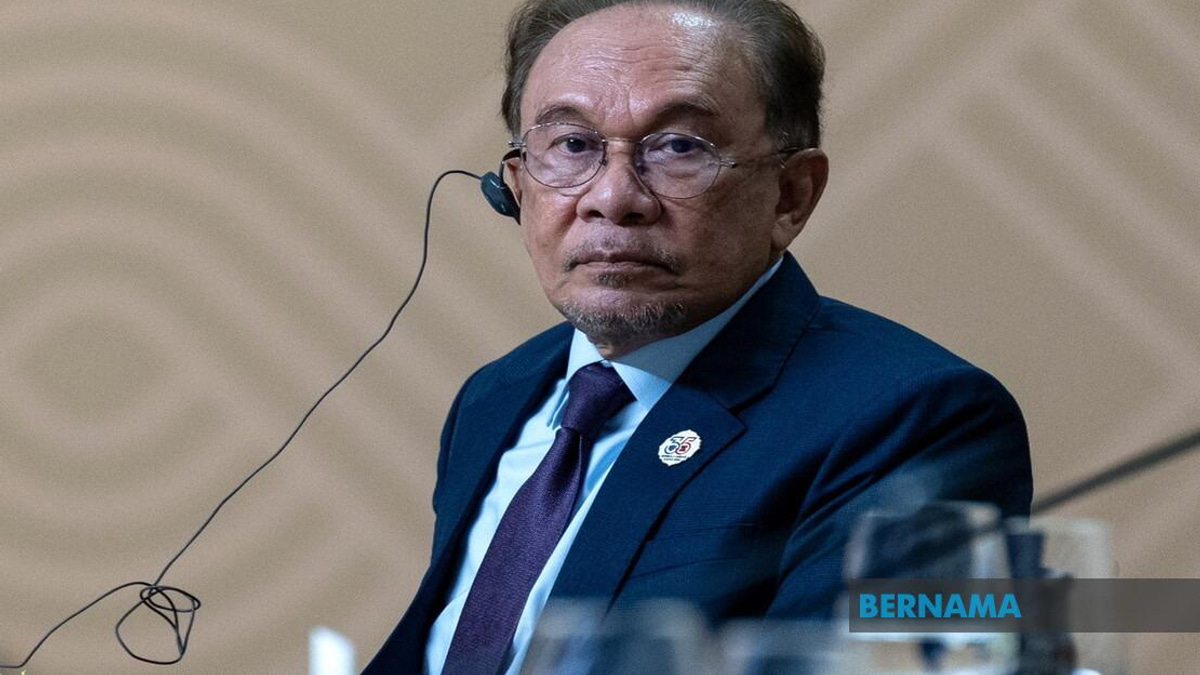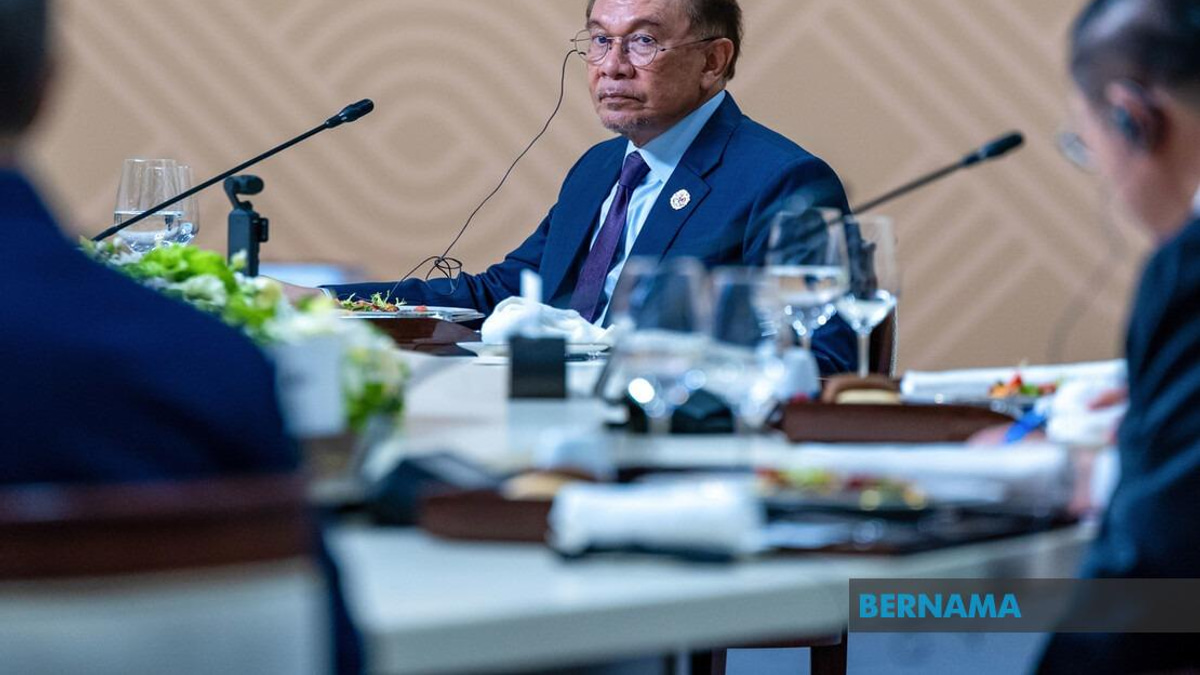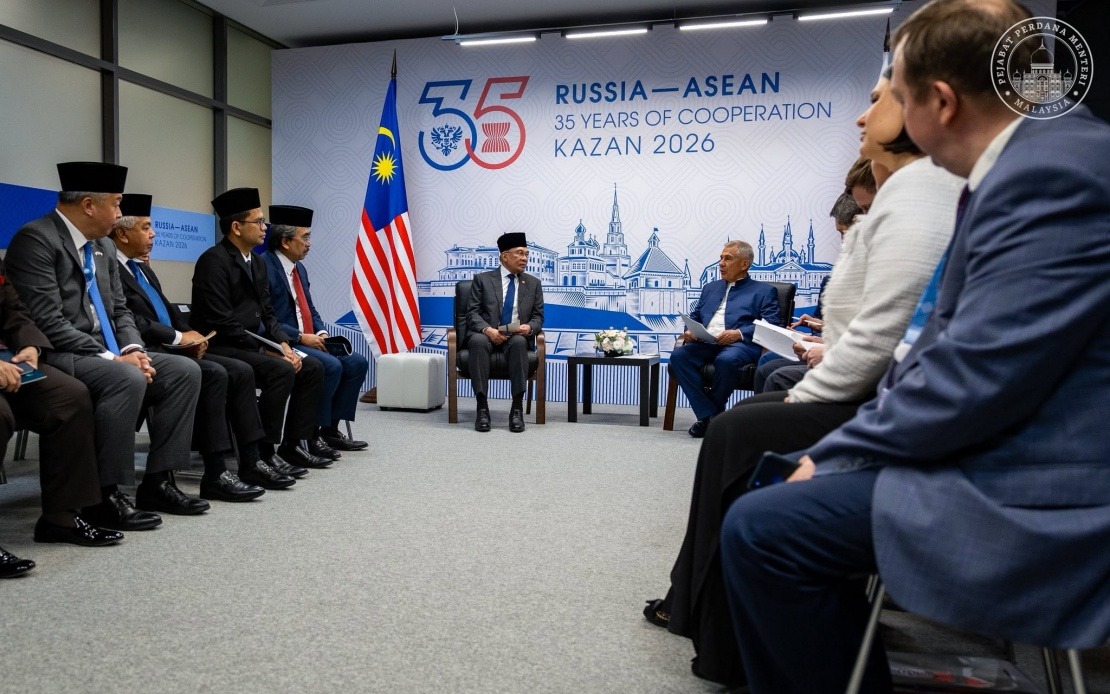
Prime Minister Datuk Seri Anwar Ibrahim has signalled Malaysia's readiness to significantly broaden its relationship with the Republic of Tatarstan, identifying multiple sectors where both regions can pursue mutually beneficial partnerships. The announcement came following Anwar's bilateral meeting with Tatarstan's leader, Rustam Minnikhanov, shortly after the Malaysian delegation's arrival in Kazan on Tuesday evening. The two officials discussed an expansive agenda spanning energy, commerce, investment flows, educational exchanges, tourism promotion, halal industry development, technological advancement and workforce capacity building.
The energy sector emerged as a centrepiece of the bilateral discussion, reflecting Tatarstan's prominence as one of Russia's leading oil-producing regions. Anwar outlined Malaysia's particular interest in collaborating across the entire petroleum value chain, explicitly mentioning downstream operations, refining capabilities and petrochemicals manufacturing. For Malaysia, such partnerships hold strategic significance given the nation's own considerable hydrocarbon sector expertise and its position as a regional energy hub. Tatarstan's substantial production capacity and technical infrastructure present complementary opportunities for Malaysian companies seeking to expand their international footprint or secure reliable energy supplies.
Beyond conventional energy cooperation, the two sides examined the potential of the Kazan Forum as a platform for strengthening commercial linkages and identifying innovative investment opportunities. The discussions specifically touched upon emerging domains including the digital economy, technological innovation and strategic capital deployment. This contemporary focus reflects broader regional trends toward economic diversification and digital transformation, areas where both Malaysia and Tatarstan possess developing strengths and mutual learning potential. The elevation of such discussions to the highest governmental levels underscores the strategic importance both nations attach to these sectors.
Anwar seized the occasion to congratulate Kazan on its designation as the Islamic World Cultural Capital 2026, a recognition bestowed by the Islamic World Educational, Scientific and Cultural Organisation. This acknowledgement carries particular resonance for Malaysia, where Islamic culture, governance and commerce occupy central roles. The designation affirms Kazan's standing as a significant nexus of Islamic intellectual tradition, heritage preservation and cultural innovation—positioning it as an attractive partner for Malaysian institutions and enterprises engaged in Islamic education, fintech, halal certification and faith-based business development. The city's historical prominence as an Islamic centre, combined with its contemporary status within Russia, creates a distinctive window for Malaysia to strengthen ties with both the Russian state and its substantial Muslim-majority regions.
The Prime Minister also acknowledged Russian President Vladimir Putin's establishment of the Strategic Vision Group, characterising it as an instrumental mechanism for fostering dialogue between Russia and the Islamic world. This platform represents an institutional framework through which Malaysia can more effectively engage with Moscow on matters of mutual interest to both Muslim-majority nations and the broader Islamic community. Such structured dialogue mechanisms facilitate sustained engagement beyond traditional bilateral channels and enable broader regional conversations on economic cooperation, security concerns and cultural exchange.
Anwar's presence in Kazan forms part of Malaysia's participation in the ASEAN-Russia Commemorative Summit, a high-level gathering commencing on the date of his arrival and extending for two days. This summit represents the apex of engagement between the ten-nation ASEAN bloc and the Russian Federation, embodying a relationship that has matured substantially since formal dialogue was established in 1991. Russia's elevation to full ASEAN Dialogue Partner status in 1996 reflected mutual recognition of shared interests, while the 2018 upgrade to Strategic Partnership status formalised a commitment to deepen cooperation across political-security, economic and socio-cultural dimensions.
The Malaysian delegation accompanying Anwar includes Investment, Trade and Industry Minister Datuk Seri Johari Abdul Ghani and Economy Minister Akmal Nasrullah Mohd Nasir, alongside supporting officials from the Prime Minister's Office and Foreign Ministry. This composition reflects the multidimensional nature of the engagement, with representation spanning investment facilitation, trade development, economic policy and diplomatic coordination. The breadth of the delegation signals Malaysia's comprehensive approach to these negotiations and its intent to translate high-level political discussions into concrete institutional and commercial arrangements.
Kazan itself merits consideration as a strategic location for Malaysia's Russia engagement. Situated approximately 800 kilometres east of Moscow at the confluence of the Volga and Kazanka rivers, the city commands a population of roughly 1.3 million and occupies the distinctive status of Russia's informal third capital following Moscow and Saint Petersburg. Its more than millennium-long history and widely recognised role as a primary centre of Russian Islamic culture and heritage create a natural alignment with Malaysian interests. The city's geographic position within European Russia, combined with its cultural significance and economic dynamism, positions it as an increasingly important node in Russian-Islamic world relations.
For Malaysia, deepening engagement with Tatarstan and the broader Russian Federation carries implications extending beyond bilateral commercial interests. It represents strategic diversification of Malaysia's international partnerships at a time of shifting global alignments and growing strategic competition among major powers. By strengthening ties with Russia across multiple sectors, Malaysia reinforces its non-aligned positioning and expands its strategic options. Additionally, the emphasis on cooperation with regions like Tatarstan—which possess substantial Muslim populations and Islamic heritage—aligns with Malaysia's positioning as a bridge between the Islamic world and international partners, a role increasingly central to Malaysian foreign policy.
The halal industry emerges as a particularly strategic area for Malaysian engagement. Malaysia's global leadership in halal certification, standards development and Shariah-compliant business practices has created substantial competitive advantages in this rapidly expanding sector. Tatarstan and broader Russia represent significant growth markets for halal products and services, given the Muslim populations distributed across Russian territories. Malaysian expertise in halal logistics, food processing, financial products and tourism services positions Malaysian enterprises advantageously for capturing emerging opportunities in these sectors throughout Russia.
Educational and talent development cooperation offers complementary benefits to both parties. Malaysia has developed considerable expertise in training professionals across technical and managerial disciplines, while Russian institutions bring scientific and engineering capabilities. Structured exchanges and capacity-building initiatives between Malaysian and Tatar institutions could yield productivity improvements and innovation benefits for both economies. Such programmes also facilitate deeper people-to-people connections that underpin enduring diplomatic relationships and create networks supporting commercial collaboration.
For regional observers, Malaysia's proactive engagement with Russia through the ASEAN-Russia Summit framework and bilateral initiatives reflects the bloc's broader commitment to maintaining constructive relationships with major powers. ASEAN's traditional emphasis on dialogue partnerships and strategic hedging finds expression in this multi-layered engagement approach. By simultaneously developing partnerships with Russia while maintaining ties with other major powers, ASEAN nations including Malaysia navigate contemporary geopolitical complexities while preserving autonomy and maximising access to diverse partnership opportunities. The Kazan visit exemplifies this balanced approach, combining institutional multilateral engagement with bilateral relationship-building across multiple functional domains.