The Malaysian government has appealed to the public to maintain humanitarian principles and empathy when engaging with Rohingya communities within the country, as public discourse and media coverage of the issue continues to intensify. Officials in Putrajaya have sought to recalibrate the national conversation around one of Southeast Asia's most pressing humanitarian crises, emphasising that compassion and the rule of law need not be incompatible positions.
The appeal reflects growing tensions between differing perspectives on how Malaysia should manage its relationship with the stateless Rohingya population. On one side, humanitarian organisations and segments of civil society advocate for more generous assistance and integration measures. On the other, domestic political actors and some sections of the public have expressed concerns about strain on resources and security implications. The government's intervention suggests an attempt to navigate these competing pressures while maintaining social cohesion.
Rohingya communities have been present in Malaysia for decades, but their numbers swelled dramatically following the Myanmar military's 2017 crackdown that the United Nations has described as genocide. Hundreds of thousands fled to neighbouring Bangladesh, but thousands also arrived in Malaysia seeking refuge. Unlike Bangladesh, which hosts the world's largest refugee camps, Malaysia has not formally recognised the Rohingya as refugees, leaving them in a precarious legal status with restricted access to employment, healthcare, and education.
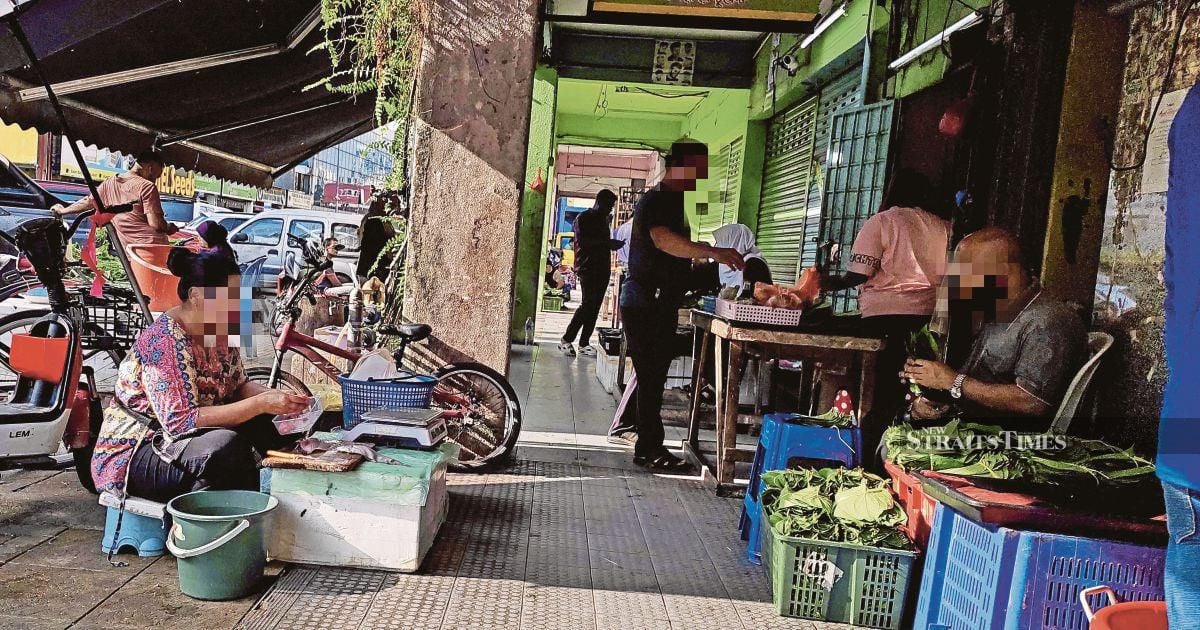
The recent shift in political rhetoric appears designed to counter increasingly vocal criticism of the Rohingya presence in Malaysian cities. Social media has amplified concerns about overcrowding in certain urban areas, allegedly disproportionate involvement in crime, and perceptions of unfair economic competition. These narratives have gained traction particularly during periods of economic uncertainty, though systematic data on such claims remains limited and contested among researchers.
The government's emphasis on balancing humanitarian concerns with legal obligations reflects Malaysia's complicated position as a signatory to international humanitarian conventions without being a signatory to the 1951 Refugee Convention. This legal ambiguity has created policy challenges, forcing officials to accommodate a vulnerable population while maintaining the fiction that they are not refugees. The tension has led to periodic enforcement operations alongside grudging provision of basic services through international organisations and NGOs.
For Malaysian society, the Rohingya question intersects with broader debates about national identity, religious solidarity, and Malaysia's role in regional stability. As a Muslim-majority nation with significant soft power in the Organisation of Islamic Cooperation, Malaysia faces expectations to demonstrate leadership in protecting Muslim minorities globally. Yet domestic political calculations and resource constraints have often limited the government's capacity to translate rhetoric into concrete policy shifts. The new appeal to compassion may signal a recalibration of these priorities.
The media landscape surrounding this issue has become increasingly polarised. Mainstream coverage has shifted to highlight negative incidents involving Rohingya individuals, while alternative media and civil society channels emphasise their vulnerability and human rights abuses suffered in Myanmar. This fragmentation means different audiences receive fundamentally different narratives about who the Rohingya are and why they matter to Malaysia. Government messaging attempting to bridge these perspectives faces an uphill battle against entrenched viewpoints on both sides.
Regionally, Malaysia's approach carries implications beyond its borders. As Southeast Asia confronts questions about responsibility-sharing for displaced populations, Malaysia's policies influence whether other nations adopt similarly restrictive or accommodating stances. The region lacks coordinated frameworks for managing stateless persons and refugees, creating incentives for countries to avoid setting precedents that might encourage further migration. This dynamic partially explains why even well-intentioned Malaysian officials may hesitate to dramatically expand Rohingya access and rights.
The government's call for balanced engagement with the Rohingya also reflects concerns about extremism recruitment. Over the past decade, security agencies across the region have warned that stateless camps and urban communities can serve as recruitment grounds for militant organisations. Marginalisation and lack of opportunity may increase vulnerability to such recruitment, creating a security rationale for ensuring minimum standards of treatment and opportunity. This security angle provides a pragmatic complement to humanitarian arguments for more generous policies.
Looking forward, the success of government messaging will depend heavily on whether officials can translate rhetorical appeals into tangible improvements in Rohingya circumstances. Without corresponding policy changes—such as expanded work rights, improved educational access, or formal refugee status—public cynicism is likely to deepen. Conversely, moves to strengthen integration measures without adequate preparation of receiving communities could provoke backlash that undermines both the humanitarian agenda and social stability.
The long-term challenge for Malaysia lies in recognising that neither unmitigated compassion nor strict legal minimalism offers sustainable solutions. The Rohingya crisis is not temporary; unless conditions in Myanmar change fundamentally, significant numbers will remain in Malaysia indefinitely. This reality demands policy frameworks that acknowledge both the legitimate needs of the displaced population and the legitimate concerns of Malaysian citizens. The government's call for balance, if backed by serious institutional reform, could represent a step toward such frameworks.