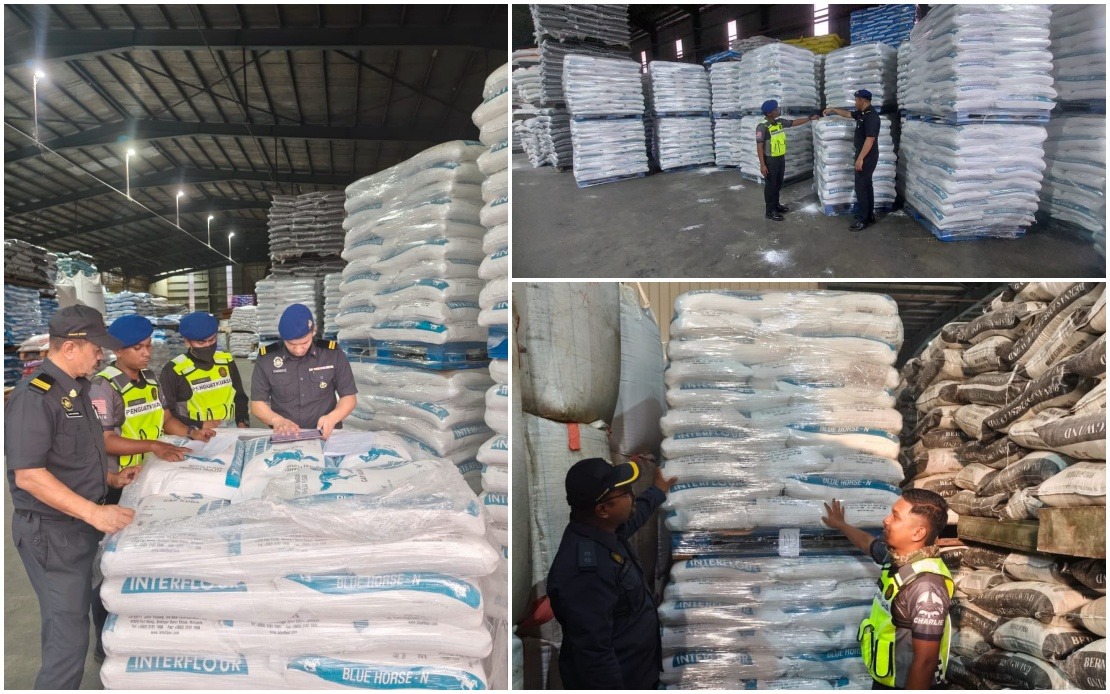
The Ministry of Domestic Trade and Cost of Living's Kedah division has impounded a substantial quantity of wheat flour from an animal feed manufacturing operation in the Kuala Ketil Industrial Area, triggering a formal investigation into potential subsidy diversion. Four enforcement officers from the Baling branch executed the raid on June 15, discovering the stockpile during an unannounced inspection that began at approximately 4.30 pm.
According to Kedah KPDN director Muhammad Nizam Jamaludin, the inspection revealed wheat flour integrated into the facility's animal feed manufacturing processes. The discovery raises questions about supply chain compliance within Kedah's industrial sector, particularly regarding how raw materials designated for specific purposes are handled by processors. The haul totalled 53,325 kilogrammes, with authorities valuing the confiscated stock at approximately RM100,251, representing a significant economic impact for the operation.
The factory manager, a 25-year-old local resident, was unable to demonstrate the necessary authorisation from the Supply Controller when confronted by inspectors. This represents a critical administrative failure, as Malaysia's regulatory framework requires explicit approval for the storage and use of certain flour supplies, especially those that may benefit from government subsidies or price controls. The absence of such documentation forms the foundation of the enforcement action.
Investigators are proceeding under Section 21 of the Control of Supplies Act 1961, legislation designed to prevent the unauthorised hoarding, diversion, or misuse of controlled commodities. This particular statute carries significant weight in Malaysia's food security governance structure, enabling authorities to maintain oversight of materials that could affect market stability or consumer access. The legal framework reflects longstanding concerns about supply manipulation in essential goods industries.
The case underscores broader regulatory challenges facing Malaysia's food processing sector, where animal feed manufacturers occupy an important but sometimes overlooked position in the agricultural supply chain. These facilities consume substantial quantities of raw materials, creating opportunities for oversight gaps if compliance mechanisms falter. The Kedah incident highlights the continued need for vigilant monitoring of industrial operations, particularly when subsidised or price-controlled inputs are involved.
For Malaysian businesses operating in similar manufacturing spaces, the enforcement action carries clear cautionary implications. Companies handling flour or other controlled substances must maintain meticulous documentation of all supply approvals, regardless of the end-use application. Even operations producing intermediate goods like animal feed face identical regulatory obligations, and ignorance of permit requirements provides no defence against enforcement action.
The broader context involves Malaysia's commitment to preventing the diversion of subsidised goods into unauthorised channels or black markets. Government-controlled pricing on essential commodities relies heavily on preventing leakage through enforcement mechanisms precisely like this raid. When subsidies are intended for specific consumer groups or applications, unauthorised storage or processing undermines the policy's effectiveness and creates artificial scarcities elsewhere in the distribution network.
Muhammad Nizam's emphasis on "firm action" against parties exploiting or misusing subsidised goods signals a hardening stance within Kedah's enforcement division. This messaging likely reflects broader directives from the federal KPDN leadership to prioritise supply chain integrity. The public nature of the announcement serves as a deterrent to other industrial operators who might consider similar breaches, establishing that such violations will be detected and prosecuted.
The Kuala Ketil Industrial Area, where the factory operates, represents one of several manufacturing clusters across northern Peninsular Malaysia. These zones concentrate numerous small and medium-sized operations across various sectors, creating both efficiency advantages and regulatory challenges for enforcement bodies. A single inspection that uncovers a violation of this scale may prompt broader compliance reviews across comparable facilities in the vicinity.
For stakeholders in the animal feed industry—including poultry farmers, livestock producers, and feed distributors—the incident raises questions about supply stability and regulatory compliance costs. Manufacturers must now factor potential enforcement actions into their operational planning, ensuring they maintain complete documentation and restrict themselves to authorised supply sources. This ultimately drives up compliance costs but reflects necessary oversight mechanisms for protecting market integrity.
The investigation's continuation will likely reveal additional details about the supply chain for this flour, potentially identifying whether the material originated from authorised distributors or whether further breaches occurred upstream. Authorities may pursue complementary investigations with suppliers and other connected parties if evidence suggests a broader network of non-compliance. Such investigations can extend considerably beyond the initial seizure, creating prolonged uncertainty for all parties involved.