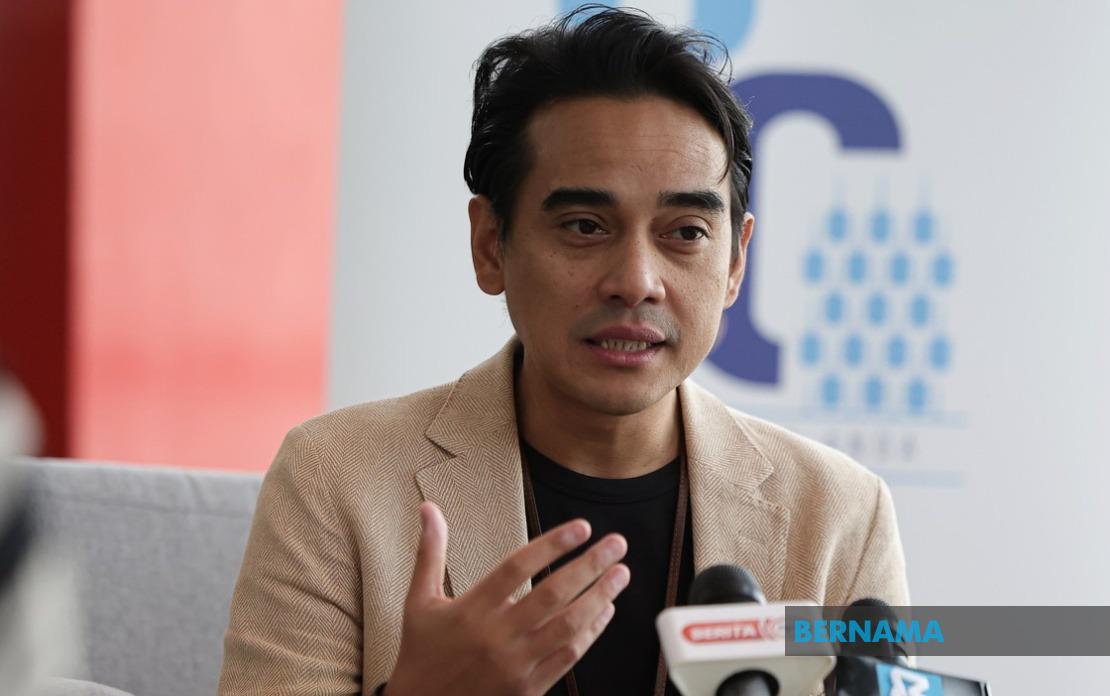
The competitive pressures reshaping global journalism have reached Malaysia's newsrooms, with the country's top broadcasting official warning that media practitioners face a stark choice: adapt to artificial intelligence or be superseded by those who do. Ashwad Ismail, Director-General of Broadcasting, delivered this assessment during a televised appearance on Bernama TV's The Nation programme in Kuala Lumpur on June 17, articulating a vision where technological adoption becomes essential to professional survival in an industry undergoing fundamental transformation.
Ashwad's framing of the AI challenge represents a deliberate reorientation of industry discourse away from existential dread toward pragmatic capability-building. Rather than casting artificial intelligence as an external threat intent on eliminating journalistic roles, he positioned the technology as a complementary instrument that, when wielded skillfully, amplifies human expertise and elevates the standard of news production. This distinction matters profoundly for newsroom morale and industry confidence, especially in Southeast Asia where economic pressures on traditional media remain acute.
The core assertion underlying Ashwad's commentary reflects a professional reality increasingly evident across global media organizations: advancement within journalism will increasingly favour those who demonstrate fluency with AI-augmented workflows. As he articulated it directly, individual journalists risk displacement not by machines themselves, but by competitors who possess superior capacity to integrate AI tools into their reporting, verification, and storytelling processes. This reframing shifts accountability squarely onto media professionals to invest in continuous skill development rather than waiting passively for technological disruption to unfold.
The Malaysian context amplifies these warnings. The country's media industry has historically lagged in technology adoption compared to developed markets, while simultaneously facing consolidation pressures and digital readership migration. For Malaysian journalists and news organizations operating within constrained budgets and competing against international digital outlets, AI literacy becomes not a luxury but an increasingly urgent practical requirement. Those unable to leverage automation for routine research, data analysis, and initial draft preparation will find themselves overwhelmed by competing newsrooms operating with greater efficiency.
Ashwad emphasized that introducing AI into newsrooms cannot proceed without comprehensive governance frameworks. He argued that clear institutional guidelines prove essential for media organizations navigating the inherent unpredictability and rapid evolution of artificial intelligence technologies. Such frameworks serve multiple purposes: they establish guardrails preventing algorithmic bias from contaminating editorial output, ensure that AI enhancement genuinely improves journalistic products rather than degrading them, and provide reassurance to audiences that human editorial judgment and accountability remain central to news production. The risk of unguided AI deployment lies in allowing efficiency gains to undermine the editorial integrity that justifies journalism's societal role.
Beyond technological competency, Ashwad connected AI adoption to the deeper crisis confronting contemporary journalism: deteriorating public trust. He argued that media organizations must simultaneously modernize their technological infrastructure while returning to foundational journalistic practices, particularly hyperlocal reporting that maintains direct community connections. This dual-track approach acknowledges that no amount of technological sophistication can substitute for the human credibility that emerges from persistent, accountable local journalism. In an era of algorithmic information delivery and digitally distributed news consumption, the "human touch" Ashwad referenced becomes paradoxically more valuable rather than less.
The emphasis on community engagement and hyperlocal reporting carries particular resonance for Malaysian news organizations. The country's diverse, multilingual, and regionally dispersed population means that centralized, technology-driven news production alone cannot adequately serve local information needs. AI tools might efficiently process national administrative announcements or aggregate international wire stories, but they cannot replace journalists embedded within communities who understand local dynamics, languages, and concerns. Trust rebuilds through demonstrated commitment to covering the specific issues affecting particular neighborhoods and constituencies—a deeply human endeavor that technology enables rather than replaces.
Ashwad's position reflects evolving international consensus within professional journalism associations and news industry bodies. Major outlets globally have already begun deploying AI for tasks ranging from routine data visualization to initial story research and document analysis, while reserving human judgment for editorial decisions, fact-verification, and narrative construction. The trajectory seems irreversible; the strategic question for media organizations is whether they advance deliberately and thoughtfully into AI integration or find themselves forced into reactive, less sophisticated adoption.
For Malaysian journalists specifically, this moment presents both vulnerability and opportunity. Vulnerability emerges from the reality that smaller news organizations with limited technical resources may struggle to implement responsible AI systems while maintaining editorial standards. Opportunity lies in the recognition that journalists who proactively develop AI competency now, while the technology is still novel within many local newsrooms, position themselves for advancement and influence in the profession's reorganized structure. Professional development agencies and journalism schools across Southeast Asia would serve the industry substantially by integrating AI literacy into core curriculum and training programs.
The broader implications extend beyond individual career trajectories to journalism's institutional future. News organizations that successfully integrate AI while preserving editorial integrity and community focus may strengthen their competitive position relative to platforms and algorithms increasingly dominating information distribution. Conversely, outlets that resist technological change while simultaneously failing to invest in hyperlocal accountability reporting risk becoming marginalized—their content undifferentiated from freely available information aggregators and AI-generated summaries.
Ashwad's intervention comes as Malaysia's media landscape confronts numerous pressures: digital advertising revenue concentration, competition from global platforms, regulatory constraints on editorial freedom, and audiences fragmenting across numerous channels. Against this backdrop, technological adaptation becomes inseparable from strategic sustainability. The broadcasting chief's messaging attempts to reframe AI as opportunity rather than threat—a crucial psychological reorientation necessary before professional journalism communities can embrace necessary skill development. Yet his call for clear institutional guidelines acknowledges that technology adoption cannot proceed unmoored from ethical considerations and professional standards that legitimize journalism's societal role. The challenge for Malaysian news organizations in coming years will involve executing this difficult balance: modernizing operations while preserving the human judgment, community accountability, and ethical commitment that justify journalism's existence in democratic societies.