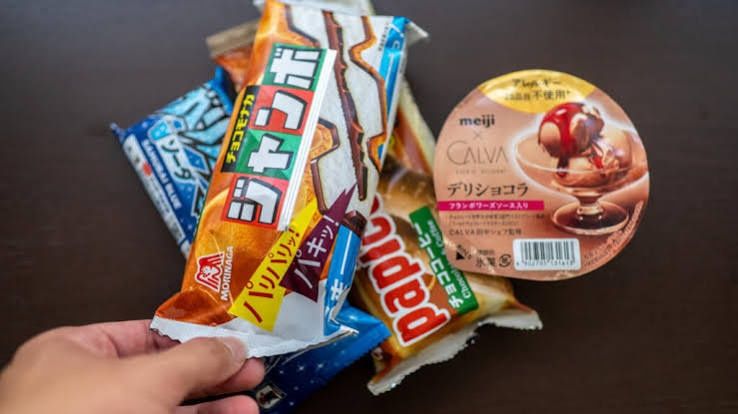
Japan's Fair Trade Commission (JFTC) has intensified its scrutiny of the nation's ice cream industry, conducting simultaneous raids on six of the country's largest frozen dessert producers on suspicion of operating a coordinated pricing cartel. The operation, which took place on Tuesday, targeted the head offices of Meiji Co., Morinaga Milk Industry Co., Lotte Co., Ezaki Glico Co., Morinaga & Co., and Akagi Nyugyo Co., marking a significant enforcement action as the sector enters its traditionally lucrative summer season.
The investigation centres on allegations that senior executives at these competing firms engaged in years-long coordination to synchronise and amplify retail price increases. According to sources privy to the matter, company officials allegedly exchanged emails and conducted face-to-face meetings to orchestrate when and by how much they would raise consumer prices. This pattern of suspected collusion appears systematic rather than circumstantial, with investigators examining communications and meeting records that may reveal explicit agreements to avoid undercutting one another during price adjustments.
The timing of this enforcement action carries particular significance for Japan's economy and consumers. The ice cream market represents a substantial commercial segment, with industry data showing sales surged to record levels exceeding 660 billion yen in the fiscal year ending March 2024. This unprecedented demand reflected Japan's experience of its hottest summer since 1989, during which consumers sought relief through increased frozen treat consumption. The sector's profitability makes it an attractive focus for antitrust regulators concerned about protecting consumer welfare during peak consumption periods.
Evidential patterns suggest the suspected cartel has operated with notable consistency. Since approximately 2022, these six firms have initiated retail price increases with remarkable synchronisation, typically raising prices around the same calendar period each year. Such coordinated timing across an entire industry is atypical of competitive markets where individual firms would make pricing decisions based on their distinct cost structures and market positions. Regulators view this uniformity as potentially indicative of pre-planned coordination rather than independent business decisions responding to market conditions.
The JFTC's investigative scope extends beyond simple price coordination to encompass potential abuse of inflationary conditions. Authorities are examining whether these companies exploited rising input costs as cover to implement price increases disproportionate to their actual cost increases. This dimension of the inquiry reflects a sophisticated understanding of how cartels operate during periods of genuine inflation, using real cost pressures as justification for inflated markups that exceed what market fundamentals alone would warrant. Such conduct would constitute a compounded violation of fair competition principles.
All six companies under investigation have responded with formal statements indicating cooperation with authorities. Natsuyo Suzuki, representing Akagi Nyugyo, confirmed the firm's willingness to participate fully in the investigative process following the on-site inspection. Five of the targeted firms released statements on Tuesday or Wednesday acknowledging the JFTC raids and pledging cooperation. This apparent compliance stance is standard practice in Japanese corporate culture, where demonstrated cooperation with regulatory inquiries can influence eventual enforcement outcomes and penalty assessments.
For Malaysia and broader Southeast Asian business communities, this enforcement action provides important signalling about Japan's increasingly assertive approach to cartels and anti-competitive conduct. The investigation demonstrates that even culturally-rooted business practices involving regular meetings and relationship-building among competitors face scrutiny when they produce uniform pricing outcomes. Foreign companies operating in Japan's market must recalibrate understanding of acceptable business conduct, particularly regarding information exchange and industry coordination.
The potential consequences for the implicated firms are substantial. If the JFTC concludes evidence supports cartel allegations, the Commission possesses authority to mandate comprehensive operational improvements addressing the competitive violations. Beyond structural remedies, the watchdog can impose significant financial penalties calculated according to statutory formulas. For major corporations like Meiji and Glico, which operate internationally including across Southeast Asia, penalties could extend reputational consequences affecting their regional market positioning and stakeholder confidence.
This enforcement action reflects broader international trends in antitrust enforcement. Competition authorities worldwide increasingly scrutinise industries where firms demonstrate parallel pricing behaviour, particularly when such patterns correlate temporally across multiple competing actors. Japan's JFTC is aligning with more aggressive stances adopted by counterparts in the European Union, United States, and other jurisdictions where cartel enforcement has intensified markedly over recent years. The investigation signals that antitrust enforcement remains an active policy priority even in mature, developed economies.
The ice cream sector's particular vulnerability to such investigation stems partly from market structure characteristics. The industry comprises a relatively concentrated group of major players, limited domestic production due to geographic constraints, and substantial brand loyalty among regional consumer bases. These features can facilitate coordination while simultaneously attracting regulatory attention when pricing behaviour appears suspicious. Additionally, the sector's seasonal demand patterns create natural inflection points where industry-wide price adjustments occur, potentially concealing coordinated behaviour among legitimate cost-response measures.
For consumers and retail chains in Japan, the investigation's outcome carries direct implications for pricing dynamics. Successful cartel enforcement typically produces downward pressure on prices as firms revert to independent pricing strategies and competitive discipline reasserts itself. However, inflationary cost pressures may mitigate immediate consumer relief. The inquiry process itself, extending over months or years, creates uncertainty affecting retail planning and consumer pricing expectations during the intervening period.
The investigation underscores how supply chain pressures and inflationary periods, while creating genuine cost challenges for manufacturers, simultaneously create enforcement risk when firms attempt to coordinate responses. Going forward, ice cream manufacturers and competitors across other concentrated industries must implement stringent compliance programmes preventing executive-level contact that might suggest pricing coordination. The JFTC's actions suggest that informal industry conventions and relationship-building practices, while culturally significant in Japanese business, cannot substitute for genuine competitive independence in pricing decisions.