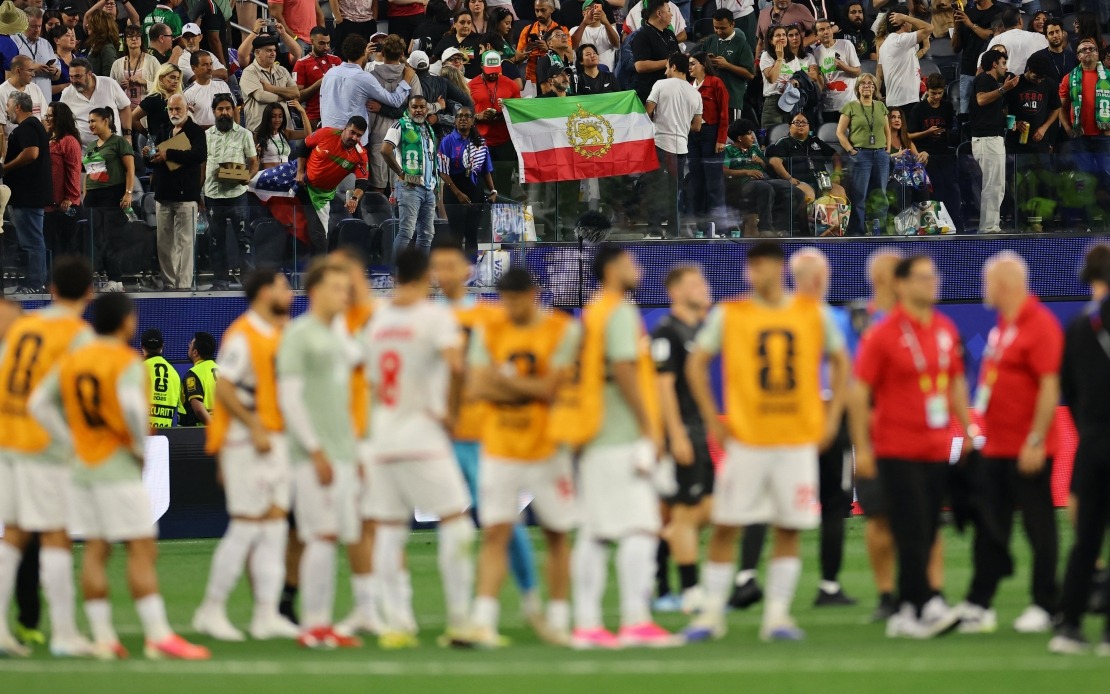
Iran's national football team faces an extraordinary situation at the World Cup, with manager Amir Ghalenoei levelling stark accusations about the restrictive conditions placed on his players. Speaking to international media in Istanbul, Ghalenoei characterised his squad as the "most repressed team in the whole World Cup," pointing to what he described as logistical harassment that has disrupted their tournament preparation and recovery protocols.
The controversy centred on the team's movements immediately following Iran's opening match against New Zealand on Monday night. Ghalenoei revealed that despite planning to remain overnight in Los Angeles for standard post-match recovery procedures, officials informed the squad they must depart for their training base in Tijuana, Mexico within hours. This sudden relocation meant the players faced significant additional travel without the crucial recovery period typically afforded to international teams between competitive matches.
The compressed schedule has taken a toll on player welfare, according to Ghalenoei's account. He highlighted the cumulative fatigue from extensive air travel, stressing that authorities provided no window for the team to recuperate after the demanding encounter. "We spent so much time in the air commuting, they didn't even give us time to recover," he stated through an interpreter, speaking to ESPN. The forced overnight travel stands out as particularly unusual in modern professional football, where sports science emphasises recovery windows following competition.
While Ghalenoei did not explicitly name the authority issuing the departure order, the implication carries geopolitical weight. Iran captain Mehdi Taremi referenced a visit from FIFA President Gianni Infantino to the team's locker room following the Monday match, suggesting international football's governing body was involved in discussions about the team's disposition. However, Taremi's cryptic remarks—"For sure, he wants to try to help us, but it's about other things, too. Everyone knows it"—pointed to deeper complexities beyond sporting logistics.
Taremi's comments alluded to the longstanding geopolitical tensions between the United States and Iran, a dynamic that evidently extends into the sporting realm. His statement that "I don't need to mention that because you know where we are" carried unmistakable reference to these historical adversarial relations. The timing appeared particularly fraught given Taremi's acknowledgment that a significant diplomatic resolution was imminent, with peace negotiations reportedly set to conclude within days.
The controversy reflects a broader pattern of complications Iran's delegation has encountered throughout their World Cup participation. Originally, the Iranian national squad planned to establish their tournament base in Tucson, Arizona, positioning themselves within American territory for the group stage. This arrangement offered geographical convenience and established training facilities. However, by late May, the team pivoted their preparations to Tijuana, Mexico, citing visa complications and logistical obstacles that rendered the American location untenable.
The shift to Mexico represented a significant compromise in tournament planning. Relocating a national team's operational base weeks before competition begins disrupts established training methodologies, accommodation arrangements, and the psychological preparation athletes undergo. Rather than remaining in a single location to build team cohesion and settle into routines, Iran's squad faced uncertainty and constant repositioning, factors that typically disadvantage competitive performance.
For Southeast Asian football observers and administrators, Iran's predicament raises broader questions about how international tournaments navigate geopolitical complexities. Malaysia and other ASEAN nations maintain diplomatic relationships spanning the spectrum of global powers, meaning the precedent established here carries implications for how their own teams might be treated during future major competitions. The apparent ability of external pressure to dictate logistical arrangements for competing nations challenges fundamental principles of sporting neutrality that international federations traditionally uphold.
The underlying situation also reflects FIFA's inherent challenge in hosting competitions involving nations with fraught international relationships. While football's governing body ostensibly maintains political neutrality, the practical implementation proves considerably more complicated when host nations or influential stakeholders apply pressure regarding team accommodations and movement. Iran's experience suggests that such political considerations can override standard player welfare protocols and sporting fairness principles.
For Iran's squad, the immediate consequence manifested in reduced preparation quality heading into subsequent group matches. Players arriving in Mexico exhausted from overnight travel faced truncated recovery periods before facing additional opponents. This physical and mental fatigue compounds competitive disadvantage, potentially affecting performance outcomes in a tournament format where marginal differences separate advancement from elimination. The team's subsequent performances must be interpreted against this contextual backdrop of external restrictions and logistical disruption.
The diplomatic implications also merit consideration. Taremi's measured but pointed commentary suggested Iran's football leadership recognised these restrictions as extensions of broader geopolitical positioning rather than purely sporting decisions. His carefully chosen words—avoiding explicit accusation while making underlying meaning transparent—reflected the diplomatic balancing act Iran's representatives must perform while competing at an international forum.
Moving forward, Iran's experience at this World Cup will likely influence how future tournaments manage team accommodations and movement when sensitive geopolitical contexts exist. The principle that sporting competition should remain insulated from political tensions faces renewed scrutiny, particularly when major federations appear unable or unwilling to enforce consistent standards. For Malaysian stakeholders observing these developments, Iran's situation underscores the importance of understanding how international political dynamics can intersect with ostensibly apolitical sporting environments.