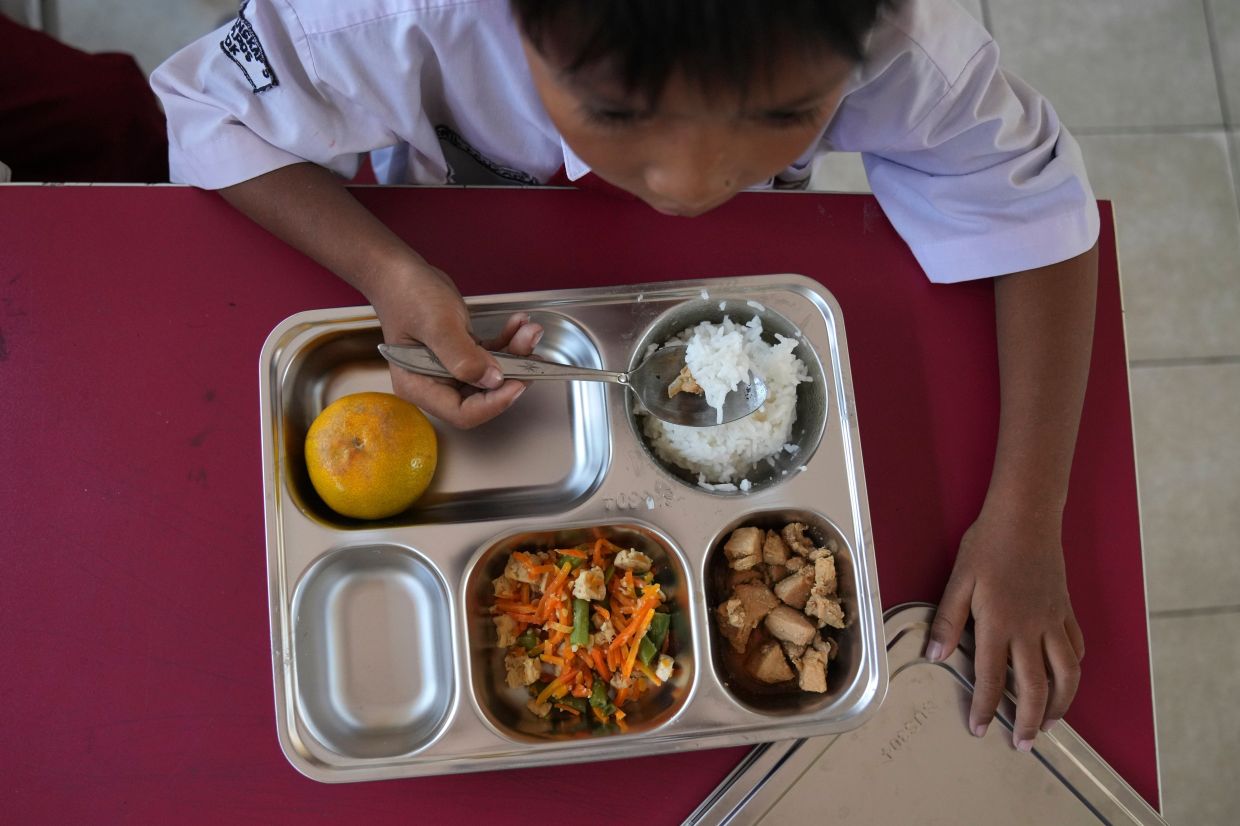
Indonesia's premier anti-corruption advocacy organisation has intensified pressure on the government to suspend President Prabowo Subianto's signature free meals initiative and launch a comprehensive investigation into the sprawling programme, which serves over 60 million recipients at an annual cost of roughly 268 trillion rupiah. Indonesia Corruption Watch, drawing from its early warnings about irregularities in the scheme, is now calling for the outright dissolution of the National Nutrition Agency (BGN), the body overseeing what is effectively a US$15 billion effort to tackle malnutrition and poverty across the archipelago. The watchdog's demands follow the recent detention of Dadan Hindayana, the agency's former chief, on corruption charges, alongside four other officials including two of his deputies.
Wana Alamsyah, heading the law and investigation division at Indonesia Corruption Watch, argues that authorities must cast their net far wider than the current focus on senior BGN personnel. In his view, the investigation should scrutinise every layer of the programme's complex machinery, from the vendors supplying meals to the procurement committees awarding contracts. His contention reflects mounting evidence that structural vulnerabilities in how the initiative was designed and rolled out have created numerous opportunities for misappropriation. The organisation contends that the programme was rushed into implementation without adequate planning, a charge that resonates with reports of food safety incidents and complaints about nutritional standards across participating schools and institutions nationwide.
The timing of enforcement action has itself become a subject of scrutiny among observers. Wana pointedly questioned why oversight authorities waited until now to take action when criticisms have circulated openly on social media platforms and through civil society channels throughout 2025. His analysis suggests that the government's sudden decisive action may be driven less by principled anti-corruption zeal than by fiscal pressure, particularly as military spending and fuel subsidies strain the national budget amid global oil price volatility linked to geopolitical tensions. In this reading, the detentions serve as a convenient deflection—a sacrificial gesture allowing the administration to reshape and retrench the programme while managing political fallout from the initiative's evident shortcomings.
President Prabowo has publicly declared zero tolerance for corruption within the meals scheme, stating unequivocally in an address to thousands of programme partners that he will not permit public funds to be diverted. Yet the breadth and sophistication of the alleged wrongdoing suggests that individual pledges, however forcefully delivered, cannot substitute for institutional safeguards and transparent procurement mechanisms. The Attorney-General's office has not yet responded to requests for comment on the investigation's scope or expected timeline, leaving uncertainty about whether law enforcement will pursue the wider examination that civil society is demanding.
The new leadership of the meals agency, now headed by Nanik S. Deyang, has signalled a fundamental recalibration rather than wholesale cancellation. Deyang has articulated plans to significantly reduce the target number of recipients, from the original 82.9 million down to an unspecified lower figure, and to shift focus toward remote and disadvantaged regions where nutritional needs are most acute. This represents an implicit acknowledgment that the initial rollout prioritised speed and headline coverage numbers over genuine impact and dietary quality. The agency's pledge to spend considerably less than the budgeted 268 trillion rupiah reflects recognition that the original approach proved both fiscally unsustainable and administratively inefficient.
The proposed refocusing includes a moratorium on establishing new meal-distribution kitchens, instead repurposing existing school canteens and institutional facilities. This pragmatic adjustment addresses one of the structural vulnerabilities that Indonesia Corruption Watch had previously documented: the proliferation of new kitchens funded through foundations with politically-connected leadership. In a review of 102 foundations across 38 provinces, the watchdog identified extensive ties to politicians, military figures, government officials, and business networks, raising obvious conflicts of interest in vendor selection and budget allocation.
Public reaction to the programme has grown increasingly turbulent. Last month, police clashed with student protesters in Jakarta who demanded the initiative's cancellation, citing broader concerns about government spending priorities. Subsequent demonstrations erupted in major cities nationwide, prompting authorities to deploy more than 6,000 police and military personnel in the capital alone. This visible security response underscores the depth of public anxiety surrounding both the programme itself and the government's credibility in managing it effectively.
Economic analysts and think tanks have raised substantive questions that extend beyond corruption concerns. Some observers question whether the meals programme, as originally conceived, can deliver the promised employment, health, and economic multiplier effects. The initiative's impact on Indonesia's fiscal trajectory has also created nervousness among international investors watching the country's budget dynamics. Additionally, several research organisations have critiqued the original decision to implement the scheme universally across all schools rather than targeting resources toward rural and economically disadvantaged communities where nutritional deficiencies are most prevalent.
A separate investigation by the Jakarta-based Centre of Economic and Law Studies found that 79 per cent of surveyed respondents identified potential conflicts of interest in the direct vendor appointment process. These findings align with earlier warnings about uneven geographical distribution, inconsistent food quality, and budget inefficiencies embedded within the programme's implementation framework. The pattern of criticism spanning social media discussion, academic research, and civil society monitoring suggests that problems were neither hidden nor newly discovered, raising uncomfortable questions about why governing bodies did not act preventatively.
Wana's assessment that fiscal constraints may be driving the current enforcement activity, rather than principled anti-corruption commitment, reflects broader regional patterns in how governments manage high-profile policy failures. By directing enforcement attention toward select officials while simultaneously reorganising the programme's structure, authorities can credibly claim reform without abandoning the initiative entirely—a political solution that may satisfy neither thorough-going reformers nor those demanding the programme's discontinuation. The challenge facing the Prabowo administration involves demonstrating that the reconstituted meals initiative can deliver genuine nutritional improvements while maintaining public confidence in transparent governance and honest administration.
Moving forward, the credibility of Indonesia's anti-corruption establishment depends on whether the Attorney-General's office pursues investigations into the broader ecosystem of beneficiaries, from procurement committee members to vendor networks, as Corruption Watch has urged. The investigation's scope will signal whether this moment represents genuine institutional reckoning or tactical repositioning. For Southeast Asian observers, Indonesia's handling of the free meals controversy offers a case study in how even well-intentioned massive public programmes can become vehicles for misappropriation when institutional checks and transparent procedures are inadequate from inception.