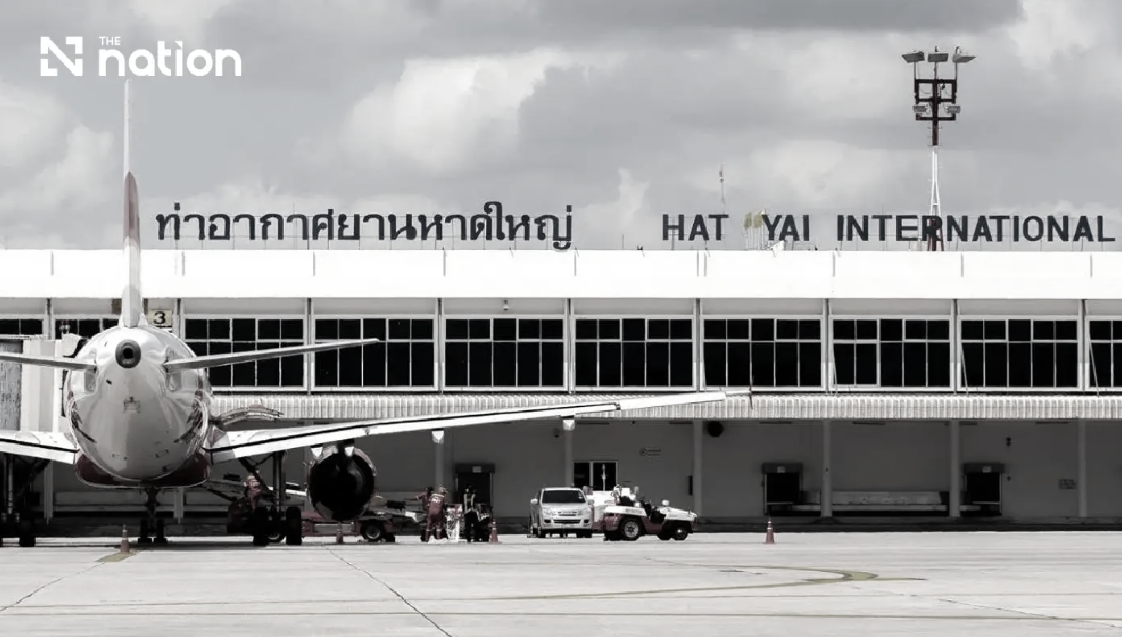
Hat Yai International Airport in southern Thailand was forced to temporarily shut down one of its critical runways on Wednesday afternoon following an accident involving an airport fire engine, resulting in the diversion of at least two commercial flights to Krabi Airport and widespread disruption to air traffic in the region.
The incident occurred at Runway 26, which serves as a primary landing strip for the airport's inbound operations. Airport authorities issued a Notice to Airmen (NOTAM) at 1.55pm declaring the runway unsafe for aircraft operations. The closure remained in effect until 4.30pm on June 17, 2026, imposing a nearly two-and-a-half-hour window during which no aircraft could land at the facility. The decision to enforce such an extended closure underscored the serious nature of the accident and the airport's commitment to passenger safety protocols.
The fire engine involved in the accident was part of Hat Yai Airport's emergency response fleet—a critical infrastructure asset maintained for rapid reaction to aircraft emergencies, fires, and other airfield crises. The fact that this essential safety vehicle became the source of a runway-blocking incident highlighted the unpredictability of airport operations, even when involving dedicated safety personnel. The airport's management did not immediately disclose the precise circumstances of the fire engine accident, contributing to confusion among passengers already affected by flight delays and diversions.
Real-time flight tracking data from Flightradar24 captured the operational chaos triggered by the runway closure. Thai Airways International flight TG263 and Thai Lion Air flight SL712 both received instructions to divert toward Krabi Airport, located approximately 140 kilometres east of Hat Yai. This geographical displacement meant passengers faced not only delays but also longer ground times and the inconvenience of landing at an alternative airport rather than their intended destination. For connecting passengers, the diversion created a cascade of missed onward flights and logistical complications that extended well beyond the simple three-hour window of the runway closure itself.
Passengers and their families were caught off guard by the incident, with limited transparency from airport authorities in the initial moments. One individual with a relative aboard Thai Airways flight TG263 contacted Hat Yai Airport directly seeking clarification about why landing was impossible. Airport staff acknowledged an emergency situation but refused to elaborate, leaving passengers in limbo without clear information about the nature of the problem or expected resolution timeframes. This communication gap, common during crisis situations at major airports, underscored the tension between operational security concerns and passenger expectations for timely updates.
The temporary diversion strategy deployed by air traffic controllers proved effective in managing the immediate crisis. Rather than circling aircraft above Hat Yai in a holding pattern until fuel reserves became critical, controllers coordinated with Krabi Airport to accept the diverted flights. Krabi, which operates as the primary airport serving Phuket province, possessed sufficient runway capacity and ground facilities to accommodate the rerouted traffic without significant operational strain. Thai Airways flight TG263 successfully touched down at Krabi Airport, confirming that the diversion procedure operated smoothly despite the unexpected nature of the routing.
For Malaysian and regional travellers, the Hat Yai incident carried significance beyond the immediate disruption it caused. Hat Yai Airport serves as a regional gateway for passengers connecting to destinations across Southeast Asia, including Malaysia. Many cross-border travellers from Penang, Perlis, and Kedah rely on Hat Yai as an alternative to the typically congested Kuala Lumpur and Penang airports. An extended closure at this facility ripples through regional aviation networks, affecting scheduling across multiple airlines and creating bottlenecks that take hours to resolve even after the initial triggering incident concludes.
The closure also raised broader questions about ground operations safety at regional airports. Fire engines and emergency vehicles move at high speeds across active runways and taxiways, and accidents involving these vehicles, while statistically rare, carry serious consequences when they occur. The fact that an emergency response vehicle became the subject of a major operational incident suggested potential gaps in runway vehicle traffic management protocols, driver training, or visibility conditions at the time of the accident. These factors warrant investigation to prevent recurrence.
Airport authorities were careful to frame the closure as a precautionary measure. The decision reflected a standardised aviation approach whereby any significant incident on an active runway triggers immediate closure pending comprehensive safety assessment and clearing operations. This conservative posture protects aircraft and passengers but generates business costs for airlines, disruption for travellers, and operational strain on alternative facilities absorbing rerouted traffic. The balance between absolute safety and operational efficiency remains one of aviation's perpetual management challenges, particularly at busy regional airports.
Passengers were advised to remain in close contact with their respective airlines for real-time updates, a recommendation that proved necessary given the fluid nature of the situation. Travel disruptions of this type often cascade beyond the initial three-hour window as airlines shuffle aircraft, crews, and passengers to compensate for the lost productivity during the closure period. Thai Airways and Thai Lion Air would have faced substantial logistical complications in recovering their schedules, potentially affecting dozens of subsequent flights across their networks.