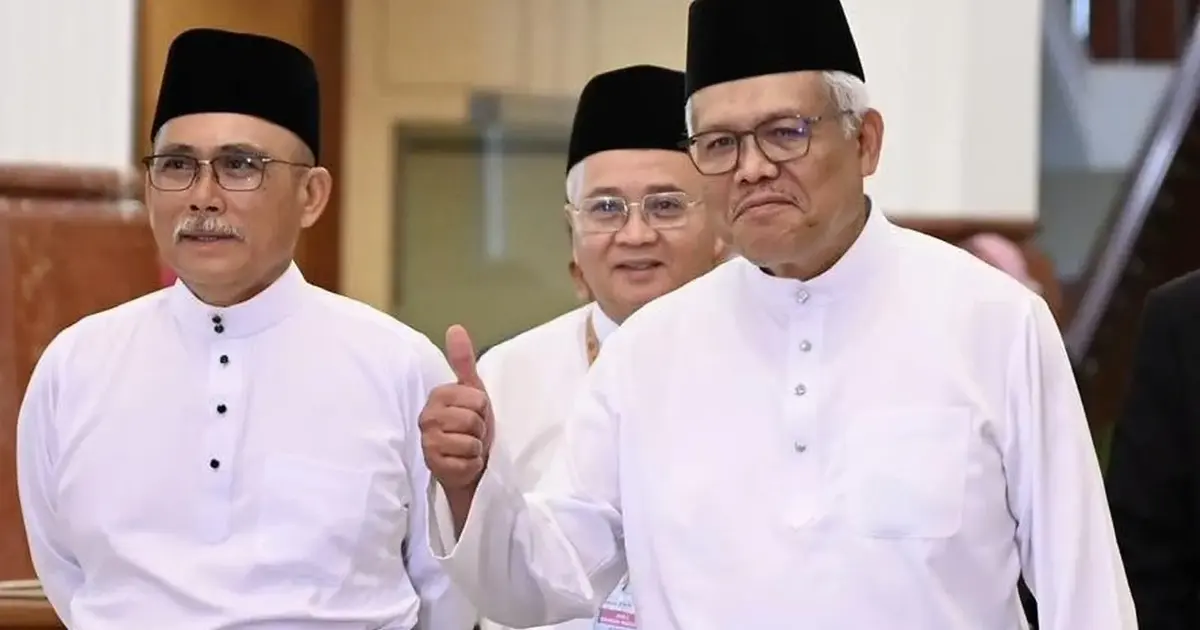
Hamzah Zainudin has been positioned as the opposition leader primarily because he commands substantial parliamentary support from multiple quarters of the anti-government coalition, according to Datuk Kiandee, the suspended Bersatu vice-president. The explanation sheds light on how opposition parties coordinated to select their new leader following recent political realignments that reshaped the balance of power in parliament.
The backing Hamzah secured represents a significant consolidation within opposition ranks. The Larut member of parliament obtained the wholesale endorsement of PAS, the pan-Malaysian Islamic party that has emerged as one of the largest opposition blocs in the current parliament. This bloc support proved decisive in the broader selection process, as PAS commands a substantial number of seats that carry considerable weight in opposition arithmetic.
Beyond PAS's unified backing, Hamzah also secured the support of the majority of Bersatu MPs. Bersatu, the party founded by former prime minister Mahathir Mohamad, has experienced considerable internal tensions and defections in recent years, yet retains meaningful representation in parliament. The fact that the majority of remaining Bersatu MPs threw their support behind Hamzah demonstrates a significant consensus among party members still in the opposition ranks.
Kiandee's statement underscores how parliamentary leadership positions in Malaysia are determined by the fundamental principle of majority support rather than automatic succession or seniority within a single party. The appointment process reflects the coalition mechanics that increasingly define Malaysian politics, where cross-party coordination has become essential for opposition parties to exercise meaningful influence on the national stage.
The timing of this announcement carries particular significance given Malaysia's political volatility over recent years. Government and opposition alignments have shifted considerably, with MPs switching sides and parties realigning themselves in response to changing circumstances. In this fluid environment, opposition parties recognise that selecting a respected figure capable of holding disparate groups together becomes crucial for maintaining coalition cohesion.
Hamzah's appointment signals an attempt by the opposition to project unified leadership despite the inherent diversity of opposition parties. The Larut MP, who previously served in various ministerial positions, brings administrative experience to the role. His ability to command support across party boundaries suggests opposition MPs view him as a figure capable of transcending narrow partisan interests and serving as an effective voice for their collective concerns in parliament.
The significance of PAS's bloc support cannot be understated. As an Islamic-based party with strong grassroots organisation, PAS has rebuilt its parliamentary presence in recent elections and now represents a substantial constituency within the opposition. Their unified decision to back Hamzah indicates they were satisfied that he could represent their interests while also maintaining broader coalition unity, a delicate balance that opposition leaders must constantly navigate.
The majority support of Bersatu MPs is equally noteworthy given that party's internal divisions. Bersatu has seen numerous defections to both government and opposition camps in recent years, with party members holding divergent views on strategic alliances and policy directions. That the majority of remaining MPs coalesced around Hamzah suggests a desire for stabilising leadership and perhaps indicates these MPs view him as offering a constructive path forward for their party within the opposition.
For Malaysian political observers, this development reflects broader patterns in how opposition parties increasingly must think collectively about their parliamentary strategy. Rather than automatic succession based on party hierarchy, contemporary Malaysian politics demands that potential leaders demonstrate they can unite diverse groups around a common agenda. Hamzah's successful consolidation of support demonstrates this reality.
The appointment also has implications for how the opposition intends to function during the current parliamentary term. An opposition leader chosen through such transparent consensus-building has stronger legitimacy to represent the coalition's interests, hold government accountable, and propose alternative policies. This matters significantly in a parliament where the government maintains control but opposition strength has grown sufficiently to demand attention to its criticisms and proposals.
Looking forward, Hamzah's acceptance of this role and the clear statement of support from multiple parties suggests the opposition intends to present a more coherent front than it has at various points in recent years. Whether this unity persists will depend on whether the coalition parties can manage their different ideological perspectives and policy priorities while maintaining focus on their core function as government opposition. The foundation appears solid, but Malaysian political history demonstrates that maintaining opposition unity consistently remains challenging.
The mechanisms through which this appointment occurred also provide insight into how Malaysian parliamentary democracy operates in practice. Rather than constitutional stipulation or automatic party processes determining opposition leadership, practical consensus-building among MPs who recognise mutual interest in unified opposition governance has become the operative norm. This reflects a maturation in how political parties approach strategic coordination.