Ghana's preparations for their crucial World Cup group-stage match against Panama have been shadowed by the ongoing legal saga surrounding midfielder Thomas Partey, yet coach Carlos Queiroz insisted on Tuesday that his team stands ready to compete at full strength or depleted, depending on how Canadian authorities ultimately rule on the player's contentious entry request.
The Portuguese manager's measured response came as a Canadian federal court convened to hear Ghana's appeal against Canada's initial refusal to grant Partey entry into the country. The hearing took place barely 24 hours before the two nations were scheduled to clash at Toronto Stadium in what promises to be a pivotal group encounter. Queiroz's pragmatic stance reflected the uncertainty that has gripped Ghana's World Cup campaign in recent days, yet he sought to project confidence that his squad possesses the tactical flexibility and personnel depth to navigate the fixture regardless of Partey's availability.
Partey, a midfielder contracted to Spanish club Villarreal, has been embroiled in allegations of rape and sexual assault levelled against him in Britain—charges which the player has categorically denied. The legal complications surrounding his status added an unexpected layer of complexity to Ghana's World Cup journey, forcing the coaching staff to devise contingency strategies and maintaining squad morale amid external distractions. Rather than dwell on the matter, Queiroz adopted a forward-focused mentality in his media interaction, deflecting questions about the midfielder's circumstances and preference to concentrate on the tactical dimensions of the forthcoming contest.
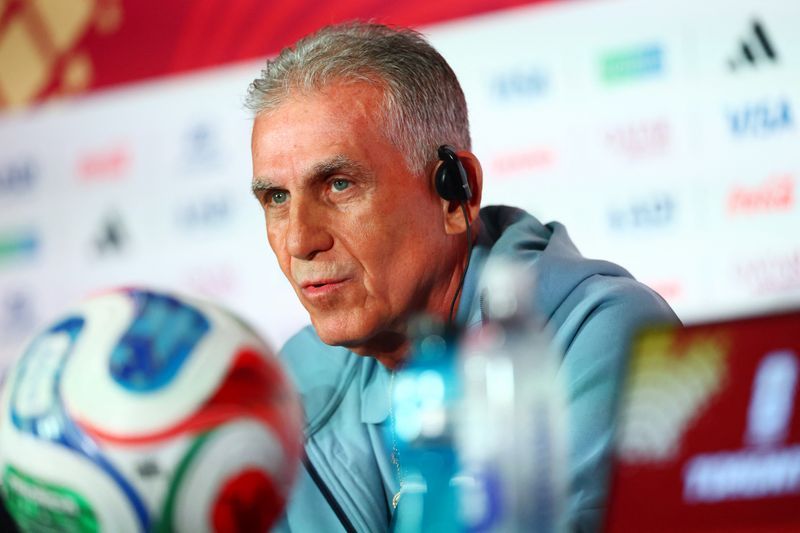
"We have our plan settled," Queiroz declared at a press conference, emphasizing his team's preparedness across multiple scenarios. He refused to elaborate extensively on Partey's situation, characterizing such discussions as peripheral to his core responsibility as a football tactician. "To add more comments about issues that are nonsense is not part of my business. My business is to play with the cards that I have in front of me," he stated, signalling his determination to maintain focus despite external pressures attempting to distract from competitive preparation.
Turning his attention to Panama, Queiroz offered measured respect for an opponent he characterized as well-organised and tactically sophisticated. The veteran coach, now 73 years old, acknowledged that Panama represents a formidable challenge grounded in their extensive tournament experience and coordinated defensive structure. However, he was equally emphatic that Ghana possesses considerable assets to exploit vulnerabilities in Panama's setup, suggesting that his tactical analysis had already identified specific weaknesses to target during the match.
"Of course, they have some weaknesses," Queiroz observed, projecting the kind of studied confidence expected from a coach preparing his squad for knockout-phase football where marginal gains determine outcomes. "We need to find them and I believe we have the solution to their strengths." This comment revealed a coach who had conducted thorough film study and strategic preparation, moving beyond generic observations to identify concrete tactical opportunities that Ghana could leverage during the contest. His assertion that his team possessed answers to Panama's strengths conveyed a sense of competitive readiness that extended beyond mere positive rhetoric.
Queiroz catalogued Ghana's competitive resources with specificity, highlighting the collective speed, technical quality, and individual brilliance available to him across the squad. He placed particular emphasis on Ghana's prowess in one-on-one situations, a dimension of football where individual skill differentials often prove decisive. This observation suggested a tactical preference for exploiting attacking transitions and creating scenarios where Ghana's technically gifted players could engineer superiority against opposition defenders operating in isolation, a conventional strategic approach for African sides seeking to maximise their attacking potential against European-structured opponents.
During his extended remarks, Queiroz was prompted to comment on FIFA's newly implemented mandatory hydration breaks during World Cup matches—a regulatory innovation that had generated considerable debate and scepticism within the coaching fraternity. Rather than offer immediate criticism, Queiroz adopted a longer-term analytical perspective, suggesting that meaningful evaluation of the policy's merits should await the tournament's conclusion. He called for an objective integrity assessment examining whether the hydration protocol genuinely prioritised player welfare and athletic performance, or whether commercial and marketing considerations had influenced FIFA's decision-making process.
"An integrity report must be clear and judge if this decision was really made more to protect the health and the performance of the players, or if it was made to protect marketing and other issues," Queiroz stated, articulating a common suspicion among footballing professionals that sporting governance often privileges commercial interests over athlete wellbeing. His commentary reflected wider concerns within international sport regarding the encroachment of financial imperatives into rule-making, a theme that resonates particularly among coaches from developing nations where FIFA's institutional priorities are sometimes perceived as misaligned with grassroots football development.
For Malaysian and Southeast Asian observers, Ghana's World Cup trajectory carries particular significance as a bellwether for African football's competitive standing. The Partey situation has introduced an element of unpredictability into Ghana's campaign, potentially affecting their performance trajectory throughout the group stage. However, Queiroz's demonstrated tactical sophistication and measured leadership style suggest that Ghana possesses the coaching infrastructure to navigate unexpected adversity—a quality that will likely prove decisive in determining whether they advance from what appears to be a competitive and unpredictable group that could produce surprising results.
The resolution of Canada's judicial proceeding regarding Partey's entry status will provide clarity within hours, allowing Ghana's final match preparations to proceed unencumbered by legal uncertainty. Regardless of that outcome, Queiroz has positioned his squad as competitive and tactically prepared, suggesting that Ghana's World Cup ambitions remain viable despite the external turbulence surrounding their recent preparations.