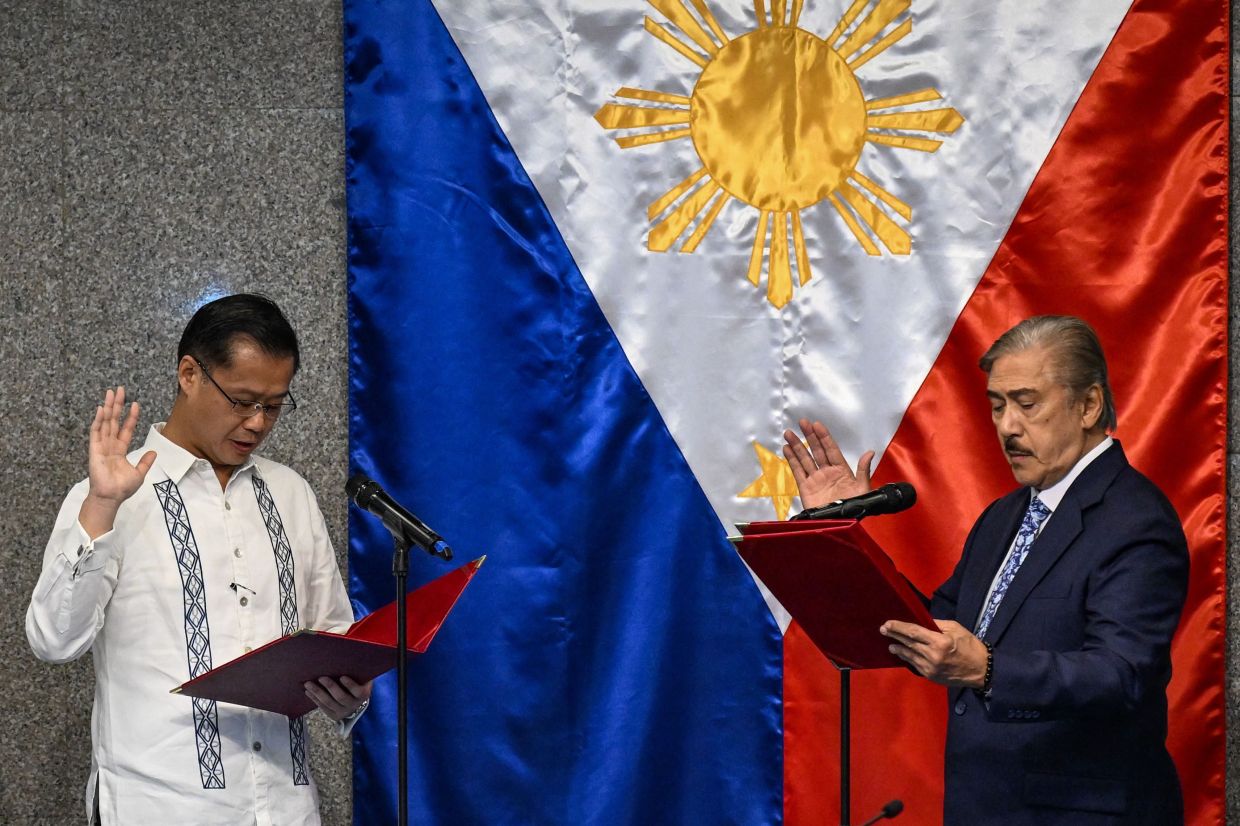
Senator Sherwin Gatchalian has secured the position of Philippine Senate president following a special legislative session on Wednesday, marking the culmination of a fractious political realignment within the 24-member chamber. The vote, which saw Gatchalian obtain exactly the minimum 13 votes necessary to claim the role, reflects the delicate arithmetic that currently defines Filipino Senate politics and underscores the fluid nature of legislative loyalties in Manila.
Gatchalian, who previously served as Mayor of Valenzuela City in the Metro Manila region and represented his constituency as a House Representative before entering the Senate, brings substantial executive and legislative experience to the presidency. His ascent to the top Senate position represents a culmination of political mobility across different levels of government, a common trajectory among Philippine politicians seeking higher office and greater influence over national policy.
The path to Gatchalian's presidency was neither smooth nor inevitable. Two weeks prior, on June 3, a separate Senate faction had managed to elect him as Senate president pro tempore with support from 12 senators, simultaneously declaring that Alan Peter Cayetano, who had assumed the Senate presidency on May 11, had effectively vacated his position. Yet Cayetano disputed this interpretation, arguing that 13 senators were required to conduct formal Senate business, including the election or removal of chamber officers—a constitutional interpretation that temporarily stalled efforts to remove him.
The critical turning point emerged when Senator Joel Villanueva, who had previously aligned with Cayetano's bloc, switched his support to Gatchalian's faction. Villanueva's defection proved decisive, providing the additional vote necessary to meet the 13-vote threshold. The senator's shift was sufficiently significant that Cayetano, recognising the changed political mathematics, indicated on Tuesday that he would relinquish the Senate presidency. This capitulation avoided what could have become a protracted institutional deadlock within the legislative chamber.
The Senate's current operational strength stands at only 22 active members, a reduced number that fundamentally shapes legislative dynamics and coalition-building. Senator Jinggoy Estrada's surrender to police earlier this month, followed by the Sandiganbayan anti-graft court's Tuesday order suspending him from office for 90 days pending his graft prosecution, has removed one seat from active play. Senator Ronald Dela Rosa's fugitive status—sought by the International Criminal Court with his location undetermined—similarly renders his seat effectively vacant, leaving the chamber operating significantly below its full complement.
For Malaysian observers and regional watchers, the Philippine Senate's leadership transition illustrates broader patterns evident across Southeast Asia's democracies, where coalition management often proves as consequential as ideological positioning. The narrow margins by which Gatchalian secured his position—and the significance of individual senators' defections—demonstrate how legislative bodies with smaller memberships remain vulnerable to sudden shifts when key figures change allegiances.
The instability within the Philippine Senate reflects deeper challenges facing Manila's political system. The concentration of power within relatively small voting blocs means that personality-driven politics frequently supersede party discipline or policy coherence. Cayetano's relatively brief tenure as Senate president, lasting barely five weeks, suggests that leadership positions remain contested terrain where coalitions can fragment rapidly when individual senators perceive advantages in realigning their support.
Gatchalian's election also occurs against a backdrop of institutional strain within the Senate. The simultaneous absence of multiple senators through suspension, fugitive status, and other complications creates operational difficulties for legislative functions requiring supermajority support. The chamber's reduced effective membership of 22, operating at approximately 92 percent capacity, leaves little margin for absences or boycotts when important votes proceed.
Regionally, the Philippine Senate's travails carry implications for Southeast Asian legislative stability more broadly. As the region's second-largest democracy by population, the Philippines' institutional functioning attracts attention from observers across ASEAN, particularly those monitoring democratic consolidation and legislative independence. The apparent ease with which Senate presidencies can change hands—contingent upon relatively small shifts in factional alignment—raises questions about the predictability and stability that investors, international partners, and domestic stakeholders expect from democratic institutions.
Gatchalian's assumption of the presidency now positions him as a central figure in determining the Senate's legislative agenda for the remainder of the sitting. His capacity to maintain the coalition that elected him will prove crucial; with only 13 senators providing his mandate, maintaining sufficient attendance and loyalty remains an ongoing challenge. The Senate president's influence over committee assignments, legislative scheduling, and procedural matters means that coalition management will occupy substantial attention during his tenure.
Looking forward, the fundamental instability evident in the Senate's leadership transition suggests that future contests for the presidency remain probable. As long as the chamber continues operating with fractionalised coalitions rather than stable majority blocs, and as long as individual senators retain meaningful discretion over their voting patterns, leadership positions will remain subject to challenge. The dramatic shift involving Villanueva's defection demonstrates that Senate presidentships can change hands even when sitting presidents initially seemed entrenched.
For the broader Philippine political system, Gatchalian's election represents a temporary resolution of acute institutional tension rather than a fundamental realignment addressing underlying fragmentation. Whether his presidency will generate sufficient legislative stability to advance significant policy initiatives remains uncertain, particularly given the reduced Senate membership and the ongoing complications arising from suspended and absent colleagues.