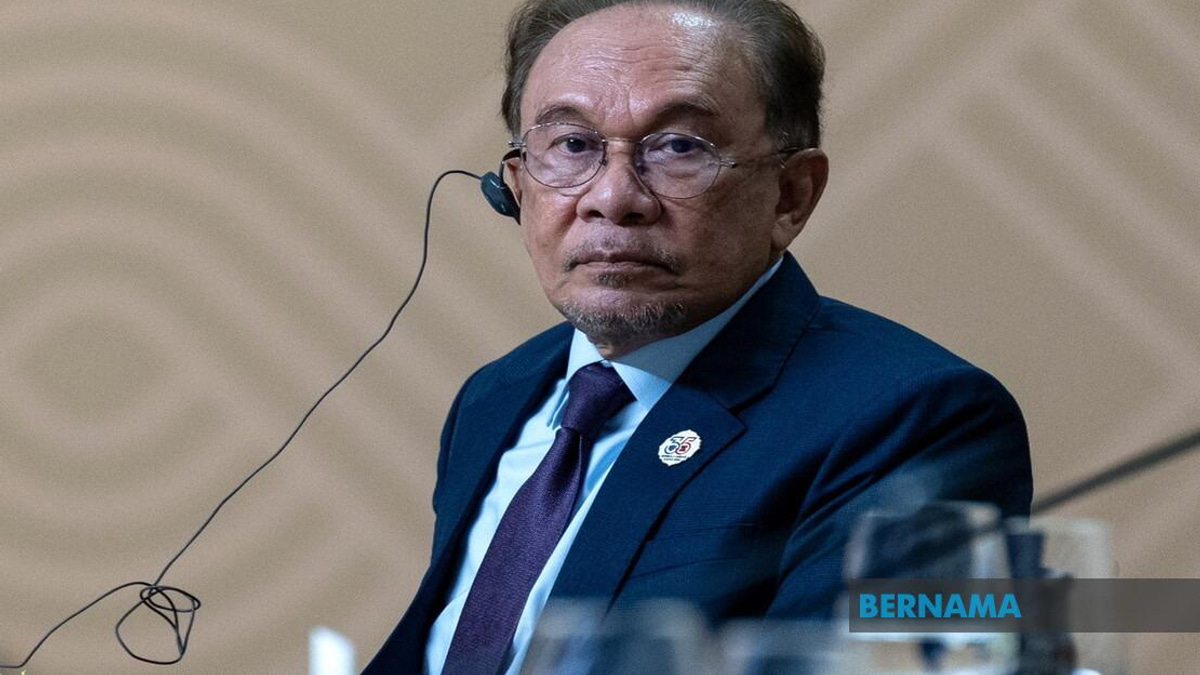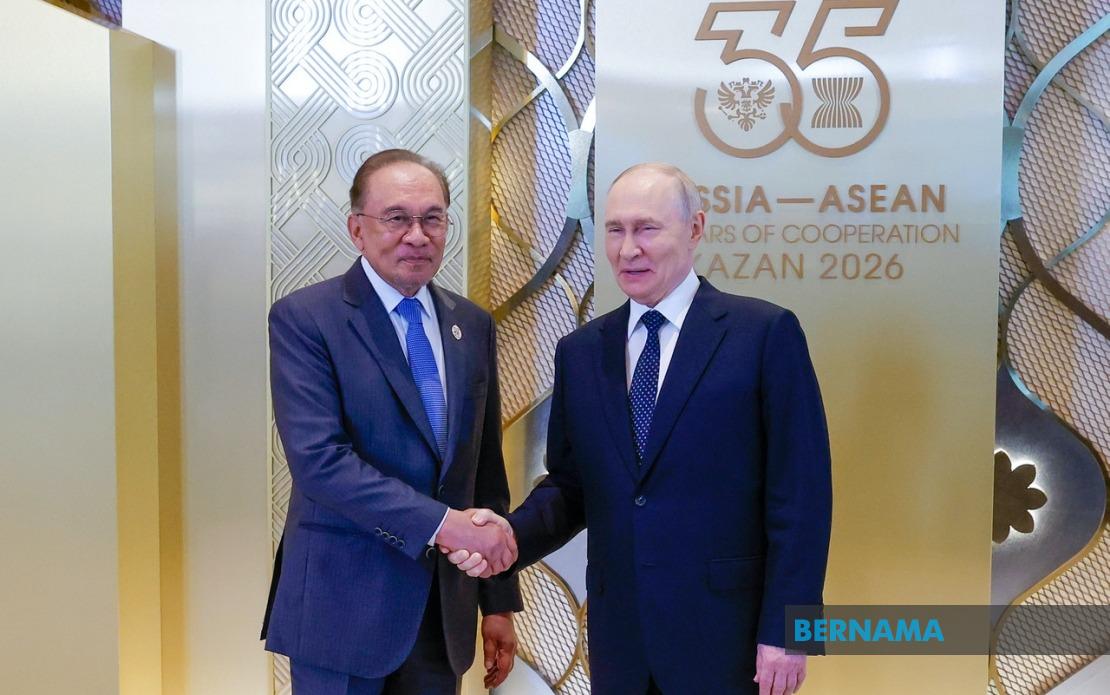
Prime Minister Datuk Seri Anwar Ibrahim has stressed that in an increasingly complex geopolitical environment marked by mounting challenges and unpredictability, formal channels for dialogue between nations remain indispensable for building robust relationships. Speaking at the ASEAN-Russia Commemorative Summit in Kazan, Anwar pointed to such gatherings and structured bilateral engagements as vital mechanisms for nurturing comprehension and goodwill among participating countries.
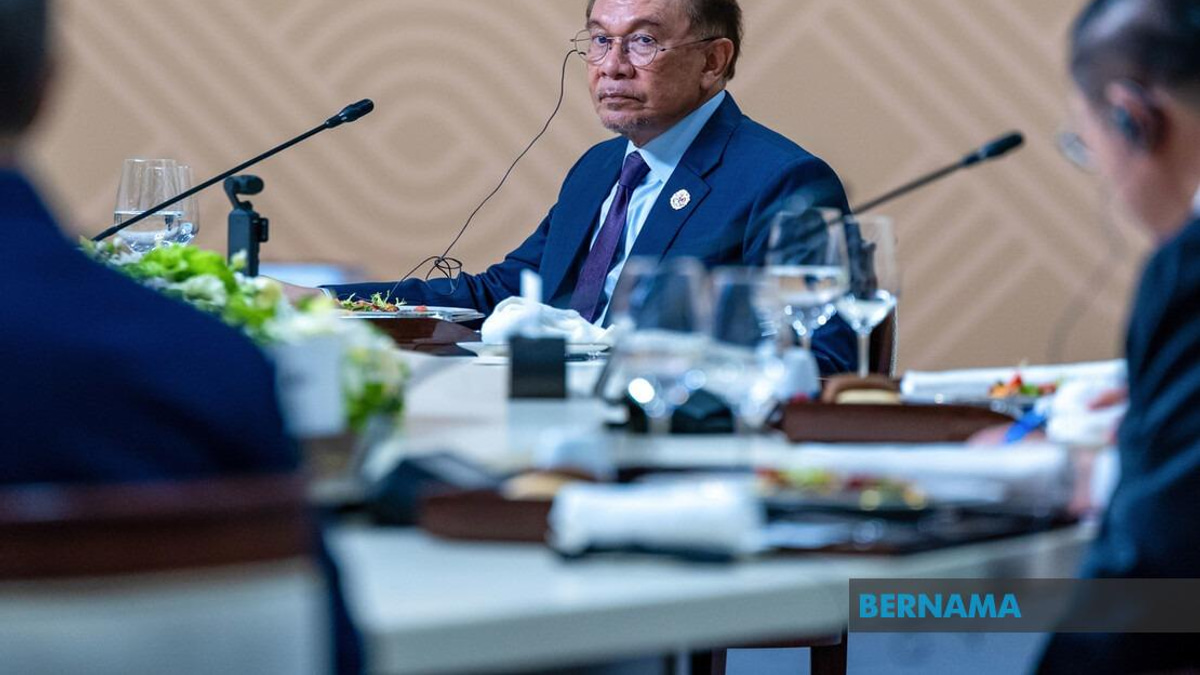
The Prime Minister, who arrived in Kazan—the capital of the Russian republic of Tatarstan—for the two-day summit held from June 17 to 18, articulated his view after attending a formal gala dinner hosted by Russian President Vladimir Putin. His remarks reflected a broader diplomatic philosophy that positions regular high-level contact as foundational to effective international relations, particularly in a region where competing interests and historical complexities often cloud understanding.
According to Anwar, these multilateral platforms serve multiple strategic purposes beyond symbolic gestures. They provide structured opportunities for leaders to consolidate existing friendships, establish common ground on pressing issues, and identify concrete areas where cooperation can yield tangible advantages for all parties involved. In the context of ASEAN-Russia relations, the Prime Minister suggested that such summits create space for candid discussions that might otherwise be constrained by formal diplomatic channels.
The significance of Anwar's intervention lies partly in Malaysia's positioning within ASEAN at a time when the bloc seeks to maintain strategic autonomy while deepening ties with major powers. Malaysia has long advocated for balanced engagement with global players, and Anwar's emphasis on dialogue aligns with this tradition. By highlighting the mutual benefits that flow from sustained engagement, he implicitly advocates for continued diplomatic investment in relationships that might offer economic, security, or cultural dividends to Southeast Asian nations.
The gala dinner itself served as a setting for what Anwar characterised as meaningful cultural and intellectual exchange. He noted that the event provided a window into Russia's historical legacy and cultural sophistication, suggesting that understanding between nations extends beyond technical negotiations to encompass appreciation of each other's civilisational contributions. This dimension of his remarks underscores how summit diplomacy functions at multiple levels simultaneously—as both practical negotiation and as soft power projection.
For Malaysia specifically, engagement with Russia carries particular weight given the country's strategic importance in energy markets, defence cooperation, and geopolitical balance in Eurasia. The ASEAN-Russia relationship, while less intense than ASEAN's ties with Western powers or China, represents an important pillar of the bloc's non-aligned positioning. By participating actively in such summits, Anwar signals Malaysia's commitment to preserving ASEAN's capacity to work with diverse partners rather than clustering exclusively within any single sphere of influence.
The timing of these remarks also reflects broader concerns within the international community about rising tensions and fragmentation. Against backdrops of regional conflicts, economic disruption, and technological competition, leaders increasingly invoke dialogue as a stabilising force. Anwar's comments fit within this global narrative while emphasising Southeast Asia's particular interest in avoiding polarisation that could constrain the region's development and autonomy.
Furthermore, the Prime Minister's dual role as both head of government and Finance Minister adds another layer to his advocacy for engagement. Economic cooperation between ASEAN and Russia remains underdeveloped relative to potential, partly owing to Western sanctions against Moscow. However, Malaysian policymakers view sustained diplomatic contact as essential groundwork for exploring future commercial opportunities when geopolitical circumstances permit. By emphasising the value of these platforms now, Anwar positions Malaysia as a bridge-builder willing to maintain relationships that could prove economically beneficial in the longer term.
The substance of Anwar's intervention also illuminates how Malaysia approaches multilateral summitry in an era of strategic competition. Rather than viewing such gatherings primarily through the lens of immediate deliverables or confrontation with rivals, he foregrounds their value as confidence-building measures and relationship-maintenance tools. This reflects a Southeast Asian diplomatic tradition that privileges process and ongoing dialogue over zero-sum competition.
Looking forward, Anwar's remarks at the Kazan summit are likely to inform Malaysia's broader approach to regional and global engagement in the coming period. They suggest a Malaysian government committed to active participation in diverse multilateral forums while maintaining strategic flexibility. For other ASEAN members and international observers tracking Southeast Asian diplomacy, the Prime Minister's emphasis on dialogue platforms offers insight into how Malaysia is navigating an increasingly complicated geopolitical landscape where maintaining multiple partnerships simultaneously has become essential to national interest.