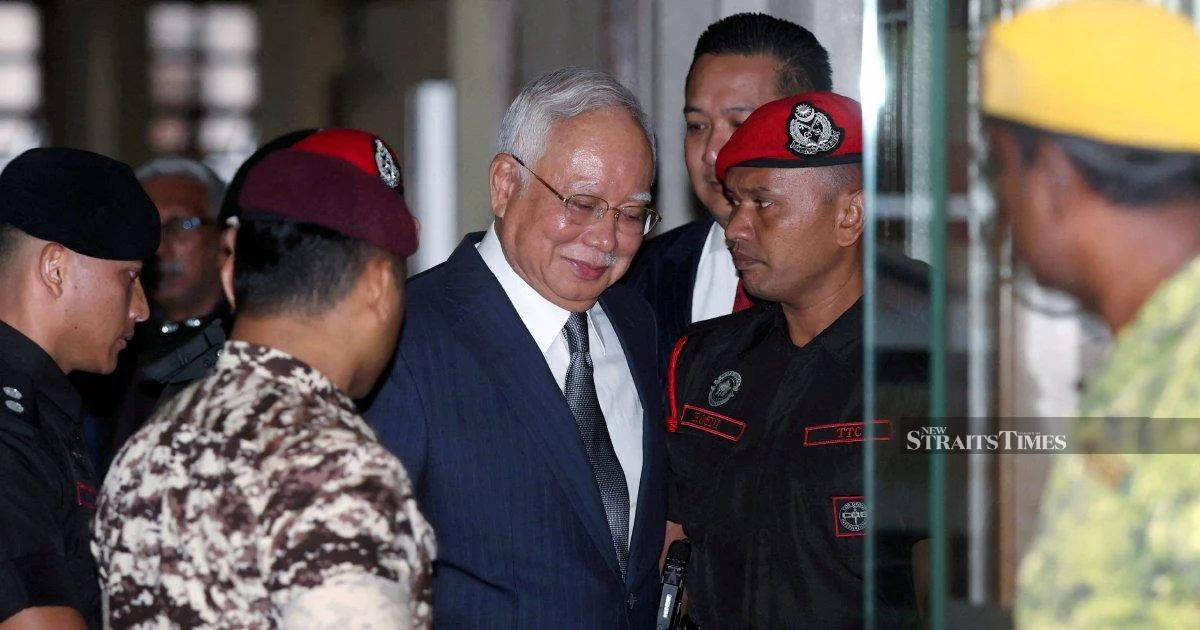
A High Court judge in Kuala Lumpur has determined that former Prime Minister Datuk Seri Najib Razak and fugitive financier Low Taek Jho operated as partners in a coordinated scheme to systematically redirect vast sums from 1Malaysia Development Bhd (1MDB), the government's now-defunct sovereign wealth fund. The judicial assessment underscores the deeply interwoven nature of the conspiracy that has become synonymous with one of the world's most significant financial frauds involving public assets.
The finding carries substantial legal implications for Najib's ongoing court proceedings in Malaysia, where he faces multiple charges related to the 1MDB scandal. The court's characterisation of the relationship between the former premier and the elusive businessman—who remains at large despite international arrest warrants—establishes a framework for understanding how the theft functioned at its highest levels. By framing their involvement as "hand-in-hand" coordination, the judge has rejected suggestions that either party operated independently or that one was merely exploiting the other for personal gain.
Low Taek Jho, commonly known as Jho Low, has become a symbol of the scandal's international dimensions. Despite Malaysia's efforts to bring him to justice, he has eluded capture by remaining outside the country's jurisdiction, complicating efforts by authorities to prosecute him directly. His status as a fugitive has nonetheless not prevented courts from examining his role and the evidence linking him to the alleged conspiracy. Malaysian law enforcement and prosecutors have pursued leads across multiple continents in attempts to locate him, reflecting the cross-border nature of the financial networks used to move stolen funds.
The 1MDB case represents perhaps Malaysia's most consequential modern financial scandal, involving the misappropriation of approximately USD 4.5 billion from a development fund that was established in 2009 with the stated purpose of advancing Malaysia's economic growth through strategic investments and partnerships. Instead, investigators discovered that the fund became a vehicle for theft on an unprecedented scale, with money flowing through complex international banking channels to offshore accounts and eventually into luxury acquisitions, political donations, and personal enrichment schemes. The scandal's exposure damaged Malaysia's international reputation and prompted sweeping reforms in governance and financial oversight.
For Malaysian readers, the judicial determination is significant because it reinforces the accountability mechanisms within the domestic legal system, even as the country grapples with recovering stolen assets and implementing structural reforms. The findings also demonstrate the courts' willingness to make determinations about high-level political corruption based on the evidence presented, setting precedents for how Malaysia evaluates allegations against powerful figures. This is particularly relevant given Malaysia's constitutional framework and the historical challenges in holding senior government figures accountable through judicial processes.
The coordinated nature of the conspiracy, as identified by the court, suggests that the theft required active participation and decision-making at the highest levels of government. Najib's position as Prime Minister and Minister of Finance during the critical years when 1MDB was established and began its operations provided him with both the authority and access necessary to facilitate the alleged diversions. His direct involvement, rather than passive oversight, fundamentally distinguishes this case from scenarios involving isolated corruption or lower-level embezzlement.
Southeast Asian observers have noted that the 1MDB scandal carries implications beyond Malaysia's borders. The use of international financial systems, the involvement of banks across multiple jurisdictions, and the movement of funds through global trading networks all highlight vulnerabilities in the region's financial architecture. The scandal prompted regulatory reviews throughout Southeast Asia and influenced international discussions about beneficial ownership disclosure and anti-money laundering compliance standards.
The relationship between Najib and Jho Low appears to have evolved from the early stages of 1MDB's establishment, when Low cultivated relationships with government officials and positioned himself as a central figure in the fund's strategic direction. According to investigative accounts and court proceedings, Low leveraged his connections and financial acumen to structure transactions that enabled wealth extraction while maintaining appearances of legitimate business activity. His ability to maintain this operation for several years before exposure suggests sophisticated understanding of both Malaysian governance and international financial systems.
The court's assessment carries practical consequences for Najib's legal defence strategy. By establishing joint liability and coordinated action, the judgment narrows arguments that might otherwise blame subordinates, foreign intermediaries, or systemic failures rather than deliberate criminal conspiracy. The finding that the two men worked "hand-in-hand" suggests a meeting of minds and shared intent—elements that prosecutors must establish to prove conspiracy charges beyond reasonable doubt in Malaysian courts.
Recovery efforts have proceeded on multiple fronts, with Malaysian authorities working alongside international partners in the United States, Singapore, the United Arab Emirates, and other jurisdictions to trace and recover assets allegedly purchased with stolen 1MDB funds. These efforts have yielded partial successes, including the recovery of artworks, real estate, and financial assets, though the full scope of dispersed funds remains difficult to quantify. The ongoing legal battles and asset tracing operations are expected to continue for years, extending well beyond the criminal trials of individuals implicated in the scandal.
For Malaysia's governance framework, the 1MDB case has catalysed discussions about strengthening internal controls, enhancing parliamentary oversight of sovereign wealth funds, and improving transparency in government-linked companies. Subsequent administrations have implemented various reforms aimed at preventing similar abuses, though experts continue to debate whether these measures are sufficiently robust. The judicial findings regarding coordination between Najib and Jho Low provide a cautionary narrative about the risks of concentrated power and weak institutional checks.
The court's conclusions also inform ongoing international investigations by American authorities, who have pursued asset forfeiture cases related to 1MDB in United States courts. The American legal system's treatment of the scandal has influenced global perceptions of the scheme's magnitude and has facilitated the recovery of certain assets held or transited through American financial institutions. Coordinated prosecution efforts across jurisdictions underscore the increasing internationalisation of financial crime enforcement.