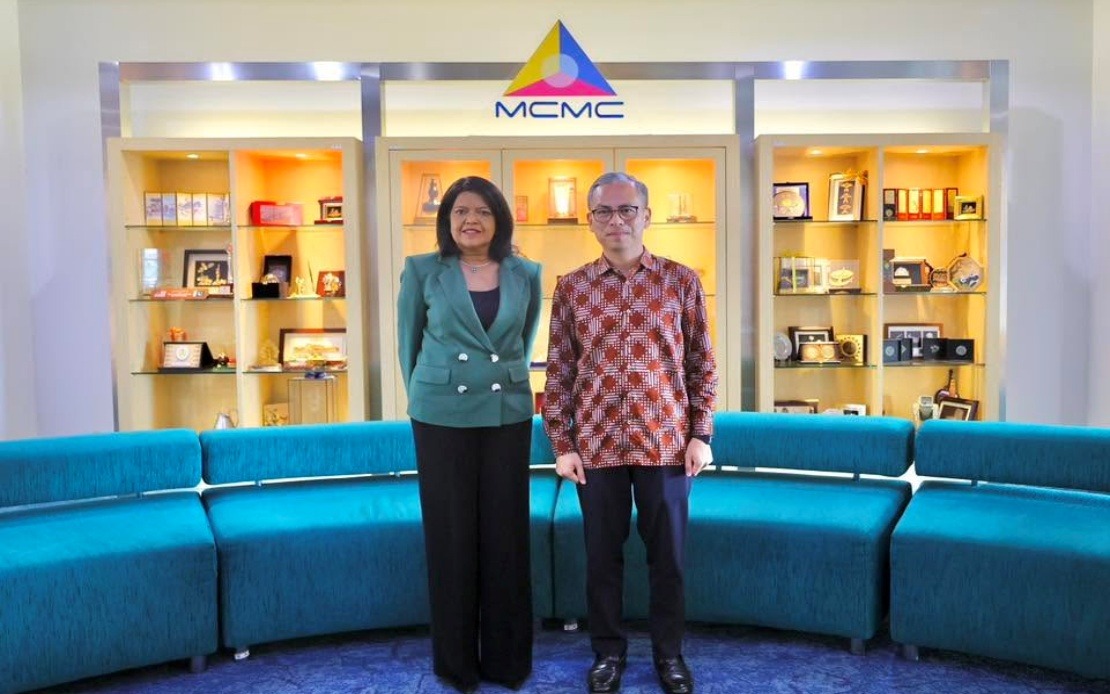
Communications Minister Datuk Fahmi Fadzil has offered his congratulations to Tan Sri Nallini Pathmanathan following her appointment as chairman of the Malaysian Media Council, the country's media industry self-regulatory body. The minister's public endorsement, shared via Facebook, signals government backing for the newly appointed chair at a time when media regulation and journalistic standards remain subjects of national importance.
The appointment of Nallini, a distinguished former judge of the Federal Court, represents a significant leadership transition for the Malaysian Media Council. In his message, Fahmi expressed confidence that Nallini would bring her considerable judicial experience and institutional knowledge to bear in advancing the council's mandate. The minister emphasised the importance of the council maintaining its commitment to responsible media freedom—a careful formulation that acknowledges both press independence and accountability.
Fahmi's statement reflects the government's strategic priorities regarding media governance. He specifically highlighted three pillars that the council should focus upon: upholding responsible media freedom, strengthening journalistic ethics, and ensuring the media industry remains both sustainable and trusted by the public. This framing suggests that the administration views the council not merely as a watchdog for press misconduct, but as an institutional partner in maintaining healthy public discourse and industry standards.
The Malaysian Media Council itself was formally established under the Malaysian Media Council Act 2025, marking a modernisation of the country's media self-regulatory framework. The council operates as an independent body designed to address complaints about media conduct whilst preserving editorial independence. The appointment of Nallini follows a unanimous endorsement by the council's board members at a meeting held on May 26, indicating broad consensus among media industry stakeholders regarding her suitability for the role.
Nallini's judicial background positions her to navigate the complex terrain between protecting press freedom and maintaining standards of accuracy and fairness. Her experience on Malaysia's highest court suggests familiarity with constitutional principles governing free speech and media rights, as well as the competing interests that regulators must balance. This combination of credentials has evidently impressed both the council's board and the government communications ministry.
The timing of this appointment carries broader significance for Malaysia's media landscape. The country has faced international scrutiny regarding press freedom rankings in recent years, with global watchdogs highlighting concerns about legal restrictions and regulatory pressures on journalists. By investing in a respected independent figure like Nallini to lead the self-regulatory body, Malaysian authorities appear intent on strengthening the credibility of the media governance system whilst demonstrating commitment to industry-led standards rather than purely state-directed control.
The distinction between self-regulation through the council and government regulation through legislative means remains important in this context. The council's role as a self-regulatory body emphasises industry responsibility and professional accountability, potentially offering a middle ground between complete editorial autonomy and direct state intervention. Whether the council can successfully establish itself as a trusted arbiter of media conduct will depend significantly on how it exercises its powers and whether industry participants and the public perceive it as genuinely independent.
For journalists and media outlets across Malaysia and the region, the council's direction under Nallini's leadership will have practical implications. The body will handle complaints, investigate alleged breaches of media ethics, and potentially issue sanctions against publications or broadcasters found to have violated standards. The credibility with which these decisions are made will influence how seriously the industry takes such oversight mechanisms and whether self-regulation remains viable as an alternative to more restrictive legislative approaches.
The appointment also reflects evolving approaches to media governance across Southeast Asia, where several countries have experimented with self-regulatory councils and press boards. Malaysia's commitment to developing institutional structures that can address legitimate concerns about media responsibility without stifling press freedom positions it within a broader regional conversation about sustainable media systems. The success or failure of the council under Nallini's stewardship may influence how other regional governments approach similar regulatory challenges.
For the broader Malaysian media ecosystem, the council's effectiveness will be tested on how it handles contentious cases that inevitably pit claims of journalistic importance against concerns about accuracy, fairness, or harm to individuals. Nallini's judicial temperament and experience interpreting law and constitutional principles may help the council issue reasoned decisions that command respect from different stakeholders. However, the council will also need to maintain active engagement with the media industry, civil society, and the public to remain relevant and trusted.
Looking ahead, Fahmi's public backing provides political support for the council's initiatives, though the organisation must ultimately establish its own institutional credibility independently. The government minister's emphasis on the council playing an important role in advancing the voice of the media industry suggests expectations that the body will not merely police media conduct but also advocate for conditions that allow journalism to thrive. This broader developmental role may distinguish Malaysia's council from purely reactive complaint-handling mechanisms.
The appointment comes at a moment when global discourse around media regulation increasingly recognises the limitations of either pure self-regulation or state control. The Malaysian Media Council represents an attempt to harness the legitimacy and professional expertise that come from industry-led governance whilst ensuring that public interests in accurate, fair reporting are protected. Whether this model succeeds depends partly on leadership quality, and Nallini's appointment suggests stakeholders believe she possesses the necessary judicial wisdom and institutional standing to guide the council through its critical early years.